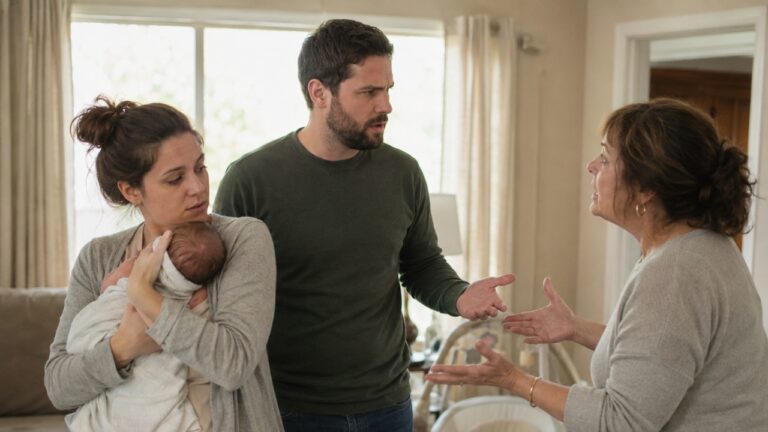
Brother’s Fiancee Accused Her of Stealing the Spotlight With Her Pregnancy News — Then Kicked Her Out of the Wedding, So Her Husband Walked Too

Photo credit: AI-generated image created using ChatGPT. Illustrative only.
Families love to pretend they’re celebrating each other, right up until somebody else’s good news threatens to pull a few eyes off the main event. Then all at once, “joy” turns into scorekeeping, and people start acting like attention is a limited resource that has to be guarded like a bank vault. That’s the kind of mess sitting underneath this wedding-and-pregnancy blowup.
In the original post, a 25-year-old woman said she got married in May, her brother got engaged in July, and she found out she was pregnant around that same time. She waited until October—about three months after the engagement—to tell her family, only to be accused by her brother and his fiancée of “stealing their spotlight.” Things escalated from there, and eventually she was kicked out of the wedding, with her husband (the brother’s best man) prepared to step out too.
The dates matter because they expose what this is really about. The brother and fiancée aren’t upset that news was shared too soon, because three months isn’t “too soon” in any normal family. They’re upset because they wanted a season where everyone’s emotional attention belonged to them, and they expected the whole family to cooperate without question.
A normal timeline got treated like a personal attack
Here’s the timeline she shared: May 2024 wedding, July 2024 engagement (and pregnancy), October 2024 pregnancy announcement, March 2025 baby born, and their wedding planned for October 2026. Read that again. Their wedding is more than two years after the pregnancy announcement and well over a year after the baby is born.
So this isn’t a story about someone showing up at an engagement party and grabbing the microphone. This is a story about a couple policing the family’s “spotlight” like it’s a stage production. In real life, people get engaged, married, have babies, change jobs, get sick, move houses, and bury relatives—all while other people are planning parties. Adult families learn to hold more than one joy at a time.
What makes it worse is the accusation of hypocrisy. The woman pointed out that her brother got engaged about two months after her wedding, and she didn’t take that as an insult. She was happy for them. That’s what grown people do: they don’t treat other people’s milestones as competition.
The fiancée didn’t just draw a boundary—she lit a fuse
According to the post, the fiancée “went crazy on our whole family,” accusing them of treating the brother horribly and not acting excited enough about the wedding. Then she had a conversation with the pregnant sister where she unloaded “everything she hates” about her. After that, she kicked her out of the wedding party because she didn’t want her “negative energy” as a bridesmaid.
There’s a big difference between saying, “Hey, I felt overlooked,” and turning a wedding party into a loyalty test. Weddings can make people anxious and controlling, especially if they’ve built their identity around being celebrated. But a bride who handles stress by attacking her future in-laws is building a marriage on sand.
It’s also telling that the complaint wasn’t just about the pregnancy announcement. The fiancée framed it as a broader character issue—how the family supposedly treats the brother, how people aren’t excited enough, how this sister is “negative.” That’s a power move: turn one disagreement into a complete indictment so you can justify extreme actions without feeling unreasonable.
Your husband isn’t a prop in somebody else’s ceremony
The husband in this story is the brother’s best man. When the sister was kicked out, she told the fiancée that her husband would be out of the wedding too if she was. She added later that she and her husband had talked about that possibility ahead of time, so it wasn’t a heat-of-the-moment threat.
A lot of men get uncomfortable here, because we’ve been trained to “keep the peace” and avoid making waves. But marriage changes your primary loyalty. Your spouse isn’t someone you leave behind so you can play a ceremonial role for a friend or sibling, especially when that spouse is being publicly disrespected.
There’s also a practical side. If the bride is willing to eject a bridesmaid over perceived “energy,” what do you think she’ll do to the best man when he doesn’t smile the right way, or when the baby cries at a family gathering, or when attention shifts again? A man who’s wise doesn’t volunteer for years of walking on eggshells just to stand in photos.
Scorekeeping shows up in families that never learned to celebrate well
The brother reportedly added another grievance: that she “stole all the attention away” when she was diagnosed with an illness when she was young. If that detail is accurate, it’s hard to read without shaking your head. Nobody chooses an illness to get attention, and even suggesting it says something is broken in the way this family handles hardship and care.
When people hoard attention, it usually means they don’t feel secure. They don’t trust that they’re loved, so they demand to be proven loved through constant focus. Engagements, weddings, and babies become arenas for validation instead of gifts to be shared.
If you’re the man reading this, keep an eye on that impulse in yourself. It’s easy to think you’re just asking for respect, when you’re actually demanding a spotlight. And the people closest to you—your wife, your kids, your siblings—pay the price.
If you’re planning a wedding, stop acting like life has to pause for you
A wedding is important. A marriage is more important. One of the fastest ways to poison a marriage is to begin it by teaching everyone around you that your happiness requires their constant performance.
Engaged couples should expect that other people will keep living. Someone will get pregnant. Someone will lose a job. Someone will have a health scare. Someone will move away. If you can’t handle other people having news, you’re not ready for the kind of humility marriage demands.
And if you’re the friend or sibling of someone like this, don’t feed it. You can be kind without surrendering your dignity. You can celebrate their milestone without acting like your own family’s joys and burdens must be hidden in the closet until the last dance.
What a steady response can look like from here
This situation has already escalated, so the goal isn’t to win. The goal is to protect your marriage, keep your conscience clean, and leave a door open for reconciliation—without crawling.
For the pregnant sister and her husband, that probably looks like clear, calm communication: “We love you. We’re happy for your wedding. We won’t participate in events where my wife is disrespected or treated like a problem.” Not a speech, not a rant, and definitely not a social media war—just steady boundaries.
For the brother, if he’s willing to listen, the best move is to stop outsourcing his backbone to his fiancée. A man doesn’t have to choose between his future wife and his sister, but he does have to choose what kind of household he’s building. If his fiancée can’t treat his family with basic decency, that isn’t “wedding stress.” That’s a character issue that will land on him once the wedding hype wears off.
Some families can come back from this, especially if somebody has the maturity to apologize without excuses. But even if they don’t, a husband standing with his wife and a wife refusing to grovel for a bridesmaid title isn’t “stealing the spotlight.” It’s two adults refusing to let somebody else’s insecurity run their home.
Read more from Thrive Girly:
- Mother-in-Law Expected to Sleep Over After Every Visit — Then the Mom Said Overnight Stays Were No Longer an Option
- Relatives Showed Up to the Wedding Without Being Invited — Then the Couple Refused to Find Them Seats
- Grandma Buckled the Baby Into Her Car and Left Without Telling Anyone — Then the Mom Made Sure It Never Happened Again