Grandma Buckled the Baby Into Her Car and Left Without Telling Anyone — Then the Mom Made Sure It Never Happened Again
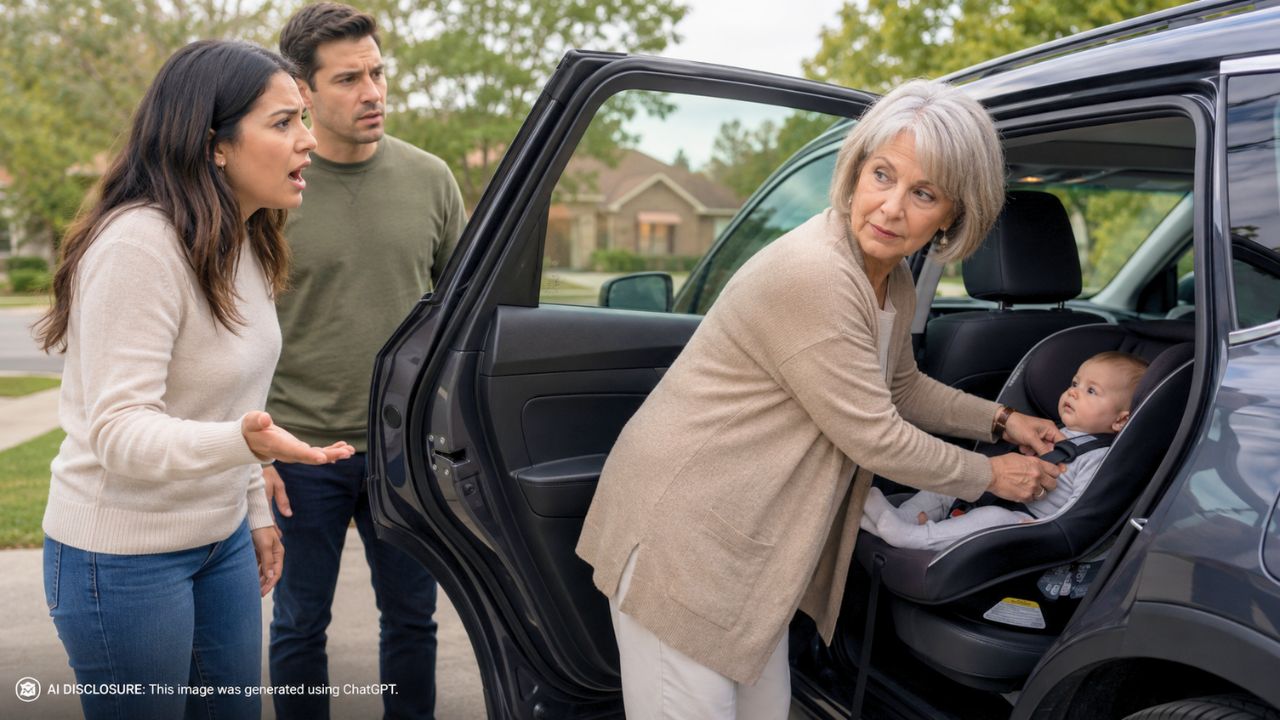
Photo credit: AI-generated image created using ChatGPT. Illustrative only.
It only took a few quiet minutes upstairs for a normal afternoon to turn into every parent’s nightmare. One minute, a grandmother was playing with her 10-month-old granddaughter while the baby’s parents handled a phone call downstairs. The next, the house went silent—and the baby was nowhere to be found.
The family was visiting the grandmother for a few weeks, a long-awaited reunion after pandemic restrictions meant she hadn’t been able to spend time with the child. Everyone was in the same home. Everyone thought everyone else knew where the baby was. And that assumption is what set off the panic.
The moment the house went quiet, everything changed
After wrapping up their call, the parents realized they couldn’t hear the usual upstairs sounds of laughing and play. The baby wasn’t in the living room. The grandmother wasn’t there either.
They checked the backyard. Nothing. Then they noticed something that made the absence feel immediately more serious: the front door was wide open.
At first, it sounded like an easy explanation—maybe grandma was just in the front yard with the baby. But the front yard was empty too.
They searched room by room, then block by block
Once the initial checks came up empty, the search turned frantic. The parents looked through the garage, bedrooms, bathrooms, and the yard again. Still no baby. Still no grandmother.
One detail made the situation even harder to interpret: the stroller was still out front, which made it seem like they hadn’t gone for a walk at all. With no note, no message, and no clue which direction they’d gone, the parents left the house and started canvassing the neighborhood.
They walked down the street calling the grandmother’s name and knocked on neighbors’ doors. Minutes dragged on. The worst possibilities start creeping in when you can’t find your child and you don’t know who has them—or where they went.
It took about half an hour before they finally saw her: the grandmother walking back up the road from a couple blocks away, the crisis ending as abruptly as it began.
“I just went to visit the neighbours,” she said
When the parents asked where she’d gone, the grandmother’s answer was simple. She said she’d gone to visit neighbors up the road.
That explanation didn’t match what the parents had just lived through. The father said he got upset and told his mother she should have told them before leaving the house with their baby.
To him, it wasn’t about whether a short walk was allowed. It was about basic communication: you don’t leave with someone else’s child without saying where you’re going, even if you’re family and even if you mean well.
The grandmother didn’t take it as a safety issue. She took it as an attack. She argued that they were “attacking her” and that it was her right as a grandmother to take her granddaughter for a walk if she wanted to.
The fight wasn’t really about the walk—it was about permission and trust
This wasn’t a scenario where the parents said the grandmother mistreated the baby or put her in danger on purpose. The conflict came from the fact that she disappeared with the child without telling anyone—while the parents were in the same house and believed the baby was upstairs.
That kind of surprise can instantly blow up trust. In a parent’s mind, “gone for a walk” and “missing” can look identical for a long time, especially when the door is open and the stroller is still sitting there.
And once the fear hits, it’s hard to unwind. Even after the baby is safe, the adrenaline lingers, and the question becomes: if she did this once, will she do it again? Will she text next time? Will she assume she doesn’t need to?
The father tried to draw a line: visiting neighbors is fine, but leaving with the baby without telling the parents is not okay “under any circumstances.” That’s where the relationship clash sharpened—grandparent entitlement versus parental authority.
In the telling shared in the original post, the father framed it as a simple rule: if you take the baby out of the house, you tell the parents first. Not after. Not when you get back.
Family members picked sides, and the pressure campaign started
The argument didn’t stay contained to the people who were there. After the confrontation, the wider family got involved, and the household split into camps.
Some relatives agreed with the parents and understood why they were upset. Others called the parents “horrible people” for being angry at the grandmother, insisting she was just doing “grandma things.”
That kind of family pile-on can make it harder to set boundaries, because it reframes a safety rule as disrespect. It also shifts the focus from the baby’s whereabouts to the grandmother’s feelings, as if panic should be apologized for instead of prevented.
For the parents, the issue wasn’t theoretical. They had just spent half an hour searching and knocking on doors, not knowing where their 10-month-old was. When relatives dismiss that experience, it can feel like being told to accept the fear as the price of having help.
What people kept coming back to: a simple heads-up could have prevented all of it
Reactions centered on how easily the scare could have been avoided. One sentence—“I’m taking her to see the neighbors up the road”—would have kept the parents from searching the neighborhood and spiraling into worst-case scenarios.
People also focused on the front door being left open, which added to the sense of danger and confusion. Even if the grandmother considered it a quick visit, the parents were left with an open home and no idea where their child had gone.
Others zeroed in on the grandmother’s framing: calling it her “right” to take the baby. That wording turns a request for communication into a power struggle, and power struggles are exactly how families end up with stricter rules—supervised time only, no outings, or no babysitting at all.
In real life, that’s often the practical outcome. Once trust is shaken, parents don’t usually negotiate with the same flexibility, because the cost of another misunderstanding is too high.
The afternoon ended with the baby safe, but the damage wasn’t just the panic of those missing minutes. It was the realization that in a house full of adults, nobody had a shared plan for where the baby could go—and one person felt entitled to make that decision alone. For many families, that’s the point where “grandma help” stops being casual and starts coming with rules in writing.