Mother-in-Law Wanted Alone Time With the Newborn — Then the Parents Asked Why
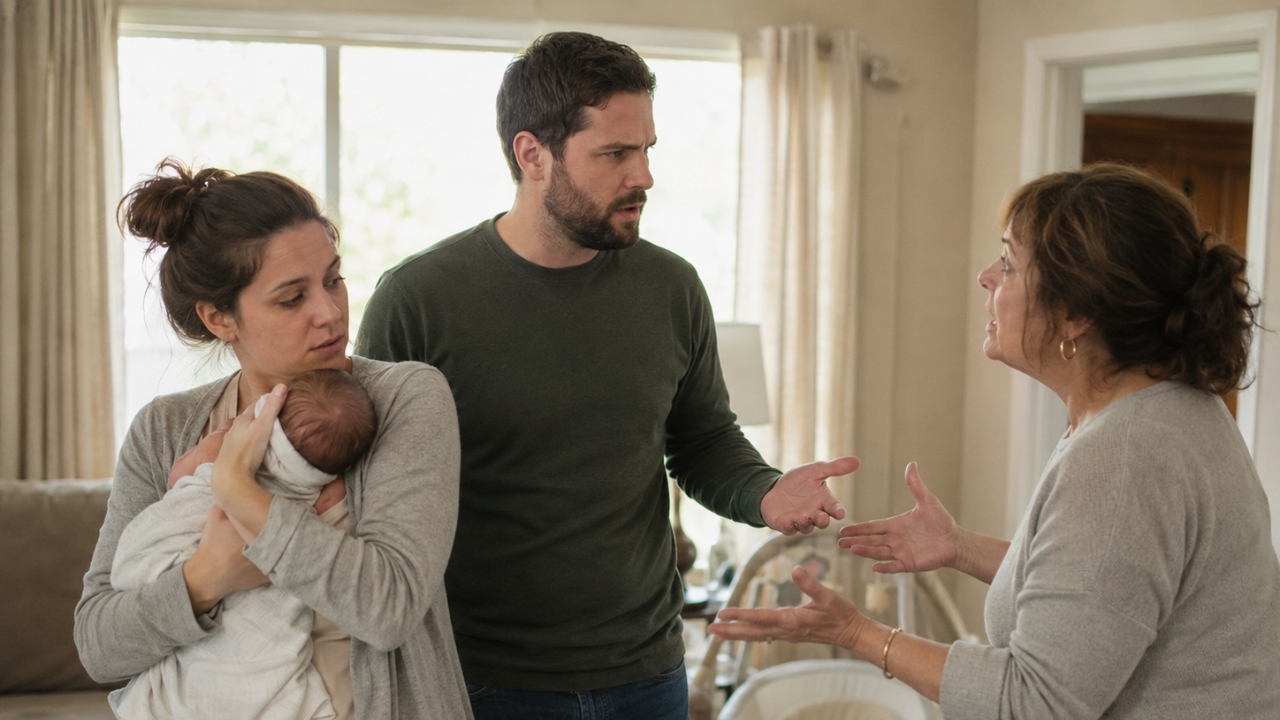
The first few weeks home with a newborn had been loud, sleepless, and strangely peaceful at the same time. The parents were still learning the baby’s cues and trying to keep a routine that didn’t fall apart the second someone knocked on the door. That knock came a lot more often once the baby arrived—mostly from the baby’s grandmother, who lived twenty minutes away and had decided she should be “dropping by” whenever she felt like it.
At first, the visits were framed as help. She’d bring soup, fold a load of laundry, or hold the baby while the parents showered. But after a few weeks, the offers shifted into requests that didn’t sound like help at all—especially the repeated insistence that she needed time alone with the baby, without either parent in the room.
The request wasn’t about helping anymore
It started with small pushes. She’d ask the mother to nap in the bedroom while she stayed in the living room with the baby, then close the door “so it’s quiet.” When the father walked in to grab a bottle, she’d angle her body between him and the bassinet and say she had it handled.
One afternoon, she suggested taking the baby for a short drive “so you two can rest.” The parents said no, explaining they weren’t comfortable with car rides yet and were still waiting on the pediatrician’s go-ahead for longer outings. The grandmother didn’t argue in the moment, but her tone changed, and she started repeating one line: she deserved bonding time without supervision.
The parents didn’t want a fight. They offered supervised visits, more frequent scheduling, and even asked her to pick a weekly day that worked for everyone. She refused the idea of a schedule and kept circling back to the same demand—alone time, in their home, with the newborn.
When the parents asked why, the answers didn’t add up
After the request came up yet again, the father finally asked a simple question: why did it need to be alone? The mother backed him up, trying to keep the tone calm, saying they weren’t accusing her of anything, but they didn’t understand the urgency.
The grandmother’s reasons shifted depending on the day. Sometimes it was about “building trust,” as if the parents were preventing it. Other times she said the baby would “sense anxiety” from the parents and needed to be away from them to calm down. On a different visit she said she wanted to “do the firsts” the parents were missing because they were too tired.
That last explanation landed hard. The parents had been documenting milestones in a shared note and saving first photos, trying to find joy in the haze of feedings. Hearing someone else suggest she should get “firsts” without them present felt less like a grandmother’s excitement and more like a grab for control.
The mother texted after the visit, laying out a boundary in writing: no closed doors, no taking the baby outside or into a different room without a parent, and no unplanned visits. The grandmother responded with a long message about disrespect and how the parents were treating her like a stranger.
Small boundary pushes turned into a pattern
Once the boundaries were in text, the grandmother started testing them. She’d show up early for a planned visit and ring the doorbell repeatedly until someone answered. If the mother said the baby was nursing, she’d claim she didn’t mind waiting inside anyway.
During one visit, she carried the baby toward the hallway and said she was going to change a diaper. The mother followed, and the grandmother tried to shut the nursery door. The mother stopped it with her hand and told her plainly: doors stay open. The grandmother acted embarrassed, then angry, and ended the visit early.
Over the next week, she started calling the father at work, asking him to “talk some sense” into his wife. When he said they agreed on the rules, she accused him of being controlled and hinted that she could “make this very difficult” if they kept pushing her out.
The parents installed a doorbell camera after a surprise drop-by late one evening. The footage caught the grandmother checking the doorknob and pressing her face close to the glass, then walking around the side of the house as if looking for another entrance. When the father called her to ask why she was there at 9 p.m., she said she was worried the baby was sick because nobody answered her texts.
The situation became a safety issue, not just family drama
The real escalation came when the parents found out the grandmother had called the pediatrician’s office. She didn’t have access to the baby’s records, but she’d tried to ask questions using the baby’s full name and birth date, which she knew. The office flagged the call and mentioned it during a routine check-in with the mother, suggesting she add a password to the account.
That prompted the parents to tighten everything: the medical password, the daycare waitlist contact, and the hospital portal. They also told close relatives not to share updates or photos unless the parents posted them first. The grandmother noticed quickly and accused them of turning the family against her.
Then came the uninvited visit when nobody was home. The doorbell camera caught her arriving with a bag, standing on the porch for several minutes, and leaving only after a neighbor walked a dog past the house. A few hours later, the mother received a text saying she’d stopped by to “drop off supplies” and didn’t understand why the parents were making it so hard for her to help.
The father called his mother and said visits were paused until she could respect the rules. The grandmother answered by threatening to seek “grandparent rights,” a phrase she seemed to have picked up online. The parents weren’t sure she understood what it meant legally, but they understood it as pressure, and it made them more cautious about what they put in writing and what they said on the phone.
Commenters focused on documentation and tightening access
When the parents described the situation to friends and a few parenting groups, the reactions were less about feelings and more about prevention. People told them to keep every text, save camera footage, and summarize phone calls in follow-up messages so there was a paper trail. The advice wasn’t to “win” an argument, but to protect themselves if the conflict spilled into something official.
Several people urged them to stop opening the door to unplanned visits entirely, even if it felt rude. Others suggested a basic written visitation boundary: days and times, no closed doors, no transport, and visits end immediately if rules are challenged. A few recommended changing locks if the grandmother had ever had a spare key, and making sure windows were secured since she’d already been recorded walking around the side of the house.
Another common point was the baby’s health and routines. People reminded the parents that newborns aren’t comfort objects, and that the mother’s recovery and the parents’ confidence mattered. The insistence on privacy, they said, was the red flag—not the grandmother’s desire to bond.
The family tried one last controlled reset
After a couple of quiet weeks, the parents offered a reset with clear terms. They proposed meeting in a public place—a coffee shop near a park—so the visit would be naturally time-limited and there would be no closed doors or wandering off. The grandmother agreed, then arrived irritated and asked why they were treating her like a risk.
When she again brought up being alone with the baby, the father repeated the question that had started all of this: what exactly was she trying to do that required privacy? This time, she said she wanted to “prove” she could soothe the baby without the mother stepping in. The mother responded that this wasn’t a competition and that the baby wasn’t a test.
The visit ended early. The parents buckled the baby into the stroller and walked back to their car while the grandmother stood on the sidewalk, calling after them about how they’d regret shutting her out. No one yelled back. The parents drove home, saved the texts that followed, and agreed they’d done enough explaining.
For now, the boundary is simple: no alone time, no surprise visits, and no contact with doctors or childcare providers. The parents are tired, but they’re also clearer than they were at the start. They can’t control what the grandmother believes she deserves, but they can control who has access to their newborn—and under what conditions.