Brother Sold His Own Share of the Inherited Land Against the Family’s Advice — Then Demanded Half of Hers, and She Refused
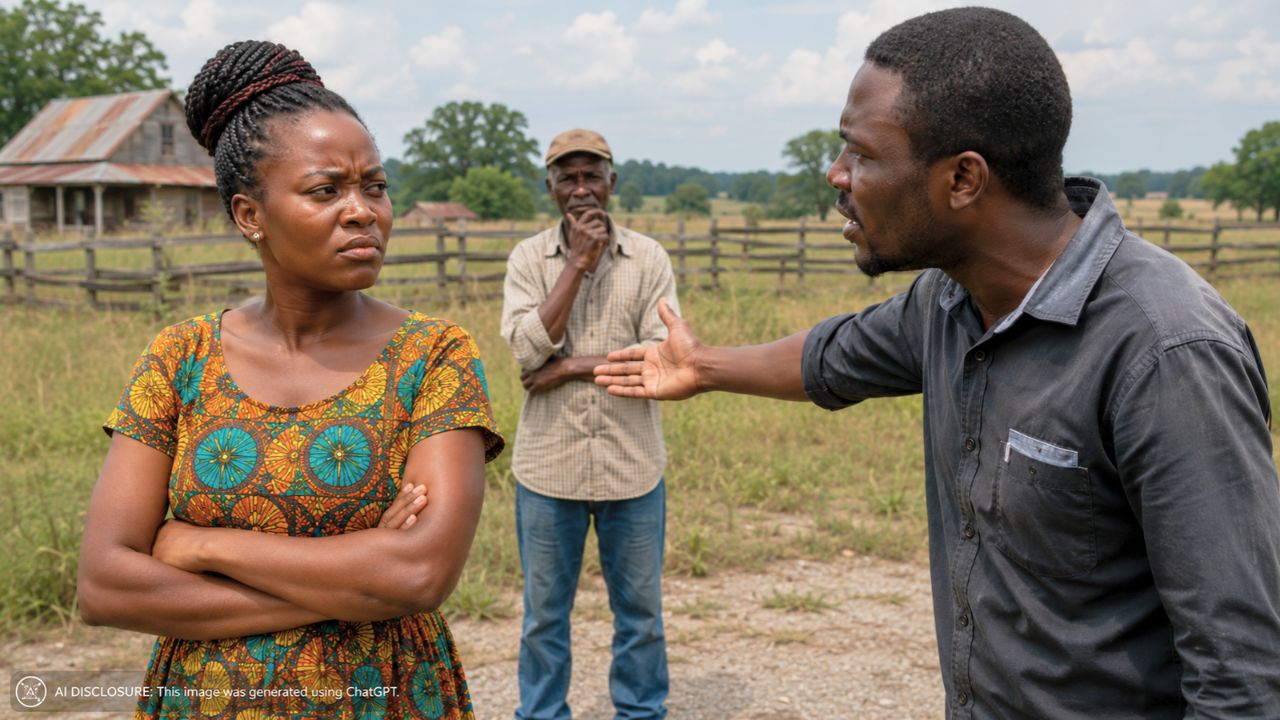
Photo credit: AI-generated image created using ChatGPT. Illustrative only.
Family can turn a man into his best self, and it can also make him do some strange math. A woman in Kenya inherited a portion of her grandfather’s land alongside her two brothers. Years later, her younger brother sold his share against everyone’s advice, lost the money on a failed business, and then demanded half of hers to “start again.” She said no.
The details come from the original discussion, and they read like a case study in entitlement, cultural pressure, and the way families sometimes treat a single woman’s future as negotiable. The land was already subdivided with title deeds, so this wasn’t a legal fight so much as a relational one. And those are often harder, because the weapon isn’t paperwork—it’s guilt.
Her situation isn’t unique to Kenya, either. Put a piece of inheritance, a struggling sibling, and a mother who’s trying to keep the peace in the same room, and you’ll see the same script in a lot of places. The names and customs change, but the temptation stays the same: sacrifice the responsible person to rescue the irresponsible one.
A bad decision doesn’t become your bill
The younger brother had land. He chose to sell it, and by her account he sold it for a low price, betting on a “promising” business idea that failed within months. That’s painful, and most decent people feel compassion for a man who took a swing and missed.
But compassion doesn’t mean rewriting ownership. If every consequence can be transferred to the nearest responsible sibling, you don’t have a family—you have a bailout system. And bailout systems don’t create men; they create dependents who get more confident with every rescue.
There’s a difference between helping your brother and handing him your future. A little support while he finds work is one thing. Handing over half your inheritance—permanently—is another category entirely.
The quiet insult: “You’re not married, so you don’t need it”
Her mother started pressuring her with the line that hits a lot of women like a slap: since she isn’t married yet, she “doesn’t need that much land anyway.” That idea isn’t just unfair; it’s revealing. It treats her life as a waiting room, and her assets as temporarily stored until a man shows up.
Even if she does marry someday, why would that erase her stewardship? A wise family wants a daughter to have stability, options, and a stake in something that can’t be taken overnight. Land—especially inherited land—isn’t just property. It’s security, leverage, livelihood, and legacy.
And if we’re being honest, the pressure often isn’t really about “need.” It’s about whose future the family takes seriously. A son who made a foolish decision is still treated as the rightful owner of tomorrow, while a daughter who planned carefully is told to loosen her grip.
Land isn’t just land in a lot of cultures
One of the most practical pieces of counsel she received came from her older brother: don’t let the younger brother move onto her land “even temporarily.” In her culture, she explained, once a man starts living on land, boundaries become difficult to enforce later—especially for a woman trying to hold the line.
That’s not paranoia; it’s pattern recognition. Possession is persuasive, and families are easily manipulated by visible facts. A brother puts up a small structure, then he’s “already there.” He starts improving it, then it becomes “his sweat.” He brings a wife or children, and now you’re the villain for wanting him out.
She also explained why her younger brother couldn’t simply build on the older brother’s portion. There are cultural markers of territory and claim, including the first house a man builds to establish his place. The specifics were local, but the principle is universal: once you mix households, property, and entitlement, you’ve got a mess that rarely stays small.
The older brother’s restraint was strategy, not cowardice
Some readers wondered why the older brother wasn’t publicly defending her from the beginning. Her update clarified something worth noticing: the mother, younger brother, and relatives were approaching her privately, trying to keep it “between them,” as if the decision could be extracted quietly before anyone else weighed in.
When she asked her older brother directly, he said nobody involved him from the start, but he was on her side. He also saw the angle: isolate the sister, apply emotional pressure, and if she gives in, it’s done. No family council. No pushback. No chance to reconsider.
That’s how plenty of bad family decisions get made. Not with a big argument at the table, but with hallway conversations, whispered guilt, and “just be the bigger person” rhetoric. If you’re the one being cornered, you need to recognize the play and bring it back into the light.
Stewardship means saying “no” without a speech
One comment she latched onto was simple: “No is a complete sentence.” That’s not just internet bravado; it’s a practical tool. Over-explaining invites negotiation, and negotiation invites people to treat your “no” like the beginning of a conversation instead of the end of a request.
She had plans for the land—build a house, start farming, use it within the next couple of years. Those aren’t selfish plans; they’re responsible ones. A person who is building a future shouldn’t be ashamed of needing the resources to do it.
If the younger brother wants land again, the hard but honorable path is work. He can earn, save, and repurchase (even if the price has gone up, as she said happened when they tried). That’s adulthood. Losing money hurts, but it can also teach a man the kind of lessons that keep him from repeating the same mistake with a bigger stake.
Helping without enabling: support has to have shape
In her update, she said she and her older brother decided to send monthly support to their mother and younger brother while they figure things out. That’s generous, and it may be the best available option given the family dynamics. But it’s also the sort of arrangement that needs clear edges, or it can quietly become permanent dependency.
The younger brother, she noted, isn’t working at the moment and says he’s “redirecting.” Fair enough—failure can rattle a man. Still, “redirecting” can turn into drifting if nobody expects him to get up, take whatever honest work he can find, and rebuild his confidence the slow way.
If you’re the brother reading this, the lesson isn’t “never help.” It’s “help in ways that don’t reward irresponsibility.” Groceries for a month while he job-hunts is help. A roof while he stabilizes is help. Surrendering half your inheritance because he demanded it is not help; it’s surrender.
What integrity looks like in a family fight
This woman’s decision to keep her inheritance wasn’t cold; it was clear-eyed. She didn’t mock her brother’s failure, and she didn’t pretend it wasn’t painful to resist her mother’s pressure. She simply refused to let someone else’s choices become her penalty.
There’s a spiritual layer here without turning it into a sermon: stewardship matters. What you’re given—land, money, responsibility, opportunity—isn’t only for your comfort. It’s something you’ll answer for in how you used it, protected it, and passed it on. And sometimes protecting it means disappointing people who are used to you folding.
Families heal more often through honesty than through appeasement. If the younger brother is ever going to become the kind of man who can keep land, he first has to become the kind of man who can live with the consequences of selling it.
She chose a hard “no” now, so she wouldn’t be forced into a bitter “why did I do that?” later. That’s not selfishness. That’s wisdom, and it’s the kind that keeps a future intact.
Read more from Thrive Girly:
- Mother-in-Law Expected to Sleep Over After Every Visit — Then the Mom Said Overnight Stays Were No Longer an Option
- Relatives Showed Up to the Wedding Without Being Invited — Then the Couple Refused to Find Them Seats
- Grandma Buckled the Baby Into Her Car and Left Without Telling Anyone — Then the Mom Made Sure It Never Happened Again