In-Laws Kept Breaking the Two Basic Rules for Babysitting the Baby — Then the Parents Stopped Letting Them Watch Him Alone
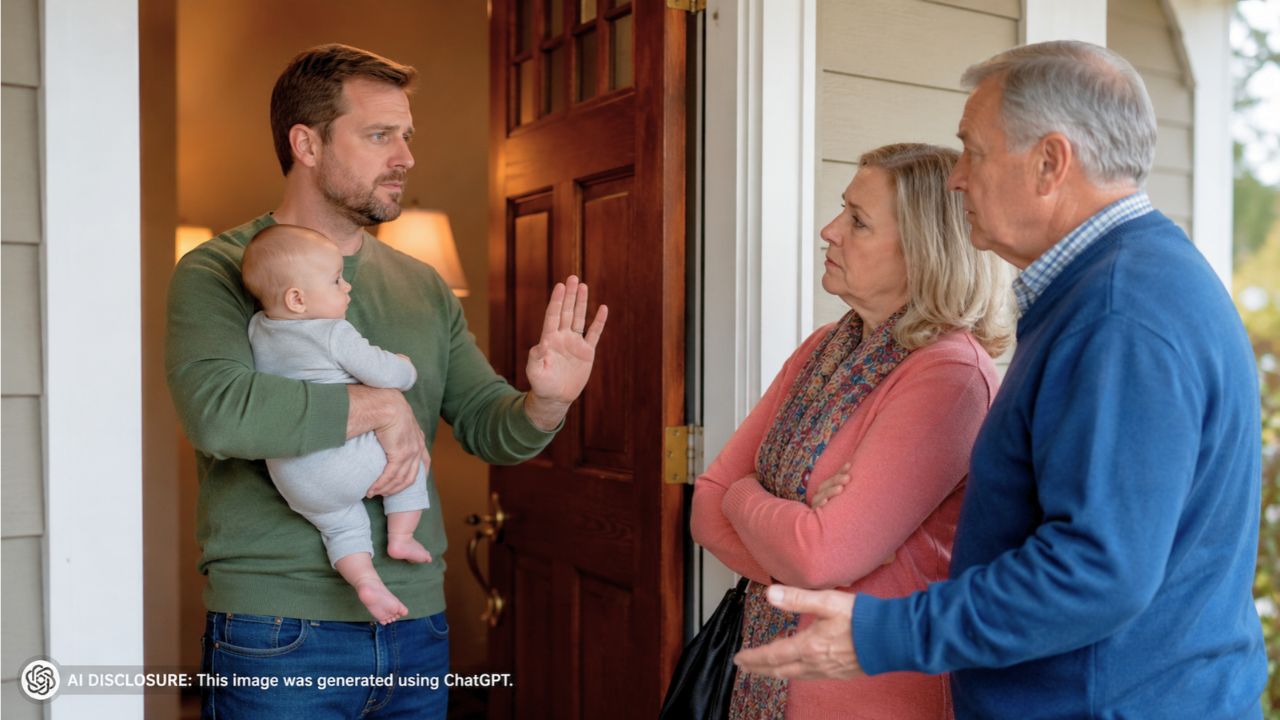
Photo credit: AI-generated image created using ChatGPT. Illustrative only.
There’s a special kind of frustration that hits a dad when the “help” you’re offered comes with a side of disregard. You’re not asking for perfection. You’re asking for two basic rules to be followed, because a baby can’t advocate for himself and you’re the one who answers to God for how you steward that little life.
In the original post, a father lays out two clear boundaries for his in-laws when they babysit: no kissing the baby (grandma gets cold sores), and no co-sleeping (he’s walked in multiple times to find grandpa asleep on the couch with the baby). On top of that, he suspects they may be feeding the child food the parents haven’t approved of, based on weird bowel movements after their weekends. The result is predictable: the parents keep saying “no” to babysitting requests because the rules aren’t being honored.
Now the tension moves from “Do we trust them?” to “How do we handle this without blowing up the family?” The dad wants to put a camera in the in-laws’ living room before they’re allowed to babysit again. His wife thinks that’s too harsh and worries her parents will take it badly, while he’s about ready to escalate it to the wider family and get the grandparents lectured.
Two rules, and both are about safety
These aren’t picky preferences like “only beige wooden toys” or “no screen time before age three.” One rule is about preventing a virus transmission risk, especially if someone is prone to cold sores. The other rule is about sleep safety, because an adult falling asleep with a baby on a couch is the kind of situation that can go sideways fast.
It’s also telling that both rules are simple. “Don’t kiss the baby” and “don’t fall asleep with the baby” are not complicated instructions that require a parenting philosophy degree. When those get ignored repeatedly, you’re not dealing with a misunderstanding; you’re dealing with a character issue—either carelessness, stubbornness, or a need to prove they’re still in charge.
What repeated boundary-breaking really communicates
Most family conflicts aren’t about the first offense. They’re about the pattern, and the attitude that comes with it. The father describes multiple times catching the grandparents breaking the rules and then acting like it isn’t a big deal.
That “no big deal” posture is the part that should bother you as a husband and a dad. It says, “Your concerns are optional,” and, “We’ll do what we want as long as you’re not watching.” A lot of men try to keep the peace by minimizing things, but peace built on ignoring real problems isn’t peace—it’s just a delay.
The weekend babysitting request isn’t neutral
The grandparents want weekend babysitting, and the parents keep declining. That’s already the natural consequence of ignored boundaries, even if nobody says it out loud. A babysitting arrangement is built on trust, and trust doesn’t survive repeated violations.
There’s also a practical side here: weekends are often the only time a young family can catch its breath. If your “break” turns into a stress spiral—checking your phone, wondering what’s happening, worrying about safety—then it’s not help. It’s an additional load you’re carrying, just in a different form.
The father also notes that his own mother babysits at their house, not hers, because her house has many pets and doesn’t feel safe. That detail matters because it shows the standard isn’t “my family gets special treatment.” The standard is “the baby’s safety comes first,” even if it inconveniences people.
Cameras: a tool, not a replacement for trust
A camera can give peace of mind, and plenty of households use them for totally normal reasons. In this situation, though, a camera in someone else’s living room isn’t just a tool—it’s a message: “We don’t trust you.” The wife is probably right that her parents will take it badly, because it’s hard not to take that personally.
But the hard truth is they’ve already earned mistrust. The dad isn’t proposing surveillance because he’s bored; he’s proposing it because they’ve been caught doing the very things they were asked not to do. If they want the privileges of being trusted caregivers, they have to act like trustworthy caregivers.
Still, it’s worth saying plainly: cameras don’t fix a heart problem. If grandparents are determined to do whatever they please, they may comply only when the lens is on them. Then you’re not building trust; you’re enforcing compliance. That might be necessary for a season, but it’s not the same thing as restored confidence.
What needs to happen before babysitting happens again
The situation doesn’t call for vague “please be more careful” conversations. It calls for a clear line: “If you kiss the baby again, you won’t babysit.” “If you co-sleep again, you won’t babysit.” Not as a threat, but as a boundary with an actual consequence.
The father is already doing the consequence part by saying no to weekend babysitting, but the in-laws seem to treat that as negotiable. It may help to name the reason directly, without drama: “We’ve said no because the rules haven’t been followed. We can’t leave him alone with you until we’re confident those rules will be respected.”
On the food concern, he only suspects it based on bowel changes, so it should be handled carefully. It’s fair to say, “We’re only doing the foods we approve right now, and we need you to stick to that.” If they get offended by that, it’s another signal that they’re prioritizing their feelings over the parents’ instructions.
Husband and wife have to be aligned, even if it’s uncomfortable
This is where a lot of men get into trouble: the temptation to go around your wife because you feel more urgency than she does. The father wants to “snitch” and involve great grandma for a lecture. That might feel satisfying, but it also risks turning a safety issue into a family politics issue, and those are hard to unwind.
The wife is in a tough spot because it’s her parents. She likely feels the pull of loyalty, fear of conflict, and maybe even some old patterns where her parents’ reactions still carry weight. The husband’s job isn’t to shame her for that; it’s to protect his child and lead his home with steadiness.
Alignment doesn’t always mean both spouses feel the same intensity. It means you agree on the standard and the plan. A solid next step is a private conversation where the couple decides what “babysitting again” would require, what the consequences are, and who is going to say it out loud. If the wife is the one delivering the message to her parents, it often lands better, but the husband still needs to be clearly supportive and present.
A more workable option than a camera in their living room
If the in-laws truly want time with their grandchild, there’s a middle ground that protects the baby without installing a camera in someone else’s house. The parents can offer supervised visits, or babysitting at the parents’ home where the existing cameras are already in place and expectations are easier to maintain.
That approach also reduces the chance of couch naps and “oops” kisses that happen in the comfort of their normal routines. It’s not punishment; it’s structure. And it quietly communicates: access to the child is a privilege, not an entitlement.
If the grandparents respond with humility—“We understand, we’re sorry, we’ll follow the rules”—trust can be rebuilt over time. If they respond with anger and accusations, that’s painful, but it clarifies the real problem. A grown adult who can’t accept basic safety rules for a baby isn’t ready to be alone with that baby.
Fatherhood forces a man to pick between being liked and being responsible, and sometimes you don’t get to be both on the same day. The wisest path here isn’t revenge, embarrassment, or family tribunals; it’s calm, united leadership from the parents and firm boundaries that don’t wobble under pressure. If the grandparents want the joy of caring for their grandson, they can start by honoring the mother and father God put in charge of him.
Read more from Thrive Girly:
- Mother-in-Law Expected to Sleep Over After Every Visit — Then the Mom Said Overnight Stays Were No Longer an Option
- Relatives Showed Up to the Wedding Without Being Invited — Then the Couple Refused to Find Them Seats
- Grandma Buckled the Baby Into Her Car and Left Without Telling Anyone — Then the Mom Made Sure It Never Happened Again