Sister-in-Law Wanted the Designer Outfit Gifted at Her Wedding — Then the Bride Said No
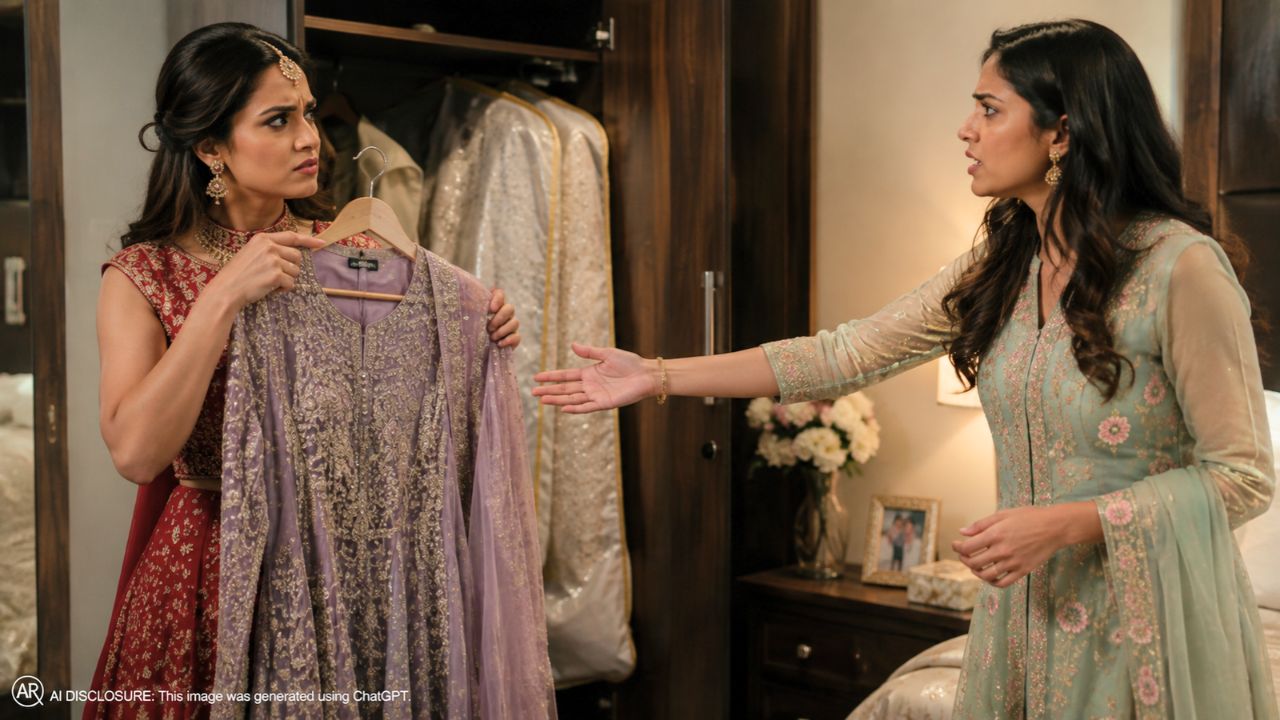
Photo credit: AI-generated image created using ChatGPT. Illustrative only.
There’s a particular kind of family tension that shows up right after a wedding. Everybody’s tired, everybody’s adjusting, and somebody always decides it’s time to test the new pecking order. In this situation, the test came disguised as a “small favor” involving a designer outfit.
In the original post, a newly married woman explains that her maternal aunt gave her a formal designer suit as a personal wedding gift. Weeks later, her sister-in-law was helping organize clothes, spotted the suit, and asked to have it for an upcoming wedding she planned to attend. The bride declined, offered to lend other items, and suddenly the request turned into a family issue.
If you’ve been around long enough, you recognize the pattern: a simple “no” gets treated like a character flaw. And because it’s family, the pressure doesn’t usually come as a direct threat—it comes as guilt, hints, and “keeping the peace” speeches.
A wedding gift isn’t community property
A wedding can make people act like the couple just received a shipment of public supplies. “You got so much stuff, what’s one more thing?” sounds reasonable until you realize what’s being asked. This wasn’t a coat the bride found on clearance last year; it was a personal gift from her aunt, given specifically to her as the bride.
Gifts have meaning beyond the price tag. Sometimes they’re practical, sometimes sentimental, sometimes both. Keeping a meaningful gift isn’t greed; it’s normal stewardship of something that was entrusted to you, especially when you haven’t even had the chance to wear it once.
The ask wasn’t “Can I borrow it?”—it was “Can I have it?”
If the sister-in-law had asked to borrow the suit for a weekend, that’s a different conversation. Even then, the bride could still say no, but at least borrowing implies return and care. The request here was to keep it, because it would look great at another wedding.
That’s not a need; that’s preference dressed up as entitlement. And entitlement usually comes with a script: act offended, accuse the other person of selfishness, and recruit an authority figure to apply pressure. Which is exactly what happened when the mother-in-law stepped in with the “nice gesture” angle.
“Keep the peace” is how bad expectations become permanent
The mother-in-law’s argument is familiar: give it up to build goodwill in your new home and avoid friction early in the marriage. It sounds wise, but it’s often a trap. If “goodwill” means surrendering personal boundaries whenever someone pouts, you’re not building peace—you’re teaching people how to get what they want.
Healthy families don’t run on quiet resentment and forced concessions. They run on respect, clear expectations, and the ability to handle disappointment without turning it into a drama. If the first months of marriage include a lesson that the new wife must pay “peace offerings” to avoid conflict, that’s not a small issue. That’s a foundation problem.
Where the husband went passive, and why it matters
The husband “staying out of it” is understandable on paper and harmful in practice. He’s trying to avoid choosing sides, but marriage doesn’t allow permanent neutrality. His wife is being pressured to give away a personal gift, and his private suggestion is basically, “Maybe just do it so everyone calms down.”
A man doesn’t need to pick a fight with his sister to lead well here. He just needs to stand beside his wife and say something simple: “That was a gift to her, and she’s keeping it.” That’s not harsh; that’s clear. If he can’t do that early, this same pattern will repeat with holidays, parenting decisions, money, and time.
There’s also a quiet respect issue. When a husband stays passive while his wife is being leaned on, she learns she’s alone in the room. And the extended family learns they can bypass him and negotiate directly with her through pressure. That’s a miserable dynamic, and it grows if you feed it.
Boundaries don’t have to be rude, but they do have to be firm
The bride’s response was measured: she offered to lend other clothes and even help find something else. That’s generosity without surrender. The sister-in-law didn’t simply accept the “no” and move on; she escalated it into a moral accusation—calling the bride selfish and implying she’s hoarding gifts.
When someone reacts like that, the issue isn’t the suit anymore. The issue is whether “no” is allowed. A firm boundary in a calm tone is often the most loving thing you can do, because it forces the relationship to operate on honesty instead of manipulation.
If this situation comes back around, the best responses are short and boring. “I’m not giving it away. I’m happy to help you pick something else.” No long explanations. No courtroom defense. Explanations invite debate, and debate is exactly what an entitled person wants.
What the suit represents: respect, not fabric
It’s tempting to argue about the value of the suit, because “designer” adds heat to the conversation. But even if it were a simple dress, the principle is the same. Respect means you don’t shop in someone else’s closet and then accuse them of selfishness for wanting to keep their own things.
There’s also a relational line here: this was a gift from the bride’s side of the family, from her aunt, specifically for her. That matters because family gifts often carry affection and personal intent. Handing it over to satisfy an in-law’s preference isn’t “sharing.” It’s treating someone else’s kindness like a resource to redistribute.
A mature family understands the difference between being generous and being coerced. Generosity is voluntary. Coercion is “If you loved us, you’d do this.” The second one poisons relationships over time, even if everyone smiles in the moment.
A cleaner way to handle the in-law pressure
If the bride wants to keep the relationship workable, she can stay polite while refusing the premise. A helpful script is: “I’m grateful you like it, but it’s important to me, and I’m keeping it. I can help you find a great outfit for the wedding you’re attending.” That’s respectful and final.
For the mother-in-law’s “goodwill” comment, the answer can be equally calm: “I do want a good relationship, and I’m happy to be generous. But I’m not giving away personal wedding gifts.” Notice what that does—it separates kindness from compliance.
And for the husband, this is a moment to grow up a little. He can speak to his sister and mother directly without making it a big scene. “Stop asking her for the suit. She said no. Let’s move on.” If he wants peace, that’s how you get it—by cutting off the drip of ongoing pressure, not by sacrificing his wife’s boundaries.
Keeping the suit doesn’t make the bride selfish. It makes her an adult who understands that a marriage can’t be built on appeasement, and an extended family can’t be kept healthy by pressuring the newest member to surrender meaningful things. The suit is just the first test; the real question is whether this family can handle a respectful “no” without turning it into a loyalty trial.
Read more from Thrive Girly:
- Mother-in-Law Expected to Sleep Over After Every Visit — Then the Mom Said Overnight Stays Were No Longer an Option
- Relatives Showed Up to the Wedding Without Being Invited — Then the Couple Refused to Find Them Seats
- Grandma Buckled the Baby Into Her Car and Left Without Telling Anyone — Then the Mom Made Sure It Never Happened Again