Woman Leaves Her Incarcerated Husband — Then His Family Starts Pressuring Her to Stay

Photo credit: Andrey_Popov/Shutterstock.com
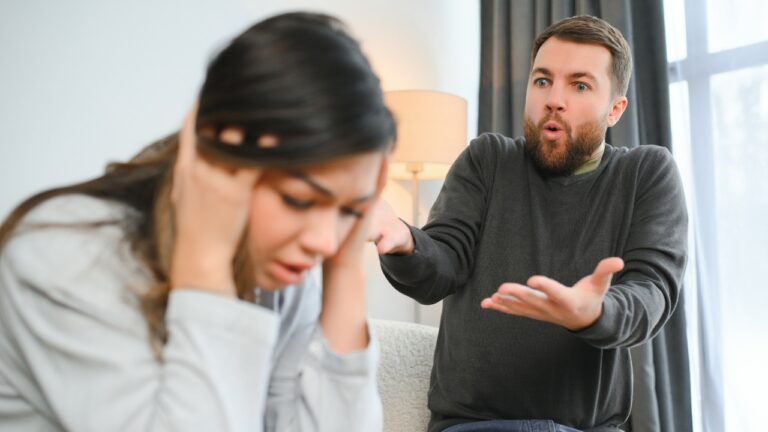
A woman in her mid-20s said she filed for divorce while her husband was in prison for a felony, and almost immediately, the guilt started closing in.
Her husband accused her of abandoning him at his lowest point. His family treated her like she was being disloyal. And after years of being told she was exaggerating, she started wondering if she really was wrong for finally choosing herself.
According to the Reddit post, the marriage had not been stable long before he went to prison. She worked, went to school, and tried to keep everything moving while he claimed he was “looking for jobs.” The problem was that he refused to apply for anything he thought was beneath him, including retail and fast food, even though they needed money.
When they both had jobs, she said things had once felt like a partnership. But after he stopped working, the balance disappeared. She carried the financial load while his grandparents helped her with money because he would not step up.
That alone would have been exhausting. But the money was only part of it.
She said he tried multiple times to meet up with other women and even tried to pay for sex, while barely showing interest in her. His so-called “brother” had even tried to set him up with other women. They fought about it constantly, and each fight seemed to drain a little more from the marriage.
When she tried to leave, he used fear to pull her back.
He threatened suicide. He cried about abandonment. She said she believes in mental health support, but after a while, those threats stopped feeling like cries for help and started feeling like a trap. She became scared he might hurt himself, hurt her, or hurt someone she cared about.
The fear was not abstract.
She described incidents where he waved a gun during arguments. In later comments, she said arguments would end with him waving a gun in her face, and that he seemed to use the weapon to prove he was masculine. He also took a gun to a friend’s house because he did not trust the friend, even though she had asked him to leave it at home. She said he was not even supposed to have it.
Over time, she became isolated.
She said she did not really have friends because he did not want her going out with anyone, male or female. He would ruin events with his attitude, and eventually they stopped being invited. Her world got smaller until work, school, and surviving the relationship seemed to take up everything.
Then he went to prison.
At first, she did not immediately frame it as the end. She told him she wanted to come back about a month before he got out so they could sit down calmly and decide whether to stay together or divorce. He twisted that into telling everyone she was leaving him.
His family reacted hard.
They told her that if she stepped onto his grandparents’ property, where they had lived, she would be arrested. That was especially painful because while she was gone, her family in that state had been helping maintain the yard and house for the grandparents, making sure things stayed okay.
Then they put her belongings on the street.
The woman said almost everything inside that house had been bought by her: furniture, beds, couch, utensils, and daily necessities. His main concern, she said, was his video games. His family threw out personal items, hobbies, and even certificates from school and work. Those certificates represented effort and progress she had made while trying to build a life, and they were gone.
That was what pushed her to file.
Her husband accused her of being with another man because she did not “wait a full year.” Meanwhile, she said she had spent double shifts and long college hours trying to cope with how unhappy she was. Even phone calls with him from prison became tense. If she was helping someone at work or talking to someone at school while on the phone, he would get aggressive, huff, and hang up.
When she finally told people she was leaving, their reaction shook her.
They congratulated her.
That was not what she expected. She thought she might be judged or told to stand by him. Instead, people who had watched from the outside seemed relieved. That made her realize how bad the marriage must have looked to everyone else.
She said that for four years she had felt small, controlled, lied to, isolated, and mentally drained. And once he was incarcerated, she felt lighter.
In the update, the divorce was officially granted on March 27, 2026. She changed her name back to her maiden name, moved across the country with her dogs, got her own one-bedroom apartment, and started working full time at a hospital.
She said life had been treating her well. She felt more at peace, more independent, and finally able to move forward. She had restarted with very little — a few clothes, her dogs, and what she could rebuild — but she was safe.
The online support helped her see the situation differently. For years, she had been trained to question herself. Once she got space, and once strangers bluntly named what she had lived through, the fog started lifting.
Her husband’s prison sentence may have been the thing that gave her enough distance to leave.
But the marriage had been over long before the cell door closed.
Commenters were overwhelmingly relieved that she got out. Many said the incarceration was not the main reason to leave. The bigger issue was the pattern of control, isolation, financial refusal, threats, and fear.
A lot of people focused on the gun. Commenters said waving a weapon during arguments was not a small sign of insecurity or masculinity. To them, it was a threat, and they were deeply worried about what could happen when he eventually got out.
Several also told her to protect her new location. They urged her to change her number, lock down social media, avoid giving her address to anyone connected to him, and be careful because his family had money and might enable him.
Others were furious that his family threw away her belongings and personal records. Some suggested legal action for illegal eviction or property loss, but the woman said she was too tired and too broke to fight it. She wanted to focus on safety, school, work, and rebuilding from scratch.
The strongest reaction was that she was not abandoning him. She was escaping him. And after years of being controlled, threatened, and blamed, commenters saw the divorce as the first real peace she had been allowed to choose.