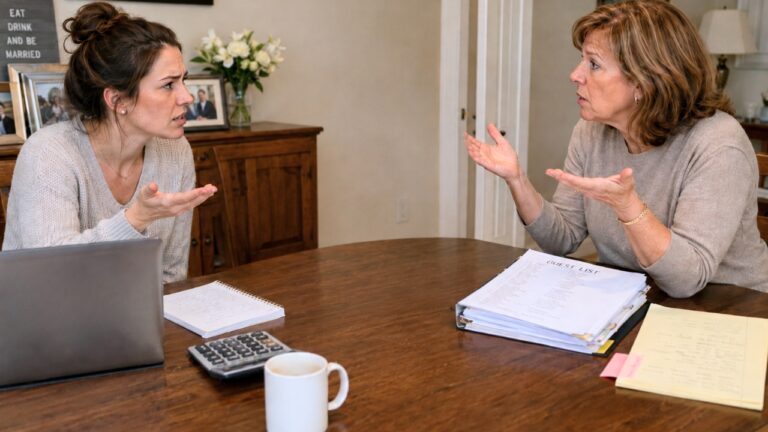
Mother-in-Law Shoved Her While She Was Holding Their Newborn — Then the New Mom Refused to See Her Again Until She Took Accountability
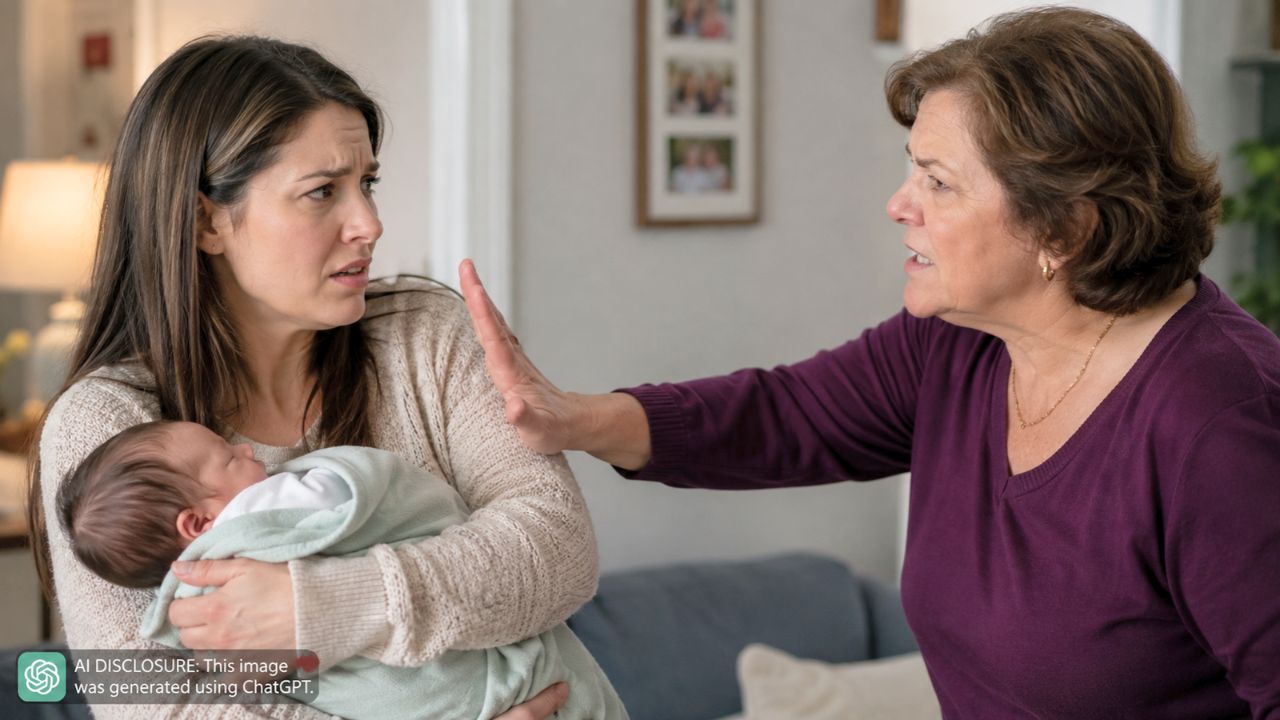
Photo credit: AI-generated image created using ChatGPT. Illustrative only.
There are plenty of awkward family moments you can smooth over with time, a phone call, and a little humility. But once someone lays hands on a new mother while she’s trying to take her baby back, we’re in a different category. That’s not “miscommunication.” That’s a safety issue, and it’s the kind of thing that tells you exactly who you’re dealing with.
In the original post, a 33-year-old mom says she gave birth in early November and, after a C-section, decided to stay home for Thanksgiving to heal. She claims her mother-in-law took that personally, made a remark about not understanding interracial relationships, and later exploded over not receiving daily baby photos. The confrontation escalated until the mother-in-law allegedly shoved the new mom while holding the newborn, pulled the baby away, and insulted her.
Months later, the mother says she still hasn’t received a real apology. Her husband wants an in-person conversation to “discuss things,” but she’s refusing to meet face-to-face until his mother takes accountability for both the physical incident and the racial comment she says was made. That refusal is now creating serious strain in the marriage.
A postpartum home isn’t a stage for family politics
A C-section isn’t a minor inconvenience; it’s major surgery followed immediately by the demands of caring for a newborn. A wise family treats those early weeks like sacred ground: keep things simple, keep things calm, and don’t make the new parents manage everyone else’s feelings. Staying home for Thanksgiving under those circumstances isn’t antisocial—it’s responsible.
The hard part is that some parents and in-laws don’t hear “we’re healing” as a neutral statement. They hear, “you’re not in charge anymore.” And once someone decides the baby is their emotional property—something they deserve access to on demand—every boundary starts to feel like an insult.
The racial comment isn’t a side issue
The mother says her mother-in-law complained at Thanksgiving that she “doesn’t understand interracial relationships or why people do them.” Even if it was said in frustration, it reveals a mindset that’s going to touch everything: respect, trust, and how she talks about the child behind closed doors. A biracial baby doesn’t need relatives who see his family as a concept to critique.
It also puts the husband in a defining moment. A man can’t build a stable home if he treats racism as an awkward detail to work around. If his wife is telling him, “Your mother said something ugly about our marriage and our child,” the right response isn’t to minimize it for the sake of family peace. Peace that’s purchased with your wife’s dignity isn’t peace; it’s surrender.
Putting hands on a mother while holding the baby changes everything
The most alarming detail is the physical escalation: the mother says she stood up calmly, approached, and asked for her baby back. The mother-in-law allegedly shoved her while still holding the child and pulled the baby away. Even if you try to imagine the most generous interpretation—high emotions, defensiveness, panic—that’s still reckless with an infant in her arms and aggressive toward the child’s mother.
Men understand this in other contexts right away. If a stranger shoved your wife while holding your newborn, you wouldn’t schedule a “conversation” to hear both sides. You’d be thinking about safety, access, and consequences. Family doesn’t get a special pass to behave worse than outsiders.
And there’s another layer: refusing to hand a baby back to the mother is a power move. It’s a way of saying, “I decide. I control. You don’t.” That can’t be brushed off as a one-time blowup, because it reveals what she reaches for when she’s not getting what she wants.
Accountability isn’t a vibe, it’s specific
The mother says she tried to address it later via text and was met with defensiveness: denial about the racial comment and a pivot into how the mother didn’t smile when she arrived. That’s a familiar tactic—ignore the major offense, then prosecute the smaller “tone” issue. It keeps the offender in the judge’s chair and forces the injured person to keep pleading their case.
A real apology has a few basic ingredients: clarity about what was done, ownership without excuses, and a commitment not to repeat it. “I’m sorry you felt that way” isn’t an apology. Neither is “I’m sorry, but you didn’t smile” or “I was upset because you didn’t send photos.” Those are negotiations, not repentance.
If the mother-in-law wants an in-person conversation, the first step is simple: acknowledge the shove, acknowledge refusing to hand back the baby, and acknowledge the insult. The second step is consequences she’s willing to accept—limited contact, no holding the baby for a while, whatever the parents decide is necessary. Without that, an in-person meeting can turn into a pressure session where the couple is expected to “move on” so everyone else can feel comfortable again.
The husband’s job is to protect his home, not manage his mother’s image
The husband wants to meet in person, and on paper that can sound mature. But there’s a difference between seeking peace and avoiding the discomfort of confrontation. Some men push for “a talk” because they’re hoping everyone will act civil in the room, the emotions will soften, and they won’t have to draw a hard line.
His wife is telling him she doesn’t feel safe and doesn’t trust his mother. She has reasons: the alleged physical incident, the alleged slur, and the refusal to own either one. If he responds by insisting she sit down with the person who harmed her before that person has apologized, he’s placing his mother’s preferences over his wife’s security.
A husband doesn’t need to become hostile or dramatic to lead here. He needs to be clear. “Mom, you shoved my wife while holding our baby. You called her a name. You also said something offensive about our marriage. Until you can take responsibility, we’re not doing in-person talks and you won’t be visiting.” That’s not cruelty. That’s fatherhood.
Access to the baby is earned through trust
The mother-in-law reportedly feels “not welcome” in the new mom’s home but expects the mother to bring the baby to her. That expectation doesn’t make sense if she’s unwilling to rebuild trust. You don’t get to treat someone badly in their home and then demand they travel to yours as a show of respect.
Grandparenthood is a gift, not a right you can collect by guilt. If a grandparent can’t respect the mother, they’re not safe to be around the child—because sooner or later the child will watch how she’s treated and learn what’s normal. A healthy family culture requires basic honor: speak with decency, keep your hands to yourself, and accept “no” without retaliation.
If there’s any path forward, it likely starts smaller than an in-person showdown. A written apology that names the behavior. Agreement on boundaries. Supervised visits if the parents allow them. And a firm understanding that yelling, insults, or physical aggression ends contact immediately. Those aren’t threats; they’re guardrails.
Some families recover from painful moments, and some don’t. But nobody heals by pretending a shove and a slur are just holiday drama that needs a nicer conversation. A man who wants his marriage to last will choose clarity over comfort, and he’ll insist that reconciliation requires repentance, not pressure.
Read more from Thrive Girly:
- Mother-in-Law Expected to Sleep Over After Every Visit — Then the Mom Said Overnight Stays Were No Longer an Option
- Relatives Showed Up to the Wedding Without Being Invited — Then the Couple Refused to Find Them Seats
- Grandma Buckled the Baby Into Her Car and Left Without Telling Anyone — Then the Mom Made Sure It Never Happened Again