MIL Took Credit for Naming Her Granddaughter in Front of the Whole Family — Then the Mom Corrected Her on the Spot
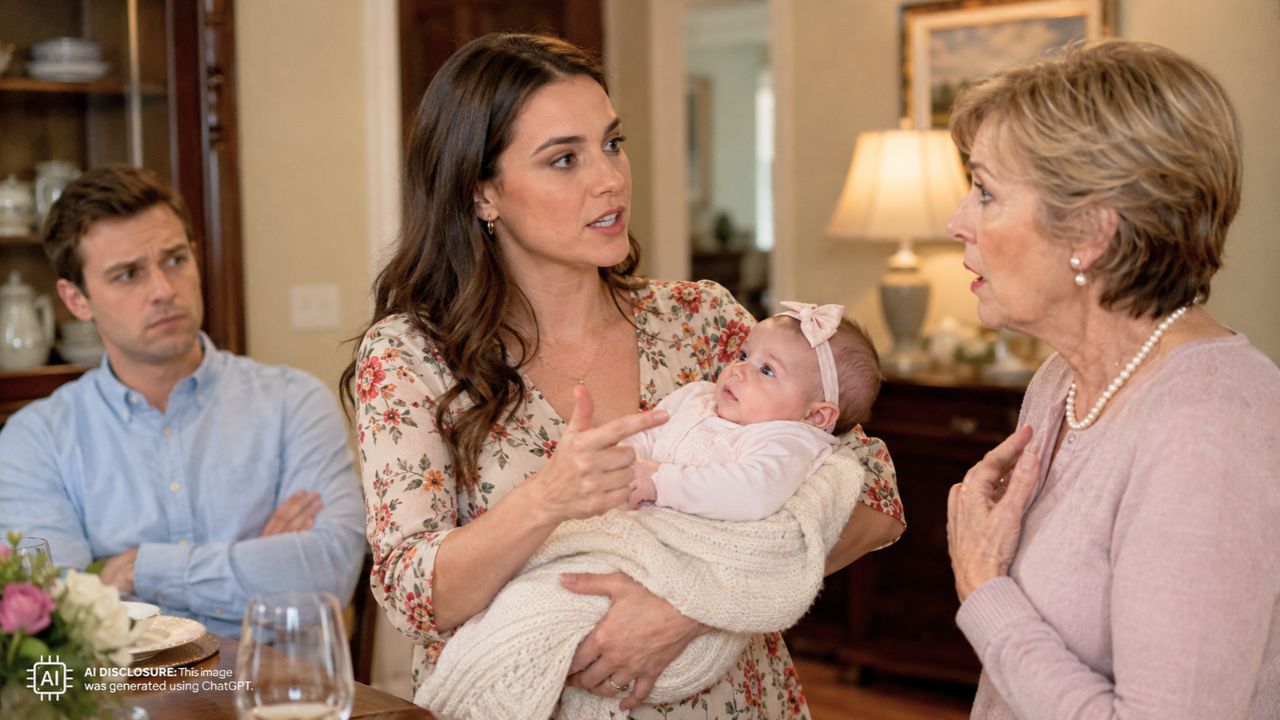
Photo credit: AI-generated image created using ChatGPT.
Family gatherings have a way of turning small things into big things, especially once a baby is involved. A compliment turns into a story, a story turns into a claim, and before you know it, someone’s rewriting history over a casserole.
In the original post, a mom of an 11-month-old says she and her husband picked their daughter’s name from a popular book/movie franchise they both love. She remembers her mother-in-law questioning pronunciation and spelling early on, but not recommending anything. Later, at a family dinner, the sister-in-law praised the name and credited the mother-in-law for choosing it, and the mother-in-law didn’t exactly rush to correct the record.
The mom, stunned, corrected it on the spot and asked her husband to back her up, which he did—uncomfortably. The mother-in-law responded with the kind of line that sounds nice until you hear what it’s doing: naming is a “collective family effort.” Afterward, the husband agreed his wife was right, but said she’d been tactless and picked the wrong time and place. The mother-in-law stayed upset, and the mom was left wondering if she crossed a line by insisting on the truth.
How this kind of “credit grab” happens
Some families have a habit of treating milestones like shared property. A wedding becomes “our wedding,” a house becomes “the family house,” and a baby can slowly get treated like the newest community project. The intent isn’t always malicious; sometimes it’s just a person trying to feel important in a season where they’re no longer the central decision-maker.
But claiming credit is different than simply feeling included. In this case, the mother-in-law didn’t just say she liked the name; she let other people believe she recommended it, then doubled down with a “we all pitched in” explanation. That’s not a warm grandmotherly moment. That’s a subtle power move, whether she means it that way or not.
Why the mom corrected her immediately
If you’ve ever watched someone take credit for something you carried, you know the heat that rises in your chest. For this mom, the name wasn’t random; it was “very dear” to her, tied to a character she loved, and it was chosen with her husband because they both cared about it. Names are personal, and for a lot of mothers, they’re wrapped up in pregnancy, hope, fear, and all the invisible work of becoming a parent.
So when the sister-in-law praised the name as the mother-in-law’s good choice, it wasn’t just a factual error. It was a public moment where the mother-in-law got crowned for something she didn’t do, while the actual parents sat there smiling politely. Correcting it wasn’t petty in the mom’s mind; it was refusing to be edited out of her own story.
The husband’s position: right on facts, nervous about fallout
The husband backed his wife up in the moment, but he did it “uncomfortably,” and later told her she was tactless. That’s a pretty common male response in family tension: confirm the truth, then try to smooth the room back into something quiet. He wasn’t arguing the facts. He was managing the emotional weather.
It’s understandable, but it’s not neutral. When a husband frames his wife’s public correction as the main problem, he can accidentally teach his family that peace matters more than honesty, and his mother’s mood matters more than his wife’s dignity. He may not mean to, but these little moments become patterns fast.
“Names are a collective family effort” is the real issue
That line is the hinge of the whole story. Of course grandparents can suggest names, and some couples love input. But “collective family effort” implies shared authority, and that’s not how marriage and parenthood work. The parents carry the responsibility, so they get the final say, and they deserve the credit for their decisions.
What makes this especially tricky is that it’s packaged as something sentimental. Who wants to argue with “family togetherness”? But if you translate it into plain language, it sounds more like: “I’m entitled to be seen as influential here.” That’s not unity. That’s someone trying to stay in the driver’s seat after the keys have changed hands.
Was the correction necessary, or did it need a softer touch?
There are two separate questions: was she right, and was she wise? On the facts, she was right, and even her husband agreed. If you’re going to correct a false claim, doing it in the moment prevents it from hardening into “the story we tell” for years.
On the delivery, the mom herself wondered if she pushed too hard by repeating it a second time. It’s possible. A clean correction can be brief and calm: “Actually, I picked that name because I love the character, and we both agreed on it.” Once you start pressing for corroboration and circling back, it can feel like a courtroom, even if you’re justified.
Still, the mother-in-law also had an easy off-ramp. She could’ve smiled and said, “Oh no, that was her favorite from the start—I just liked it.” She chose not to. When someone refuses the graceful exit, you can’t carry all the blame for the awkwardness that follows.
The bigger risk: letting small lies become family law
If this had been about a dessert recipe, you could let it slide and live your life. But credit-taking around a child is rarely a one-time thing. First it’s the name. Then it’s “she got her temperament from our side.” Then it’s “I told them how to feed her.” It’s a slow creep where grandparents become co-parents in the storytelling, and then they want it in real life, too.
The mom’s instinct to draw a line early makes sense. It’s easier to correct a narrative at 11 months than at 11 years, when the whole extended family has been repeating the same version of events like it’s tradition. A family’s stories shape a family’s pecking order, and people fight for their spot in them.
How a couple can handle the next gathering like grown adults
The immediate work isn’t about the name anymore; it’s about alignment. The husband needs to decide whether he’s primarily a son managing his mother’s feelings, or a husband protecting his household’s integrity. He doesn’t have to be rude, but he does need to be clear, because passivity is just delayed conflict.
A practical way forward is a private conversation with the mother-in-law where the husband leads. Something simple: “Mom, we’re glad you love her name, but we chose it. Please don’t present it as your recommendation.” No long speeches, no character assassination, just a boundary. If she’s embarrassed, that’s not the couple’s job to fix with more silence.
And for the mom, it helps to decide ahead of time what tone she wants to carry. She can be firm without making every correction feel like a showdown. A calm voice, a short sentence, and then moving on communicates strength better than a prolonged argument does.
Families don’t fall apart because someone corrected a baby-name story. They fall apart when people learn that truth is negotiable and that the person most willing to sulk gets to set the rules. This mom wasn’t wrong to correct the record, and her husband wasn’t wrong to want less bitterness, but he’s aiming at the wrong target. The real fix is a united couple, clear boundaries, and the humility—on the mother-in-law’s side—to enjoy being a grandmother without needing to be the author of everything.
Read more from Thrive Girly:
- Mother-in-Law Expected to Sleep Over After Every Visit — Then the Mom Said Overnight Stays Were No Longer an Option
- Relatives Showed Up to the Wedding Without Being Invited — Then the Couple Refused to Find Them Seats
- Grandma Buckled the Baby Into Her Car and Left Without Telling Anyone — Then the Mom Made Sure It Never Happened Again