Her Mom Made Her Childhood Miserable — Then She Decided Her Mother Would Have No Place in Her Daughter’s Life

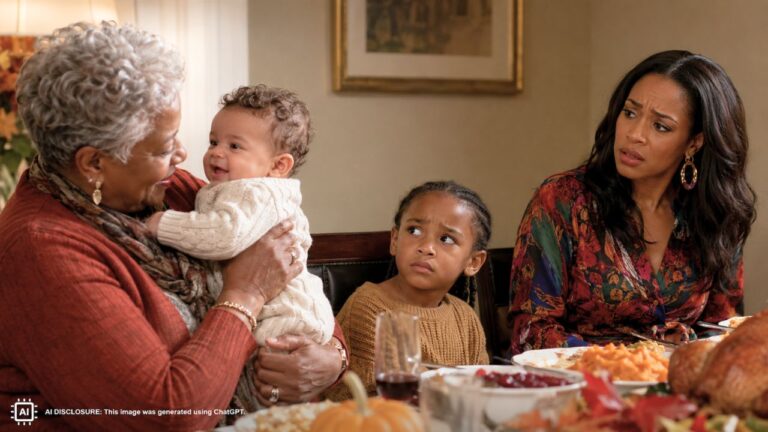
Photo credit: AI-generated image created using ChatGPT. Illustrative only.
At 23, she should be thinking about nursery colors and baby names. Instead, she’s bracing for the phone calls, the guilt trips, and the familiar feeling that her needs will come last—because she’s pregnant with a little girl, and she’s already made one decision her family can’t stop arguing about.
She doesn’t want her mother in her daughter’s life. And after everything she says she lived through, she doesn’t see that as punishment—she sees it as protection. In the original post, she laid out the history that got her here, and why “but she’s grandma” isn’t convincing her to open the door again.
The problem started long before the pregnancy
She says she grew up feeling like the odd one out in her own home. She’s the oldest of three, but she describes her childhood like she was the one always getting singled out—excluded from family events, yelled at “over everything,” and treated like the family punching bag.
She’s not pretending she was a perfect kid. She admits she had a bad temper and lashed out when she got angry, but she also points out something important: she was still a child. A child who needed help, not a steady stream of blame.
Now, she’s been in therapy for years, including currently. She says she’s worked hard to take accountability for her own behavior and become healthier, which makes her next point hit harder: she’s done the work, but she doesn’t feel like her mom has.
Moving out didn’t erase what she was taught at home
When she turned 18 and moved out, she tried to keep things civil. No dramatic explosion, no grand goodbye—just distance and an attempt to make it work in a calmer way.
But she says the way she was raised didn’t stay in the past. It showed up in how she moved through adulthood: apologizing constantly because she assumed she was always wrong, being afraid to speak up or ask questions, and feeling like any mistake would get her yelled at.
She even says there were basic things she struggled with because she never learned them growing up. It’s the kind of detail that makes her story feel less like one big argument and more like a life shaped by years of walking on eggshells.
She asked for answers—and got blamed instead
Eventually, she sat down with her mom and asked why things were the way they were. She says she wasn’t trying to attack her—she wanted understanding, maybe even closure.
Her mom’s response was blunt: she “tried her best,” but her daughter was “too difficult of a child” to deal with. For the woman who spent her childhood feeling like the problem, it sounds like that conversation confirmed her worst fear: that her mom still sees her pain as something she deserved.
And then, when she opened up to her boyfriend and a few close friends about parts of her childhood—enough to explain why she struggles with anxiety and why certain situations are hard—her mom found out and got angry.
According to her, her mother told her she had no right to tell anyone about her childhood. Her mom also claimed she had “a very active imagination,” and insisted that whatever happened “happened in the past,” so she needed to let it go.
That wasn’t just hurtful. It was a denial of her reality, and it turned a private attempt to heal into something her mother treated like betrayal.
Then her mom pulled the siblings into it
She tried to explain that trauma doesn’t vanish because someone orders you to move on. She wanted acknowledgment so she could find some peace.
Instead, she says her mom told her siblings that she doesn’t love her anymore and that she’s trying to make her out to be a terrible mother. That’s when the situation stopped being just between them and became a full-family split.
Her brother has distanced himself from her completely because she cut contact with their mom. And with that, her choice wasn’t just “I need space.” It came with a price tag: losing a sibling relationship, or at least watching it fade into something cold and distant.
It’s hard to miss the pattern in what she describes. When she speaks up, she gets framed as dramatic. When she tries to explain herself, she gets labeled difficult. When she sets distance, other relatives get recruited to pressure her back into line.
Pregnancy turned the pressure up overnight
Now she’s pregnant with her first child—a little girl—and her family is pushing for a reunion. The argument they keep offering sounds simple: her daughter deserves a relationship with her grandmother, and she should put the past aside.
But her fear is just as simple. She doesn’t know if her mom would treat her daughter the way she treated her, and she’s not willing to gamble her child’s emotional safety on hope and a title.
She’s not saying she wants her daughter to grow up without extended family. She actually says the opposite: she’d love for her daughter to have loving grandparents in her life. She just doesn’t believe every grandparent is automatically entitled to that relationship, especially when they haven’t taken responsibility for how they treated their own child.
And that’s where the family is calling her cruel. Because in their minds, this is about forgiveness, tradition, and keeping the family intact. In her mind, it’s about preventing the next generation from inheriting the same pain she’s spent years trying to untangle.
The family isn’t arguing about one choice—they’re arguing about the story
Underneath the fight about access to the baby is a bigger fight about reality. She says she lived a childhood of exclusion and constant yelling, and she’s still dealing with the effects. Her mother, on the other hand, dismisses her account as imagination and insists she should stop talking about it.
That difference matters, because it’s hard to build a safe relationship with someone who won’t even admit what happened. And it’s even harder to trust them with a child when they’ve shown they’ll rewrite the past, recruit other family members, and punish you socially for speaking up.
For her, this isn’t about revenge. It’s about refusing to hand her daughter the same role she was given: the kid who gets labeled “too difficult” instead of cared for.
She’s still pregnant, still in therapy, and still watching her family draw lines in the sand. She may not be able to control what her relatives think of her, but she can control who gets close to her child. And right now, she’s choosing peace—even if it comes with silence from people she once hoped would understand.
Read more from Thrive Girly:
- Mother-in-Law Expected to Sleep Over After Every Visit — Then the Mom Said Overnight Stays Were No Longer an Option
- Relatives Showed Up to the Wedding Without Being Invited — Then the Couple Refused to Find Them Seats
- Grandma Buckled the Baby Into Her Car and Left Without Telling Anyone — Then the Mom Made Sure It Never Happened Again