Her Boyfriend’s Mom Expected Hospital Access for a Baby That Wasn’t Hers — Then She Wasn’t Allowed to Meet the Newborn There
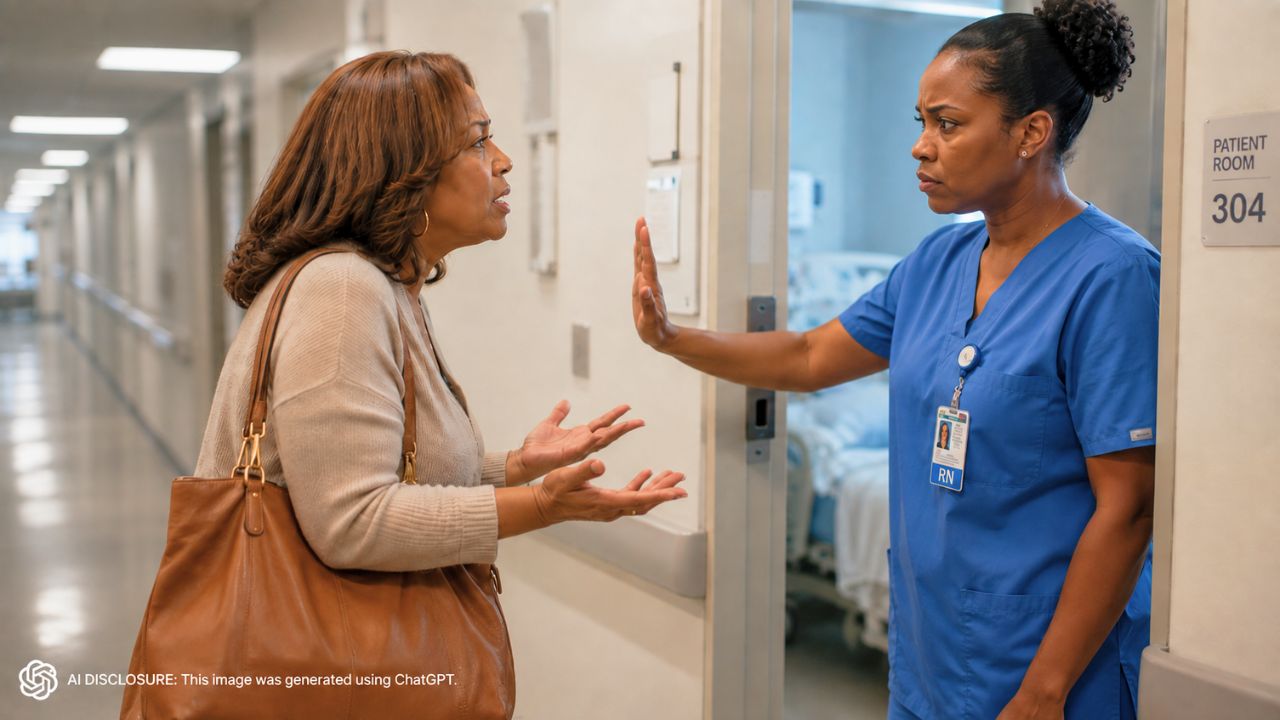
Photo credit: AI-generated image created using ChatGPT.
A newborn doesn’t fix a broken family dynamic. It just turns the volume up on whatever was already there, especially if the people involved are used to getting their way through pressure, guilt, and a well-timed tearful phone call.
In the original post, a 35-year-old mother pregnant with her third child says she’s planning to ban her boyfriend’s mother from the hospital after delivery. The catch is that this “MIL” has a long history of ignoring boundaries, stirring conflict, and keeping an unusually tight connection with the boyfriend’s ex-wife and the ex’s daughter—who the boyfriend isn’t even related to by blood. Now the due date is near, the grandmother expects access, and the mother is asking whether grief over a recent death in the grandmother’s family should change the plan.
It’s not a light decision. A hospital room is a vulnerable place, and childbirth is not a spectator sport. But it’s also not nothing to block a grandparent from meeting a baby in the earliest hours, especially in a family already strained by loyalty tests and old resentments.
When a “granddaughter” becomes a wedge
The mess didn’t start with the hospital. It started years earlier, with a strange ongoing bond between the boyfriend’s mother and the boyfriend’s ex-wife’s daughter—a child the poster says is “100% not his child,” conceived before that marriage began. The boyfriend’s mother still watches that child, and, according to the mother-to-be, she pushed that relationship hard from the beginning.
From the outside, it can look like a grandmother with a soft spot for a kid who needs stability. But in the story as told, it doesn’t stop there. The ex allegedly escalated to harassment and even tried to get the new girlfriend fired after learning the relationship was serious, which turned “odd family connection” into “active threat.”
Boundaries that only count when they’re convenient
So the couple did what most grown adults do when life gets complicated: they set boundaries. The mother says they asked to be notified if the ex and the child would be at family events. They also didn’t want the ex’s child at their home or on their boat, and they didn’t want their kids watched alongside the ex’s child, partly because they didn’t want their children pulled into confusing relationships and partly out of fear of liability if the ex caused trouble.
Those boundaries sound strict, and some families would bristle at them. But strict doesn’t automatically mean wrong, especially after a person has already tried to damage your livelihood. The bigger problem is what happened next: the boyfriend’s mother reportedly agreed, then repeatedly disregarded the agreement over the next four years.
There are few things more exhausting than someone who “agrees” in the moment but treats your limits like suggestions. It forces you to keep re-litigating the same issue, and every re-ligation wears the couple down. That’s usually the point.
The moment the couple stopped being a team
The breaking point, in her telling, came at a family event where the ex showed up. The couple left early, and the boyfriend himself expressed wanting to go. On the ride home, the poster thought they were aligned: they should’ve been notified so they could decide whether to attend.
Then the script flipped. She says her boyfriend suddenly framed her as overreacting, and the conflict shifted from “your mom broke the boundary again” to “you’re the problem.” The boyfriend and his mother had a dinner to “clear the air,” and the mother-to-be felt like the bond between them got stronger while her relationship weakened.
This is where men tend to fail in predictable ways. A lot of us will do almost anything to avoid the discomfort of confronting our mother, and we’ll call it “keeping the peace.” It isn’t peace; it’s outsourcing the cost to the woman we share a home with.
Pregnancy, stress, and a woman running out of margin
The poster describes a rough season: pregnant with baby three, managing health problems, raising two kids, working full-time, and keeping up with the house while family tension escalated. She mentions previous miscarriages and fear of losing this baby, which adds a heavy layer of anxiety to an already stretched situation.
She also describes going to weekly therapy and, for a time, reaching the point where she was ready to sell the house and move on. That’s not a dramatic flourish; that’s what it looks like when someone’s margin is gone. When a person has no margin, the hospital becomes less like a “special moment” and more like a final exam of safety and control.
Then came a hard conversation with the boyfriend where he started to understand her perspective, and they began repairing the relationship. That matters, because the issue isn’t only the grandmother’s behavior. It’s whether the father will protect his household, even when protection costs him something emotionally.
A sit-down that revealed the real posture
When the mother-to-be met with her boyfriend’s mother to talk, she expected a difficult but constructive conversation. Instead, she says the older woman arrived angry and contemptuous and made statements like she was “no longer part of the family,” things would “never go back” to how they were, and the couple would “never make it.” The poster left in tears, believing her family was about to split.
Ironically, that blow-up seems to have been the moment the boyfriend finally saw what she had been experiencing. She says he recognized a darker side to his mother, a “mask slip,” and since then they’ve kept contact minimal. The grandmother has watched their children only a few times with agreement from both parents, but the trust is still damaged, and the poster says she feels pressure to “get over it” even though the grandmother hasn’t apologized.
“I shouldn’t have said that” isn’t an apology. It’s a person admitting they leaked the truth out loud, not that the truth itself was wrong.
Hospital access is a privilege, not a right
Now to the question at hand: should the grandmother be allowed at the hospital after delivery? The mother’s instinct is no, because she expects to be vulnerable and doesn’t want someone there who spikes her anxiety. She also feels the grandmother has shown “no care” for her, their family, or the baby during this pregnancy.
Here’s the plain, unromantic reality: the patient gets to decide who has access. Not the grandmother, not the extended family, and not a boyfriend trying to smooth things over. Childbirth is a medical event, and postpartum is a physically and emotionally raw window. If the mother anticipates stress and conflict, she’s not being petty by minimizing it; she’s being responsible for her health.
There’s also a practical angle that men need to respect. The hospital isn’t the only time to meet the baby. If a grandparent can’t handle “not right now,” that’s not love for the child talking. That’s entitlement.
Grief doesn’t erase patterns, but it should shape tone
The complicating detail is that the grandmother’s mother recently passed away. The poster wonders if that loss should factor into the decision. It should factor into the tone, not the boundary. Grief can make people more fragile, more reactive, and more likely to lash out, and that’s exactly why a delivery room isn’t the place to test-drive reconciliation.
Compassion doesn’t require access. You can acknowledge someone’s pain, send food, express condolences, and still keep the hospital quiet and protected. If anything, a fresh loss is another reason to keep expectations simple and avoid emotionally loaded scenes.
If there’s going to be a path forward, it probably starts after the baby is home, the mother is rested, and both parents can set a clear, calm plan: first visits, time limits, rules about photos and sharing, and what happens if disrespect shows up again. That’s not punishment; that’s stewardship of a fragile season.
Families heal when adults act like adults. If the father wants to rebuild trust, this is one of those moments where he chooses his household with his actions, not just his words, and he does it without theatrics. A new baby deserves a peaceful entrance, and the mother deserves to recover without bracing for someone else’s moods.
Read more from Thrive Girly:
- Mother-in-Law Expected to Sleep Over After Every Visit — Then the Mom Said Overnight Stays Were No Longer an Option
- Relatives Showed Up to the Wedding Without Being Invited — Then the Couple Refused to Find Them Seats
- Grandma Buckled the Baby Into Her Car and Left Without Telling Anyone — Then the Mom Made Sure It Never Happened Again