Ex Stopped Managing the Dog’s Ongoing Medical Care After the Breakup and the Dog Went Missing — Then She Refused to Return Him
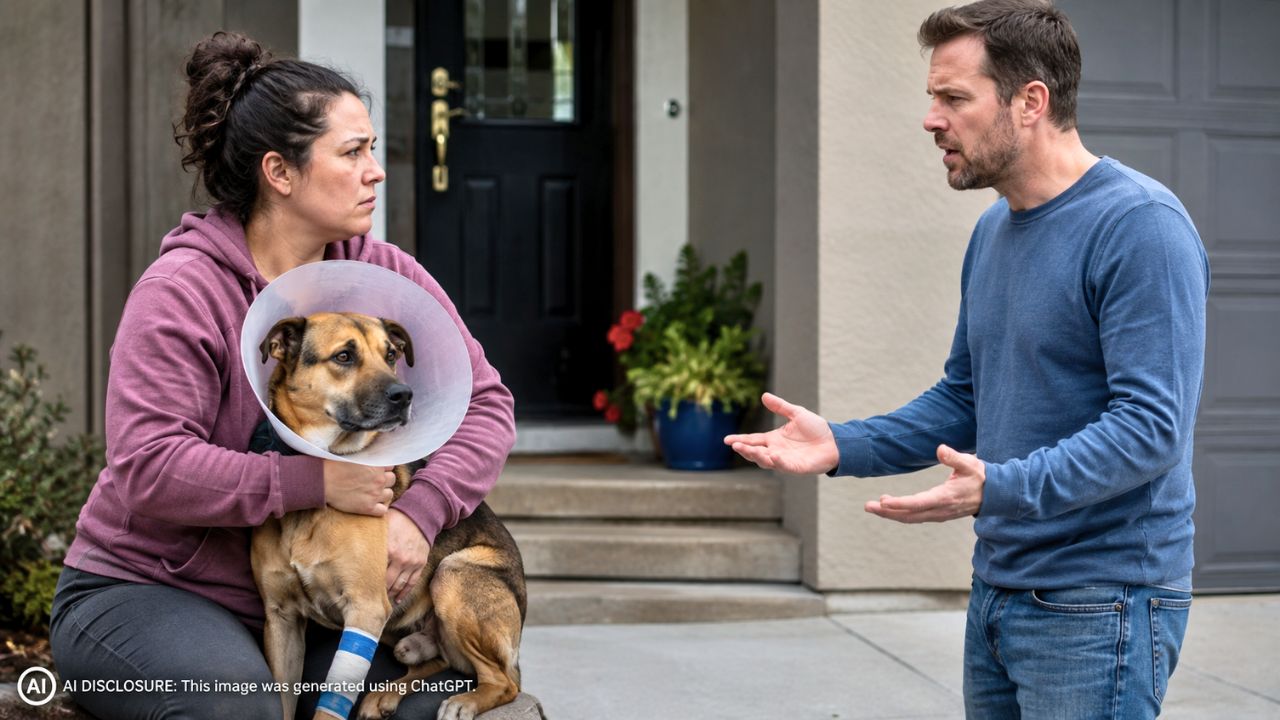
Photo credit: AI-generated image created using ChatGPT.
Breakups have a way of turning ordinary responsibilities into contested territory. You’re not just dividing furniture and deciding who keeps the Netflix password. You’re trying to untangle a shared life without letting something living and dependent get caught in the middle.
That’s the knot at the center of the original post: after a long-term relationship ended, one partner took the cats and initially let the ex keep the dog. But as the weeks went on, she grew increasingly uneasy—especially because she works in veterinary medicine and had always handled the dog’s care, including ongoing treatment for a chronic skin condition.
Then the dog went missing. A few days later, another vet called her because she was listed as the primary contact on the microchip. She picked the dog up and decided not to return him, citing welfare concerns. Now the ex is accusing her of stealing, and her own mother is urging her to give the dog back just to calm things down.
A dog isn’t a couch you can split down the middle
It’s easy for people on the outside to talk about “fairness” like we’re dividing up tools in a garage. But a dog isn’t property in the simple sense, even if the law sometimes treats it that way. A dog is a daily commitment with needs that don’t pause because you’re tired, heartbroken, or out late blowing off steam.
In this case, the dog isn’t just young and energetic. He has ongoing skin issues that require consistent care—medicated baths, monthly injections, topical treatments, and steroids during flare-ups. That’s not a “do it if you get around to it” situation. That’s a routine, a watchful eye, and the kind of consistency that some people can provide and others honestly can’t.
The caretaking gap shows up fast after a breakup
During a relationship, couples often slide into unspoken roles. One person becomes “the medical one,” the schedule keeper, the one who remembers the flea and tick meds, the vet appointments, the shampoo that actually works. The other person may love the dog just as much, but love isn’t the same thing as competent follow-through.
After the separation, the poster describes coming and going to pick up belongings and seeing issues firsthand. The dog was reportedly without food or water on extremely hot days (around 38°C). There was also destructive behavior—chewing, pulling palings off the patio railing—which can be a sign of boredom, stress, excess energy, or being left alone too long. She says she raised concerns calmly, but nothing changed.
A lot of men don’t like being told they’re not handling something well, especially by an ex. Pride flares up, and instead of adjusting, they dig in. But if a dog is going without water in high heat, pride needs to take a back seat to basic stewardship.
The schedule problem isn’t a character indictment, but it is a reality
The ex works late hours as a chef, sometimes until 1 or 2 a.m., and often goes out drinking after work. Plenty of hardworking men are in that industry, and late shifts don’t make someone a villain. Still, a late-night lifestyle does put pressure on routines—especially routines that require consistency, like medical care and a stable environment for a young dog.
If you’re getting home after midnight, and then you’re out again, a dog can end up alone for long stretches. Even if the dog gets fed most days, the margin for error gets thin. The poster’s concern wasn’t only companionship. It was that the dog’s condition requires ongoing monitoring and regular treatment, and that the household rhythm didn’t seem built to provide it.
A responsible man looks at his life as it is, not as he wishes it were. If your schedule is chaos, you either build a system to care for what’s under your roof, or you admit you’re not the best home for that responsibility right now. Neither option is shameful. Pretending is the part that gets ugly.
The microchip detail matters because it’s about prevention, not revenge
The microchip is one of those unromantic details that becomes very romantic the moment you need it. In this story, the poster says she is the primary contact on the dog’s microchip, with the ex as secondary. It was done openly during the relationship, not secretly after the breakup.
She also says she told him clearly—on the day he broke up with her—that she would not change the microchip or ownership details into his name unless and until she was confident the dog’s needs were being met. That’s not “going behind his back.” That’s stating terms, plainly, ahead of time.
Some will hear that and think it sounds controlling. Others will hear it as a protective boundary for an animal with documented, ongoing medical needs. The difference usually comes down to whether you believe the dog’s welfare is truly at risk, or whether you think this is just heartbreak wearing a lab coat.
The missing-dog moment forced the issue
The dog escaped and went missing on Christmas Day after the poster finished a 13-hour shift. The ex contacted her for help, and she did what she could while still working. She also believed that because she was the primary microchip contact, she would be the first person called if the dog was found.
A few days later, another vet called and said they had the dog. She immediately collected him and, consistent with what she had told her ex earlier, did not return the dog to the property due to her concerns.
This is the part where people tend to simplify it: “He had the dog, so give the dog back.” But the dog going missing isn’t a small detail. Dogs escape sometimes, sure. Yet when you combine an escape with reports of no water on scorching days and inconsistent care, it stops being a one-off mishap and starts looking like a pattern of instability.
“Keep the peace” is not always the same as “do the right thing”
Her mother thinks she should return the dog to de-escalate the conflict. A lot of families push that advice because they’re tired of tension and they want quiet holidays. They want life to feel normal again, and they’ll sacrifice the complicated truth to get there.
But “de-escalate” can become a fancy word for “ignore the problem.” If the dog’s welfare concerns are legitimate—lack of water in extreme heat, medical routines not being followed, long absences—then returning him just to calm an angry ex isn’t peace. It’s avoidance with a bow on it.
There’s also a sobering spiritual angle here, even if you don’t dress it up in religious language: stewardship is measurable. It’s not what you feel. It’s what you do consistently when no one is clapping for you. If someone can’t or won’t provide the basics, the responsible thing is to put the animal where those basics are reliable.
If you’re going to hold the line, do it cleanly
Refusing to return the dog may be defensible on welfare grounds, but it can still be handled poorly. If she keeps the dog, she’ll want to keep everything above-board: document the medical needs and ongoing treatments, save receipts, keep records of vet visits, and communicate in a way that’s calm and factual. Not to win an argument, but to keep the situation anchored to reality instead of emotion.
It also helps to be honest about motives. If any part of this is fueled by the pain of being left, it’s better to admit that to yourself than to dress it up as purity. Still, hurt feelings don’t cancel real concerns. Two things can be true: a breakup can sting, and the dog can genuinely be safer with the person who has consistently managed his care.
The cleanest outcome is usually the one where the dog’s needs are met without the adults playing tug-of-war. That might mean one person keeps the dog and the other gets visitation, or it might mean a formal agreement. What it shouldn’t mean is using an animal as a pressure point to settle the emotional score.
In a story like this, the dog can’t testify and can’t negotiate. So the right question isn’t, “Who deserves the dog?” It’s, “Who will reliably provide food, water, time, medical care, and stability?” If the answer is the person who picked him up from the vet and already knows his treatment routine, then keeping him isn’t theft. It’s taking responsibility seriously, even when it would be easier to hand the problem back and call it peace.
Read more from Thrive Girly:
- Mother-in-Law Expected to Sleep Over After Every Visit — Then the Mom Said Overnight Stays Were No Longer an Option
- Relatives Showed Up to the Wedding Without Being Invited — Then the Couple Refused to Find Them Seats
- Grandma Buckled the Baby Into Her Car and Left Without Telling Anyone — Then the Mom Made Sure It Never Happened Again