Ex Cheated, Disappeared for Months, and Suddenly Wanted Visitation With the Dog She’d Abandoned — Then He Said No
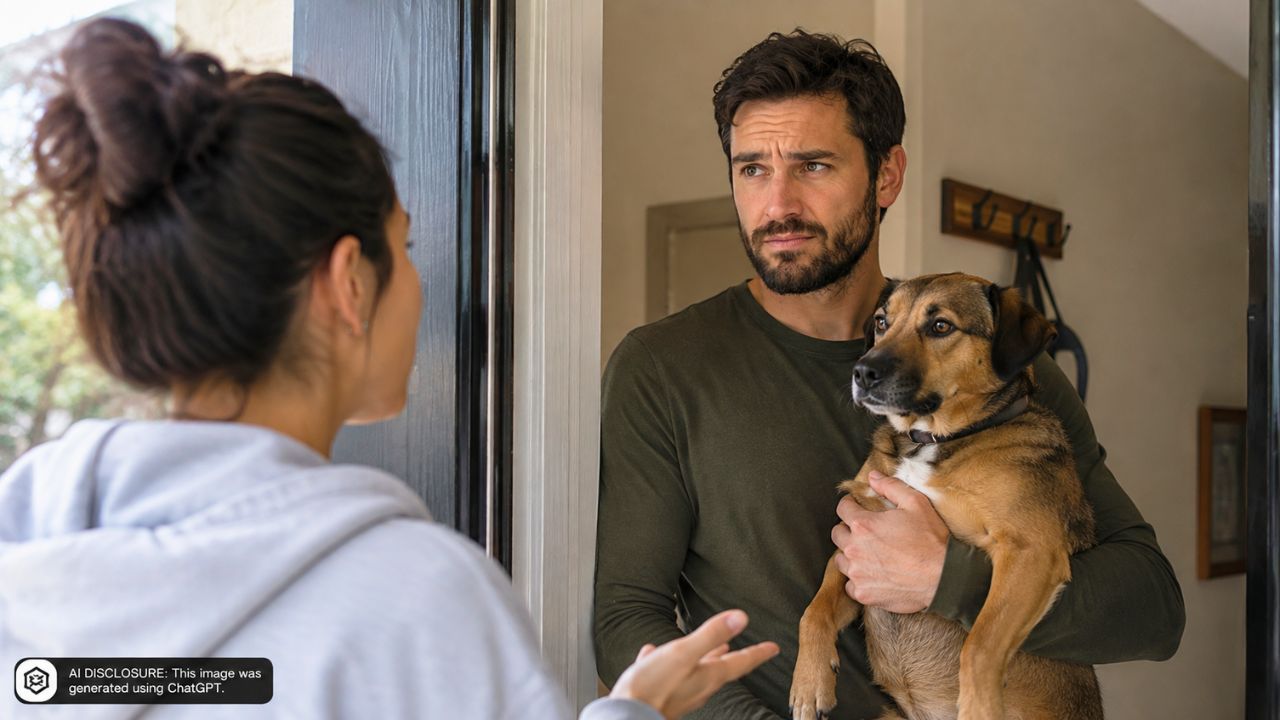
Photo credit: AI-generated image created using ChatGPT.
There’s a certain kind of audacity that only shows up after someone has already blown the doors off the relationship. Not the loud, chest-thumping kind. The quiet kind that arrives dressed as “just checking in,” as if betrayal has an off switch and you can flip it back when you miss the good parts.
A man shared a simple situation in the original post: he and his ex split after a long relationship because she was talking to someone else. They’d gotten a puppy together a few years ago. Months went by with her not seeing the dog, and then she asked if she could start coming by to walk the dog. He initially said yes weeks earlier, but as he tried to move on, he changed his mind and told her it wasn’t a good idea. She got upset, saying she didn’t want to never see “her” dog again.
Men recognize this pattern because we’ve lived it, or we’ve watched a friend live it. Somebody wants the comfort of the old life without the responsibility of honoring it. The problem is, a dog isn’t a timeshare, and your healing isn’t a community resource.
The dog isn’t the real issue, but the dog is in the middle
On the surface, it sounds like a simple request. A walk. A quick visit. A familiar routine. But most grown men can tell the difference between a genuine concern for the animal and a convenient excuse to keep a door cracked open.
If she hadn’t seen the dog in months, this isn’t about maintaining a steady bond. It’s about re-entry. Sometimes it’s guilt. Sometimes it’s loneliness. Sometimes the new situation didn’t feel as good as it looked from the outside, and the old life starts to seem warm again.
Meanwhile, the dog doesn’t understand any of the adult drama. He understands consistency, home, and who feeds him and keeps him safe. If the dog has been living with one person and the other person has been gone for months, “visitation” is something the humans are doing for themselves, not something the dog has been requesting.
Changing your mind isn’t cruelty; it’s clarity
He admitted something important: a few weeks earlier, he was okay with the idea. That doesn’t make him weak. That makes him human. Right after a breakup, especially one with betrayal involved, a man’s judgment can swing between wanting distance and wanting normalcy.
Then reality settles in. You start trying to move on, and you realize how “small” interactions keep you tethered. A quick dog walk becomes a text thread. The text thread becomes a check-in. The check-in becomes a habit. Soon you’re back in the role of emotional caretaker for the person who walked away.
There’s nothing dishonest about updating your boundaries when you understand what you actually need. If anything, it’s more honest than agreeing to something that quietly keeps you stuck.
Betrayal changes the terms, even if nobody likes it
When someone is talking to somebody else during a long relationship, it’s not just an “oops.” It’s a choice that reshapes trust. That choice also reshapes access. You don’t get to rupture the foundation and then demand the benefits of the old arrangement because you miss the sweet parts.
This is one of the hardest lessons for decent men: you can care about someone’s feelings without organizing your life around them. Her being upset doesn’t automatically mean he’s wrong. It means she’s experiencing the consequences of decisions she made, and consequences rarely arrive with soothing music in the background.
In plain terms, she ended things and disappeared for months. That’s not the posture of someone diligently co-parenting a dog. If she wanted a shared arrangement, that would’ve required consistent involvement and a clean, respectful breakup. She didn’t choose that road.
“Her dog” vs. the dog you’re actually stewarding
People get territorial about pets after a breakup because pets feel like family. That’s understandable. But ownership language can become a way to apply pressure: “How could you keep me from my dog?” It sounds noble, but it can be manipulative.
Here’s the grounded view: who is doing the daily work? Who is paying for food, scheduling vet visits, buying flea and tick meds, handling the unpleasant parts, and keeping the dog’s life stable? The person doing that is the one stewarding the animal in real time.
Stewardship is a word faith teaches well. If you’re responsible for something living, you don’t make decisions based on somebody else’s guilt, loneliness, or anger. You make decisions based on what’s steady and good, even if it’s unpopular.
Visitation can turn into leverage fast
A lot of guys agree to these arrangements because they want to be fair and they don’t want conflict. Fairness matters. Peace matters too. But peace that requires you to keep absorbing someone else’s chaos isn’t peace; it’s just quiet suffering.
Once “she can stop by” becomes routine, she can start treating it like a right. If you try to pull back later, you’re the villain. If you start dating, you’re “replacing” her. If you’re not home at her preferred time, you’re “keeping the dog from her.” The dog becomes a lever she can pull to get a response.
And even if she has no bad intentions, the dynamic still keeps you in each other’s orbit. A clean break is often the only way a man can rebuild his focus, his habits, and his peace.
If you do allow it, keep it structured and unemotional
There’s a middle road some men choose: allowing limited contact for the dog’s sake or out of sheer decency, but setting firm terms. That can work in certain situations, especially if both people are mature and consistent. It’s also where a lot of men fool themselves into thinking they can manage what they haven’t healed from yet.
If he ever decides to revisit the idea, it needs structure. Not “whenever you want.” Not lingering chats. Not coming inside to “see him for a minute.” Something like: a specific day, a specific time window, a public place, and a quick handoff. The point is to remove the couple-like familiarity and keep it about the dog.
But he’s not obligated to offer that. He’s allowed to decide that any ongoing contact slows his healing and complicates his life. That’s not punishment; that’s wisdom earned the hard way.
What a clean “no” can sound like
A lot of men get trapped because they try to soften the message until it’s unclear. Then the other person keeps negotiating. A respectful “no” is a gift, even if it doesn’t feel like it in the moment.
Something simple works: “I’m not comfortable with visits. I’m focusing on moving forward, and I need space. I’m taking care of the dog, and I’m not going to start a routine of meetups.” No moral lectures. No courtroom arguments. No long emotional back-and-forth.
If she escalates, repeats herself, or tries to make him feel cruel, it confirms why the boundary is needed. You don’t have to win the debate. You just have to hold your line.
A breakup after betrayal is already a hard season. Adding regular contact under the banner of “dog visitation” can keep the wound open and slow down the work of rebuilding a stable life. Sometimes the most responsible thing a man can do—for himself and for the animal he’s caring for—is to say no and mean it.
Read more from Thrive Girly:
- Mother-in-Law Expected to Sleep Over After Every Visit — Then the Mom Said Overnight Stays Were No Longer an Option
- Relatives Showed Up to the Wedding Without Being Invited — Then the Couple Refused to Find Them Seats
- Grandma Buckled the Baby Into Her Car and Left Without Telling Anyone — Then the Mom Made Sure It Never Happened Again