Stranger Blocked Her Reserved Accessible Parking Spot for a Full Day and Ignored Every Warning — Then She Had the Car Towed
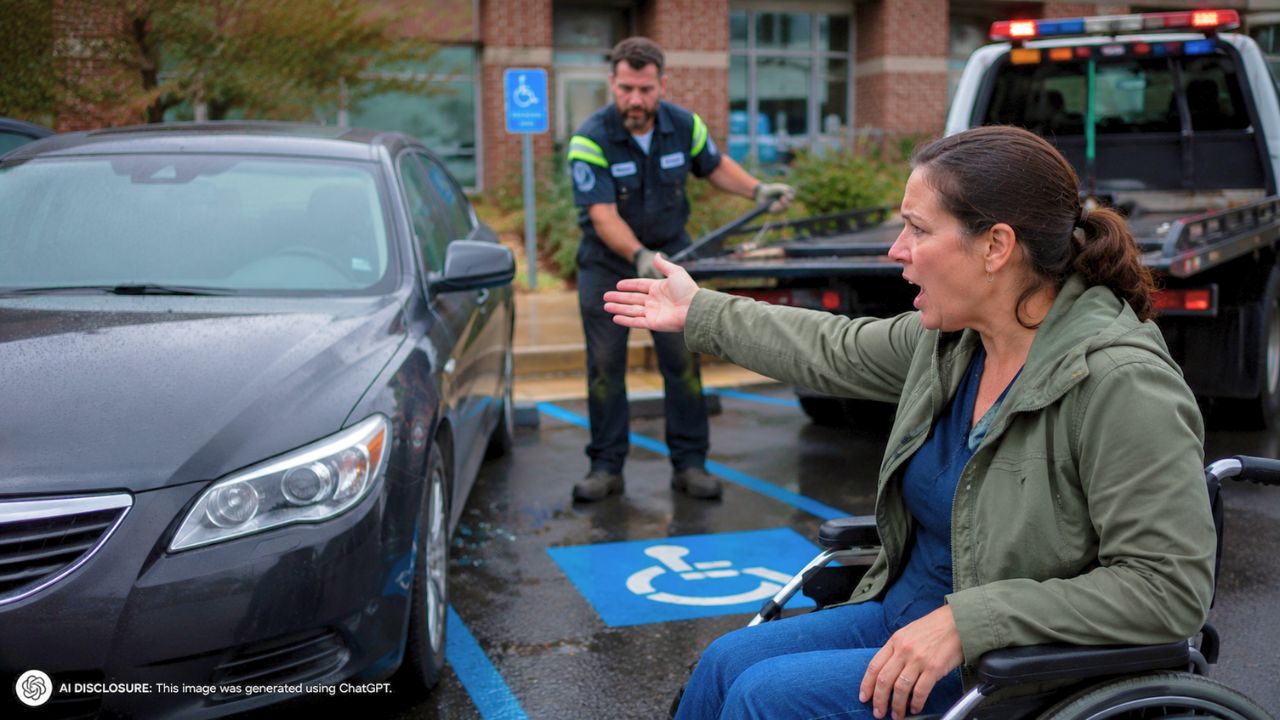
Photo credit: AI-generated image created using ChatGPT
There’s a certain kind of entitlement that only shows up in parking lots. It’s the casual decision to take what isn’t yours, paired with the quiet assumption that the owner will sigh, adjust, and move on. In the original post, a 32-year-old woman described that exact situation after someone parked in her paid, reserved spot—marked with her apartment number and a “towing enforced” notice—and stayed there long enough to turn a minor inconvenience into a full-blown problem.
This wasn’t about being precious over a few feet of pavement. She lives with a chronic lung condition that makes long walks difficult, sometimes triggering a flare-up that requires a breathing machine. Her condition may not be formally classified as a disability, but it’s serious enough that she pays for a close spot because the complex routinely runs out of regular parking, forcing residents to park down the street.
She tried patience first. The first night, she found a nearby open spot and decided to give the unknown driver a few hours to correct the mistake. Hours passed, and the car didn’t move. By the time she could involve the tow process through the property manager, the car had effectively squatted in her reserved spot for a full day and ignored every warning sign posted right in front of it.
A reserved spot isn’t a suggestion
Men understand property lines even if we don’t always say it out loud. If your name is on the lease, your number is on the door, and your payment is tied to a specific spot, that spot isn’t “nice to have.” It’s part of what you bought. A reserved parking space is one of the few clear, simple agreements in modern life: this is yours, not mine, and we all keep the peace by respecting it.
The driver didn’t accidentally pull into an unmarked area. The space had her apartment number on it and signage that said towing was enforced. If you park there anyway, you’re not confused—you’re rolling the dice and hoping the person you’re inconveniencing is too tired, too timid, or too polite to do anything about it.
She gave the driver time, and the driver doubled down
One detail that matters here is the timeline. She didn’t call for a tow the moment she saw the car. She adjusted her evening plans, parked elsewhere, and gave the person a chance to leave. That’s a reasonable first step when you’re not looking to escalate and you assume the best—that someone got turned around, visited the wrong building, or made a careless decision they’ll quickly fix.
But the car stayed through the night and into the next day. When she contacted the tow company, she learned she couldn’t even request the tow herself; the property manager had to do it. So she waited again, got home from work again, and found the car still there. That’s not an honest mistake anymore. That’s someone choosing to impose their problem on a stranger because it’s convenient.
Health limitations don’t need a label to be real
A lot of decent people get awkward the moment the word “disability” is involved. They want paperwork. They want a badge. They want a neat category that tells them who deserves consideration and who doesn’t. Life doesn’t always cooperate with neat categories, and the body doesn’t ask permission before it starts failing in a specific way.
This woman described a lung condition that makes distance walking hard and can trigger flare-ups that require a breathing machine. That’s not a preference; that’s a limitation. She didn’t demand special treatment from strangers—she paid for a practical solution inside her own apartment complex. If anything, she handled her situation with responsibility and foresight, which is more than can be said for the person who decided her reserved spot looked available enough.
Towing isn’t cruelty; it’s enforcement
There’s a difference between revenge and consequence. Revenge is personal and excessive; consequence is predictable and tied to the rules everyone can see. Towing enforced means exactly what it says. It’s there because some people only learn when their wallet gets lighter and their day gets harder.
She didn’t slash tires, leave a note filled with insults, or try to trap the car in. She went through the proper channels and waited for the property manager to make the call the tow company required. Even then, she still had to park far away and wait a few more hours while the tow was arranged. If there’s any unfairness in this story, it’s that she had to do so much work to regain access to something she already pays for.
The crying mom moment and the guilt trap
The emotional punch came later: her own mother saw a woman outside crying with her kids, saying the car had been towed. That image can mess with anybody who has a conscience. Most of us don’t want to be the reason a family has a bad night, and a crying parent has a way of making everyone in earshot feel like they’ve committed a crime.
But guilt can be a trap when it disconnects feelings from facts. The driver made a choice. The driver saw the warnings, or ignored them. The driver left the car there through a full day. Having kids doesn’t turn someone into a saint, and it doesn’t erase the impact of their decisions on other people. If anything, being responsible for children should make a person more careful about where they park, not less.
It’s also worth saying plainly: the woman who got towed wasn’t crying because the rules were unfair. She was crying because the rules finally applied to her. A lot of tears in adult life are less about injustice and more about consequences arriving on schedule.
Family pressure can blur right and wrong
Her mother called her an awful name and told her she should be ashamed. That’s a heavy charge, especially from family, and it hits deeper than a stranger’s criticism. Plenty of grown adults still fold under a parent’s disappointment, even when the parent is wrong, because old dynamics don’t retire just because you move out.
But wisdom means sorting compassion from confusion. Compassion says, “I’m sorry this ended painfully for that woman.” Confusion says, “Therefore you should’ve let her keep taking from you.” Those aren’t the same. Shame is a powerful tool, and it’s often used to pressure the responsible person into being the one who always absorbs the cost.
If you’re the kind of man who tries to keep peace at any price, you’ll recognize the temptation: let it go, don’t rock the boat, take the long walk, deal with it later. The trouble is, later usually means never, and “never” is how small injustices become habits—both for the person taking advantage and for the person quietly allowing it.
What a better outcome would’ve required
The cleanest outcome would’ve been the driver moving their car within those first few hours. The next best would’ve been a note left on the windshield with an apology and a phone number, followed by the car being gone before morning. The worst option—the one chosen—was leaving it there and betting the reserved-spot owner wouldn’t do anything.
If the driver truly had an emergency or a misunderstanding, the towing sign and the apartment number were still there, giving them a clear off-ramp. They ignored it. The woman who pays for the spot can’t manage someone else’s judgment, and she shouldn’t be expected to sacrifice her health and energy because a stranger decided their convenience mattered more.
Consequences aren’t pleasant, but they’re often merciful in the long run. They teach people that the world isn’t held together by other folks quietly cleaning up their mess. A little discomfort now can prevent bigger entitlement later.
In the end, this wasn’t a story about being unkind; it was a story about refusing to be passive. She did what adults do: she tried patience, followed the process, and enforced a boundary she pays for—one tied to a real physical limitation, not a petty preference. Feeling sympathy for the crying woman is human, but carrying guilt for her decision isn’t necessary, and it isn’t righteous either.
Read more from Thrive Girly:
- Mother-in-Law Expected to Sleep Over After Every Visit — Then the Mom Said Overnight Stays Were No Longer an Option
- Relatives Showed Up to the Wedding Without Being Invited — Then the Couple Refused to Find Them Seats
- Grandma Buckled the Baby Into Her Car and Left Without Telling Anyone — Then the Mom Made Sure It Never Happened Again