Mom Refused to Put Her Baby Online for Six Months — Then a Stranger’s Message Proved Why
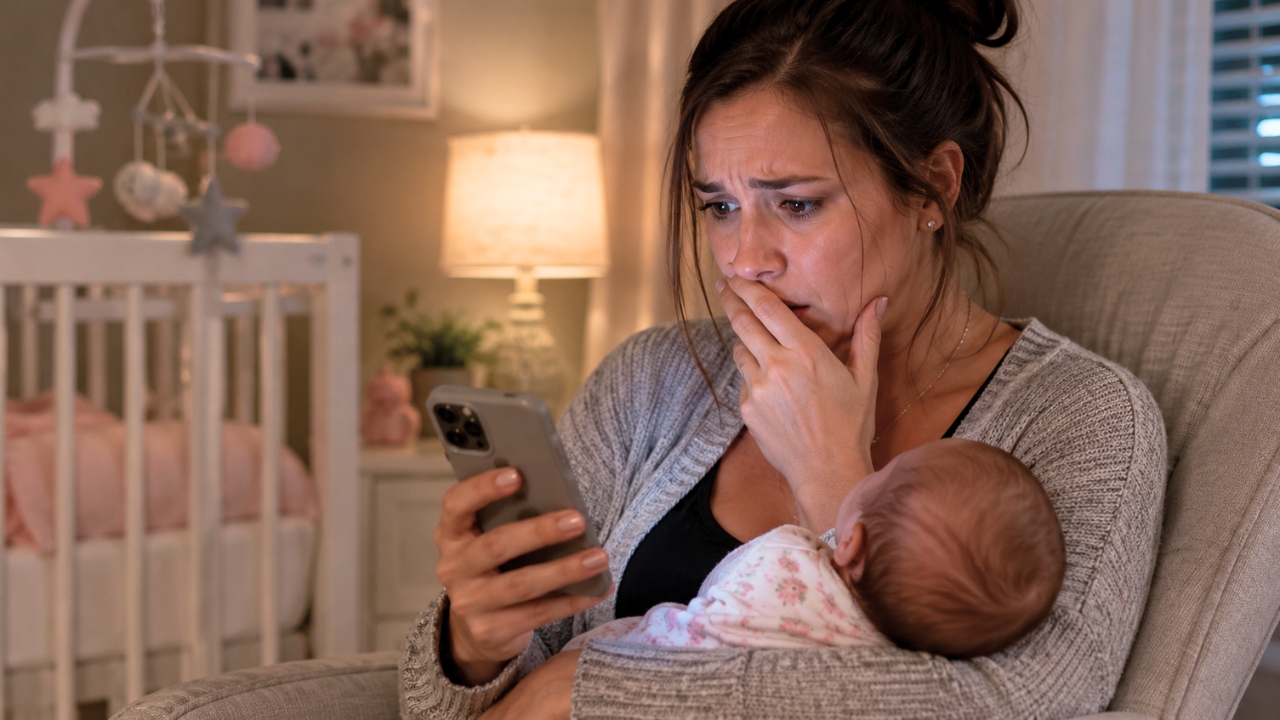
Photo credit: Thrivegirly.com
For the first six months after her son was born, Maya’s feed looked like a lot of new-mom accounts do—just with one obvious gap. There were pictures of tiny socks on a dryer door, a stroller wheel in the rain, her partner’s hand holding a bottle at 3 a.m. But never the baby’s face, never his name, and never a clear shot that could tie him to her apartment building or her daily route.
Friends noticed. Her aunt kept commenting asking when she was “finally going to show him.” Coworkers messaged privately for photos. Even other parents in her building’s courtyard nudged her about it, like it was a phase she’d grow out of.
Then, on a quiet weeknight, Maya posted a long explanation—not a rant, not a manifesto. Just a careful account of what happened, what it cost her, and why she decided her child wouldn’t be content.
It started as a boundary, then turned into a safety plan
Maya had always shared online, but her pregnancy changed the math. She’d had a job that required occasional public-facing work and a few messy interactions with strangers who felt entitled to her time. She wasn’t famous, but she was recognizable in a small circle, and her posts traveled farther than she liked through other people’s shares.
When her son was born, she decided to keep the baby offline until she felt steady again. At first, it was about privacy and not turning every moment into something performative. But within a month, it became more practical: she realized how easy it was for someone to stitch together a routine from innocent details.
She stopped posting the view from her living room because it showed the courtyard mural. She stopped tagging the park because the same bench appeared in too many pictures. Even her “middle of the night” posts had clues—the distinctive hallway light outside her door, the reflection of a unit number in a glossy frame.
A small incident made the risk feel real
The turning point, she wrote, wasn’t a dramatic abduction story. It was something smaller and more believable, the kind of thing people brush off until it stacks up. A package with baby formula disappeared from the lobby shelf, then two more deliveries vanished over the next week.
She filed a report with building management, assuming it was routine theft. But the manager told her the thefts were oddly specific: mostly baby-related deliveries, mostly on the same floor. Maya’s neighbor mentioned that a stranger had been seen lingering near the mailboxes, scrolling on a phone, like they were waiting for something.
Then she got a message request from an unfamiliar account. It included a photo of her stroller—taken from across the street—along with a cheerful note asking about the brand and where she “usually parks it.” She didn’t answer. She blocked the account. But she couldn’t shake the feeling that the person didn’t need to ask.
She also noticed that when she posted an errand photo, her “coincidental” run-ins increased. A man who had once asked for her number outside a coffee shop showed up again at the grocery store the day after she posted a story from that parking lot. A woman she didn’t recognize approached her at a bus stop and said she “felt like she knew her,” referencing a caption Maya had written the night before.
She tested how much could be found with almost nothing
Before she made any big decisions, Maya tried an experiment. She created a private document and wrote down everything she’d posted in the last month: timestamps, backgrounds, reflections, anything with a landmark. Then she handed her phone to a friend who was good at online sleuthing and asked him to find her building without using her name.
He did it in under twenty minutes, she wrote. Not by hacking anything, not by paying for data, just by zooming into a photo of a window reflection and matching it to a listing image. The rest came quickly: her neighborhood, her likely walking route to the pharmacy, and the park she used when the weather was warm.
That’s when she stopped thinking about “oversharing” as a personality flaw and started thinking about it as exposure. She wasn’t accusing anyone of plotting something extreme. She was saying that the same tools that make the internet feel connected also make it easy for the wrong person to feel close.
The explanation wasn’t about judgment, it was about consequences
When Maya finally explained why her baby wasn’t on her page, she didn’t frame it as a moral stance. She framed it as a chain of cause and effect. She talked about the missing deliveries, the message request with the stroller photo, and the way the building’s security camera didn’t cover the lobby shelf well enough to identify anyone clearly.
She described what it cost her to adjust: she paid extra for a lockbox for packages. She changed her walking schedule and started using a different entrance so she wasn’t predictable. She asked the property manager, in writing, to improve camera coverage and lighting near the mail area and to move deliveries behind a locked door.
She also changed her own phone habits. No real-time posting. No identifiable backgrounds. No showing the baby’s face, not because she thought her child was uniquely at risk, but because she didn’t want a digital trail attached to someone who couldn’t consent.
And she admitted the uncomfortable part: even if nothing “big” ever happened, the anxiety was already a consequence. The constant mental math—what did that photo reveal, who might be watching, how many people knew the baby’s schedule—was changing the way she lived.
People zeroed in on proof, documentation, and the unglamorous steps
After her post, the response she received wasn’t just encouragement. A lot of people latched onto the practical details: the stolen packages, the bad camera angles, the message request that crossed a line. Some parents said they’d had the same thing happen with diapers and formula deliveries, especially in buildings where drivers left packages in plain view.
Others focused on the paper trail. They urged her to keep screenshots of the message request, save delivery confirmations, and report the theft pattern every time so management couldn’t treat it as a one-off. A few suggested she ask neighbors if they’d seen the same person near the mail area and to request that the building send a general security notice without naming her.
There was also a lot of talk about how to tighten privacy without disappearing entirely. People recommended delaying posts by a day, turning off location permissions for camera apps, and watching for small identifiers like keychains, car decals, or visible street signs in reflections.
Not everyone agreed with her approach. Some argued that hiding a baby’s face is pointless because friends will share anyway. But even those comments tended to circle back to the same point: once an image is out, you don’t control where it goes.
She didn’t end the debate, but she changed how people around her behaved
The most immediate impact for Maya wasn’t online. It was in her everyday interactions. Her relatives stopped pressuring her for public posts and started asking what photos she was comfortable with being shared in family group chats. A friend who’d been reposting her stories without thinking asked before sharing anything that showed the stroller or the building.
In her apartment complex, she said the manager finally agreed to move deliveries into a locked vestibule during peak hours and put up a notice reminding residents not to buzz in strangers. It didn’t solve everything, but it shifted the building culture from shrugging at theft to treating it like a real safety issue.
Maya still posts. She still shares little slices of her life. But her son remains mostly off-camera, a presence without a digital footprint. The tension hasn’t disappeared—there’s no perfect way to be online without risk—but her boundary is clearer now, and the people closest to her seem to understand that it was never about being secretive. It was about not making access too easy.