MIL Wanted a Five-Week Postpartum Stay That Overlapped With Her Own Mom’s Visit — Then She Made Them Take Turns Instead
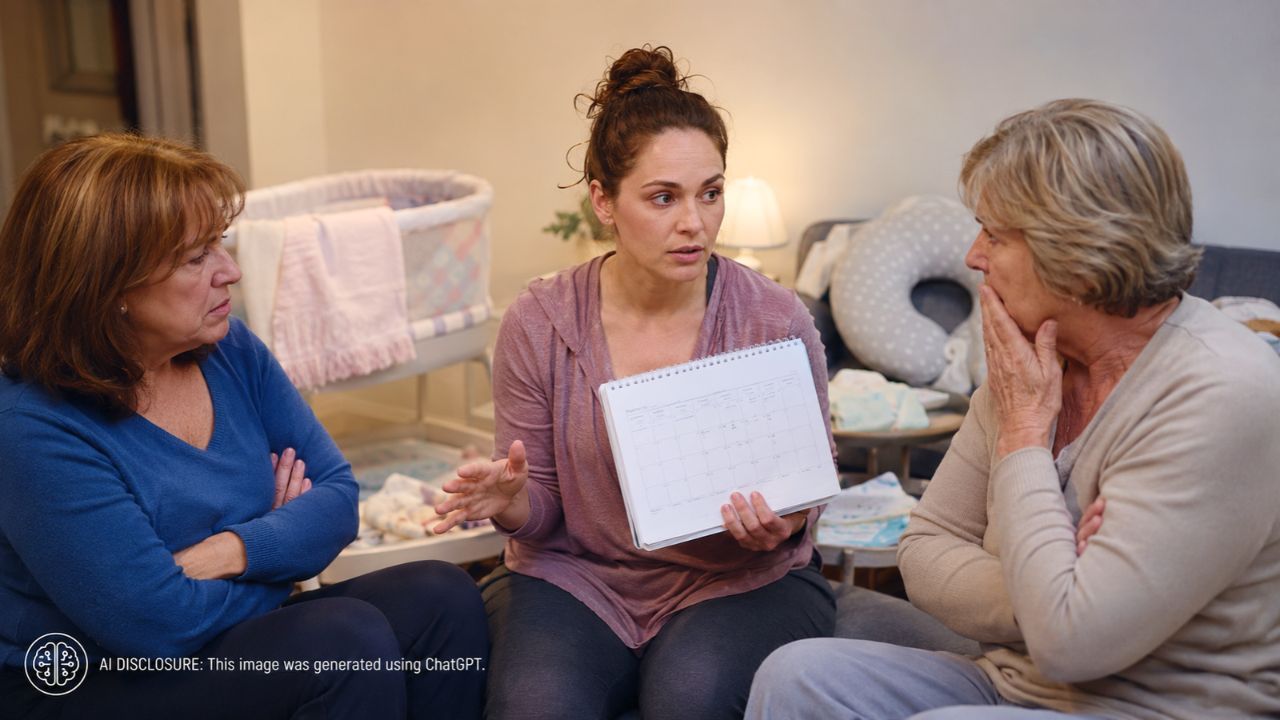
Photo credit: AI-generated image created using ChatGPT
A baby on the way has a funny way of exposing every weak seam in a marriage. You think you’re debating travel plans, but you’re really debating authority, loyalty, and whether the new family you’re forming will actually function like one. Add a scheduled C-section and limited paternity leave, and you’re not talking about a casual visit anymore—you’re talking about who gets access to a recovering mother and a brand-new home routine.
In the original post, a first-time mom laid out a situation a lot of couples recognize: her parents coordinated carefully, asked for input, and planned a practical help schedule. Meanwhile, her mother-in-law booked a five-week stay in an Airbnb without asking, timed to overlap with the mom’s own mother’s four-week visit. Then the husband pushed back when his wife suggested they take turns instead of stacking everybody in the same window.
This isn’t about being “fair” in a spreadsheet sense. It’s about whether the postpartum season will be managed like a mission with clear roles, or like an open house where the exhausted couple tries to keep everyone happy.
Postpartum help isn’t a family reunion
After a C-section, the goal isn’t social harmony—it’s recovery. The mother is healing from major surgery, learning a newborn’s rhythms, and trying to establish feeding and sleep routines with a body that’s been through a lot. Even the best-intentioned guest can become one more person to manage.
There’s also a difference between “help” and “presence.” Help looks like doing laundry, cleaning up after meals, running errands, and keeping the house calm. Presence is wanting proximity to the baby, conversation, and emotional reassurance—and those aren’t evil desires, but they can drain the people who are actually in the trenches.
The problem wasn’t the Airbnb—it was the assumption
Credit where it’s due: booking an Airbnb instead of expecting the guest room is considerate. It reduces friction, gives everyone space, and avoids the pressure of hosting under the same roof. But the main issue isn’t where she sleeps; it’s that she decided the length and timing without a conversation.
That move quietly communicates, “I’m coming, and you’ll adjust.” Even if she’s anxious and excited and means well, it sets a pattern where the couple’s home becomes a place extended family can schedule around their own wants. Once that precedent is set, it’s hard to undo later—especially if this may be the only grandchild.
Equality between moms is a misunderstanding of the moment
The husband’s initial reaction—“You’re not treating our moms equally”—is common, and it sounds noble. It’s also the wrong frame. Pregnancy, birth, and postpartum recovery are not symmetrical experiences for a wife and a husband, so the support needs won’t look symmetrical either.
Her mother isn’t showing up as a competing grandmother. She’s showing up as the daughter’s primary comfort person in a vulnerable, medical recovery window, especially since the husband may not be able to take much leave. A man can honor his mother without pretending she plays the same role as the woman who raised his wife and can help her in uniquely personal ways.
There’s another point men need to hear plainly: “fair” is not the highest good in a marriage. Faithfulness is. Protecting your wife when she’s physically compromised is part of the job, and it doesn’t require an apology.
Overlap creates friction, not more help
The wife’s suggestion was practical: let the visits be staggered, not stacked. Two moms overlapping doesn’t double the help; it often doubles the opinions, doubles the noise, and increases the sense that the parents are being watched. Even if both women are “friendly,” the couple still has to manage dynamics, schedules, meals, and expectations.
In this case, there are extra complications. The mother-in-law asked for help borrowing a car from her ex-husband, and the couple feels pressure to solve transportation. The father-in-law won’t come to holidays if the mother-in-law is staying with them, which means family relationships get reshuffled around her presence. None of that is small during postpartum; it’s the kind of background tension that steals peace and sleep.
And then there’s the history: boundary issues, controlling schedules, criticism about cleaning, and the “you need to stay and hang out” kind of pressure. Those patterns don’t magically disappear because a baby arrives. A newborn amplifies whatever’s already there.
A husband’s first loyalty is to his household
Marriage is the formation of a new household, not a permanent extension of the old ones. Honoring parents remains a command, but it doesn’t mean letting them run the calendar. A man can be kind and firm at the same time, and postpartum is exactly the time for firm.
What would leadership look like here? It would sound like the husband telling his mom, respectfully, “We’re grateful you want to help. We need the first month to be quiet and focused on recovery, so we’re going to set dates that work for our home.” Not “my wife is anxious” or “she doesn’t want you,” but “we have a plan.” A united front prevents a lot of resentment later.
If the husband refuses to do that work, the wife is left carrying the relational burden while also carrying the physical recovery. That’s how bitterness gets planted. A man doesn’t need to be harsh; he just needs to stop outsourcing hard conversations to his recovering wife.
“Take turns” is not a punishment—it’s a plan
The wife’s proposed compromise—one week early, then a return trip later—wasn’t cruel. It was a reasonable attempt to give the mother-in-law meaningful time with the baby while still protecting the most fragile weeks. It also recognizes something practical: the help needed at week one is different from the help needed at week six or seven.
Early on, mom needs recovery support and a quiet house. Later, she may need someone to hold the baby so she can shower, someone to run errands, or support as the husband goes back to work and the reality of daily life sets in. Staggered visits can actually make a grandparent more helpful, not less.
Yes, changing flights and an Airbnb reservation may cost money or hassle. That’s unfortunate, but it’s also a natural consequence of booking a five-week stay without checking first. Adults absorb the cost of their assumptions, and it’s better to handle that now than to pay for it in marital strain.
Set a few clear rules before anyone arrives
If you’re the couple in this situation, don’t just negotiate dates. Decide what “help” means in your home and communicate it plainly. Things like: visiting hours, no surprise drop-ins, no extra guests, no criticism about housekeeping, and the parents decide feeding and sleep routines.
Also decide who communicates what. In most cases, the husband should handle his family, and the wife should handle hers, so no one feels triangulated. And make transportation a hard boundary: the visiting adult arranges their own car unless the couple explicitly offers otherwise. A new baby is not the time to become an unpaid travel coordinator for someone else’s five-week stay.
Finally, protect the mother’s rest without making it weird. A simple line like, “If mom goes to lie down, that’s not a social cue—she’s recovering,” can save a lot of awkwardness and prevent the old “you need to stay and hang out” pressure from resurfacing.
A family welcoming a first baby needs less pageantry and more peace. A mother healing from surgery doesn’t need to manage a rotating cast of well-meaning adults, and a husband doesn’t get to hide behind “fairness” when his wife is the one bleeding, sore, and sleep-deprived. Take turns, set dates, and protect the home. If everybody truly wants what’s best for the baby, they can handle a calendar that puts recovery first.
Read more from Thrive Girly:
- Mother-in-Law Expected to Sleep Over After Every Visit — Then the Mom Said Overnight Stays Were No Longer an Option
- Relatives Showed Up to the Wedding Without Being Invited — Then the Couple Refused to Find Them Seats
- Grandma Buckled the Baby Into Her Car and Left Without Telling Anyone — Then the Mom Made Sure It Never Happened Again