MIL Saw the NICU Photos Before the New Mom Even Held Her Baby — Then the Mom Went Low Contact

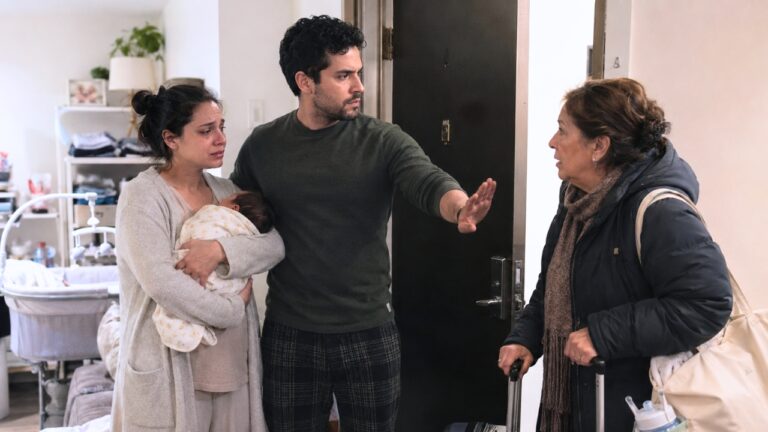
Photo credit: AI-generated image created using ChatGPT. Illustrative only.
There are a few things in life you don’t get back. One of them is the first day with your child. So when a mom delivers early, fights severe preeclampsia, and then can’t even see or touch her newborn for the first 36 hours, you don’t treat that like a minor inconvenience. You treat it like a wound.
In the original post, a new mom describes exactly that scenario: her baby was taken straight to the NICU while she was medically unable to go. Meanwhile, her mother-in-law and other relatives were allowed to visit the baby before she ever could. Then the MIL sent a photo of the newborn with her eyes open and made a comment asking if the mom thought she’d get to see that before. The mom says she cried, and she hasn’t looked at her MIL the same since.
Layer on top of that an older child with special needs, a grandmother who pushes boundaries, and a husband whose best explanation is “that’s just my mom,” and you’ve got a family situation that can quietly poison a marriage if a couple doesn’t handle it with backbone and wisdom. The mom has chosen low contact for her mental health and for her kids’ stability, and she’s asking if she’s wrong for that.
A NICU isn’t a spectator sport
Anybody who’s had a baby in the NICU will tell you it’s not cute or casual. It’s wires, rules, worry, and the kind of exhaustion that makes time feel weird. The mother in this situation wasn’t choosing to “wait.” She was dealing with severe preeclampsia and was medically kept from her own child for 36 hours.
That detail matters, because it’s easy for extended family to act like the mom is being “sensitive” about something she should just get over. But a mother being separated from her baby right after birth isn’t a small emotional hiccup. It’s frightening, it’s disorienting, and it can stick in your mind for a long time.
The photo wasn’t the problem; the attitude was
A picture of a NICU baby can be a sweet gesture if it’s sent with humility and care: “She’s okay. She’s beautiful. I’m praying for you. I can’t wait for you to hold her.” What was sent here didn’t land that way. The mom describes a message that felt like a jab—pointing out that the baby’s eyes were open and basically rubbing in the fact that someone else got that moment first.
Whether the MIL meant to be cruel or was just tone-deaf, the impact is the same: it deepened the mother’s grief. And a mature adult, once she realizes she hurt someone in a tender season, doesn’t double down. She apologizes plainly, without excuses, and she learns.
The follow-up detail makes it worse: the MIL also complained that she wasn’t allowed to hold the baby right away, even though the baby was in the NICU and the mother herself hadn’t held her yet. That’s not grandmotherly excitement. That’s entitlement wearing perfume.
Grandparents don’t get to be the main character
There’s a difference between being eager and being inappropriate. A grandmother can be thrilled, emotional, even a little awkward. But she can’t treat the parents’ hardship like an obstacle to her experience. This is where a lot of families get it twisted: they talk about “the baby” like the baby is community property and the parents are temporary gatekeepers.
In a healthy family, the circle is clear. Mom and dad are the center. Everyone else is support. The job of extended family is to strengthen the parents, not compete with them, not test their boundaries, and definitely not criticize them for having boundaries in the first place.
If you’re a husband reading this, understand what your wife is hearing in moments like these. She’s not just hearing a rude comment. She’s hearing, “Your pain doesn’t matter as much as my access.” That will harden a woman’s heart fast, and honestly, it should.
Then there’s the older child, and the pattern becomes obvious
The story isn’t only about the NICU. The mom also describes raising an older child who is nonverbal and autistic, with specific routines and safe foods. That’s not a preference; it’s the child’s stability. The MIL reportedly ignores those needs, pushes foods or interactions after being told no, and minimizes the child’s distress.
That’s a major warning sign because it shows the issue isn’t one isolated comment. It’s a pattern of disrespect: “I know better,” “It’ll be fine,” “You’re overreacting,” “She needs to get used to it.” People say those things when they care more about feeling in control than they care about the child in front of them.
Parents of special-needs kids don’t have the luxury of being loose with boundaries. If routines and safe foods are part of keeping the day from turning into a meltdown, you protect that like you’d protect medicine. A grandparent who can’t accept that is not a safe helper, no matter how much they “mean well.”
“Get ahold of your emotions” isn’t leadership; it’s dismissal
After a few months of low contact, the MIL pushed for a conversation. When the mom got emotional describing how traumatic it was not to see or touch her baby, the MIL reportedly told her she was “letting the devil into [her] head” and needed to “get ahold of [her] emotions.” That’s the kind of line that sounds spiritual, but functions like a gag order.
Faith isn’t supposed to be a club you use to silence people. If someone is hurting, the godly response is compassion, patience, and the humility to listen. You can believe someone is spiraling emotionally and still speak to them with gentleness. Telling a postpartum mother to clamp down on her emotions, while offering no accountability for your own behavior, is not maturity.
The same conversation apparently included the MIL crying because the mom had posted about her pregnancy and postpartum experience, saying it made her look “evil” and that the mom was being dramatic. That’s another pattern: making the mother responsible for the MIL’s reputation and feelings, while minimizing the mother’s actual trauma.
Low contact isn’t revenge; sometimes it’s stewardship
People hear “low contact” and assume it’s punishment. Sometimes it is. But sometimes it’s a married couple finally admitting, “This relationship keeps costing us peace, and we’ve tried talking.” The mom says she feels anxious when the MIL hugs her older daughter or wants to hold the baby, and that she doesn’t trust her. Meanwhile, she feels fine with her father-in-law, who gives the older child space and doesn’t bombard the kids.
That contrast matters. It suggests the mom isn’t anti-grandparent or trying to isolate the family. She’s responding to a particular person’s behavior. Trust is built with consistent respect, not family titles.
Low contact, in this kind of situation, can be a way of keeping the home steady while you sort out whether a grandparent is willing to change. The key is that boundaries have to be clear and enforceable. Vague boundaries are just invitations to argue.
Husbands can’t hide behind “that’s just my mom”
That line—“Well, that is just my mom”—is a common escape hatch for men who hate conflict. It sounds like acceptance, but it’s really passivity. If your mother is hurting your wife, “that’s just my mom” translates to: “I’m not going to do the hard work of protecting my marriage.”
A man leaves his parents and cleaves to his wife. That doesn’t mean he stops honoring his mother, but it does mean his primary loyalty is to his household. If his mother can’t respect his wife as the mother of those children, he has to address it directly. Not angrily, not disrespectfully, but firmly and consistently.
The husband should be the one setting terms with his own mother: no undermining routines with the older child, no guilt trips about access, no spiritual manipulation, and no commentary that pits grandmotherly “rights” against a mother’s recovery. If that feels uncomfortable, good. Leadership often does.
There’s a heartbreaking simplicity to this situation. A mother went through a terrifying start to her child’s life, then got treated like she was being dramatic for having normal human grief. She also has an older child whose needs are repeatedly brushed aside by the same person. Low contact doesn’t sound like overreaction; it sounds like a mother trying to keep her home safe and calm while she heals.
Read more from Thrive Girly:
- Mother-in-Law Expected to Sleep Over After Every Visit — Then the Mom Said Overnight Stays Were No Longer an Option
- Relatives Showed Up to the Wedding Without Being Invited — Then the Couple Refused to Find Them Seats
- Grandma Buckled the Baby Into Her Car and Left Without Telling Anyone — Then the Mom Made Sure It Never Happened Again