Her Mom Cried and Guilt-Tripped Her Over Being Kept Out of the Delivery Room — Then She Held Her Ground and Offered a Visit Hours Later Instead
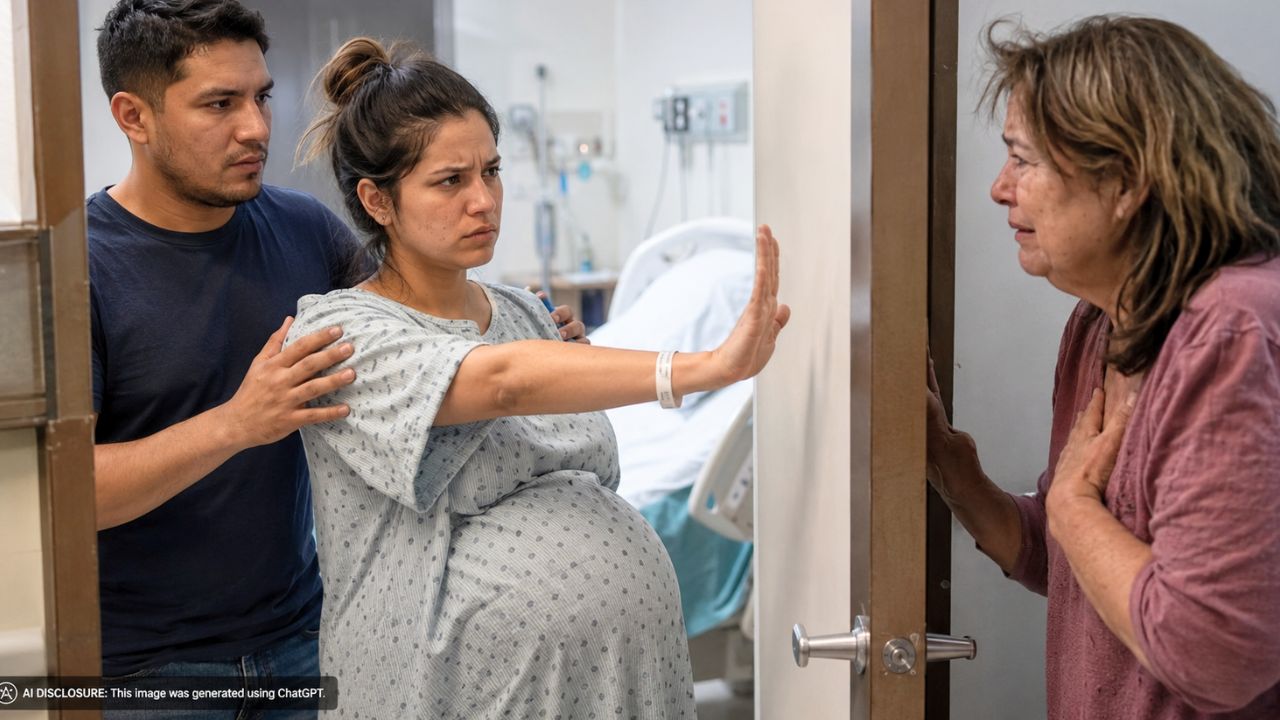
Photo credit: AI-generated image created using ChatGPT.
There’s a certain kind of pressure that only shows up when family feels entitled to your milestones. Not because they’re evil, but because they’re close enough to confuse love with ownership. And childbirth—private, intense, and unforgettable—has a way of exposing that confusion fast.
A 25-year-old expectant mother due in November shared her situation in the original post: she wants only her boyfriend in the delivery room. Her mom, a single mother who raised her as an only child, took it personally, cried, and started sending backhanded messages after being offered a compromise—come visit a few hours after the birth instead. The daughter also lives with her mom, which makes the “give me some space” request feel even more loaded.
You can feel the tension in it: gratitude for a mom who’s been there through everything, paired with a grown woman’s need to step into motherhood without her own mother directing the scene. This isn’t just about a hospital room. It’s about who gets to lead this next chapter.
The delivery room isn’t a spectator sport
Let’s say the quiet part out loud: giving birth isn’t dinner theater. It’s not a front-row seat for the people who “deserve” to be there, and it’s not a prize handed out for years of good parenting. It’s a medical event and a deeply personal moment, and the person doing the labor gets to decide who’s in the room.
Plenty of families treat the birth like a communal celebration, and sometimes that works. But it only works when the mother giving birth actually wants that. If she doesn’t, then pushing your way in “for her own good” is just control wearing a sentimental costume.
Good moms can still struggle to let go
The daughter describes being close with her mom, and that matters. A single mom raising an only child can form a bond that’s strong, loyal, and hard-earned. The problem is that a bond like that can also turn into a kind of dependency—especially if boundaries never got practiced along the way.
She mentions her mom tracking her location, constantly texting and calling when she’s out with her boyfriend, and having opinions on everything. That doesn’t sound like the occasional worried parent check-in. It sounds like a mother who still relates to her adult daughter as if she’s twelve and needs supervision.
To be fair, fear can drive a lot of this. A mom who’s carried the whole load for years may worry she’s about to be replaced. But fear doesn’t justify guilt-tripping, and it definitely doesn’t justify hijacking the most vulnerable moment of her daughter’s life.
“I deserve to be there” is a dangerous sentence
Her mom’s argument was simple: she’s been the only one there for her, so she deserves to be in the delivery room. It’s an emotional line, and it works on a lot of people because it mixes truth with entitlement. Yes, she’s been there. Yes, she sacrificed. No, that doesn’t purchase decision-making rights over her daughter’s body.
This is where a lot of grown men can nod along, because we’ve seen versions of this in other areas. A parent pays for something, helped you through school, gave you a place to live, and suddenly they feel they can steer your relationships, your schedule, your marriage, your parenting. It’s not always said out loud, but it’s the same message: “You owe me access.”
Honoring your parents is real, and gratitude should be real too. But honor doesn’t mean surrendering adulthood. Sometimes the most respectful thing you can do is tell the truth plainly and not negotiate with tears.
Her compromise was fair—and more generous than people admit
The daughter did what a lot of reasonable adults try first: she offered a middle ground. Her mom could come visit a few hours after the birth. That’s not a shut door; it’s a boundary with a welcome mat on the other side.
Visiting later still gives grandma that first-day connection. It also gives the couple time to breathe, the mother time to recover a bit, and the new family a chance to have their first moments without an audience. If anything, that compromise shows maturity, not selfishness.
Her mom responded with crying and backhanded messages. That’s a tactic, whether she means it that way or not. When someone uses emotional fallout to punish you for setting a boundary, they’re training you to avoid boundaries in the future.
Living under her roof makes the power dynamic messy
One detail that complicates everything is that she lives with her mom and her boyfriend doesn’t. When you live with someone, their presence is constant, and their influence can quietly expand into areas it shouldn’t. It’s harder to say, “This is my life,” when you’re still walking through their kitchen every day.
It also explains why the daughter is craving a moment that’s “mine, not hers.” If mom is involved in every ordinary hour—location tracking, frequent calls, constant opinions—then the delivery room becomes symbolic. It becomes the line in the sand where a daughter says, “I’m not a child anymore.”
None of this means the daughter has to be unkind. But it does mean she needs clarity. If she can’t hold a boundary on the biggest day, she’s going to have a hard time holding boundaries when it’s time to parent, to move out, or to build a home with her boyfriend.
How to hold the line without turning it into a war
The best approach here is calm and firm, not dramatic and reactive. A simple script does a lot of heavy lifting: “Mom, I love you. I’m grateful for you. I’m not having anyone in the room except my boyfriend. I want you to meet the baby a few hours later, and I’m looking forward to that.” Then stop talking.
Long explanations can sound like negotiations. If she keeps pushing, repeating the same sentence—gently—is often more effective than adding new reasons. The goal isn’t to win an argument; it’s to establish a reality.
And practically speaking, this is also where the couple needs to be on the same page. If the boyfriend is the support person, he can’t be passive. He may need to help communicate with hospital staff about who is and isn’t allowed in, because when labor hits, the person giving birth shouldn’t be doing boundary enforcement between contractions.
This is really about the start of a new family
There’s a shift that happens when a woman becomes a mother and a man becomes a father. The extended family still matters, but it’s no longer the center of gravity. The couple—whether married or not—has to start making calls as a unit, building rhythms, and protecting peace in the home they’re forming.
The mother in this story may feel like she’s losing her place. But a healthy grandparent role is earned by trust and humility, not demanded by guilt. If she can learn to step back now, she may actually gain more closeness later—because her daughter won’t feel the need to constantly fight for air.
Childbirth is a doorway. The daughter’s trying to walk through it as an adult, not as someone’s little girl. Holding her ground, while still offering a visit a few hours later, sounds less like rebellion and more like the first responsible act of a new mother protecting what needs protecting.
Read more from Thrive Girly:
- Mother-in-Law Expected to Sleep Over After Every Visit — Then the Mom Said Overnight Stays Were No Longer an Option
- Relatives Showed Up to the Wedding Without Being Invited — Then the Couple Refused to Find Them Seats
- Grandma Buckled the Baby Into Her Car and Left Without Telling Anyone — Then the Mom Made Sure It Never Happened Again