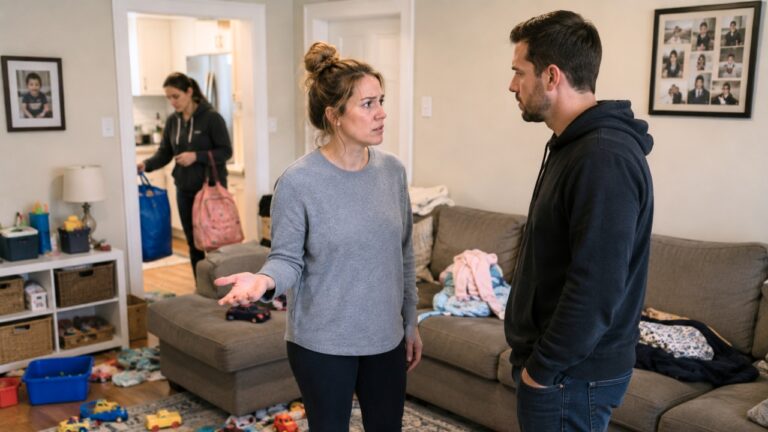
Her Boyfriend’s Sister-in-Law Let Her Son Rough Up the Dogs and Treated Her House Like Her Own — Then She Kicked Her Out for Good

Photo credit: AI-generated image created using ChatGPT.
Every man knows the kind of houseguest who doesn’t just visit, but occupies. They show up like they’ve got a key, make themselves comfortable like they pay the mortgage, and act offended when you treat your own home like it belongs to you.
That’s the situation described in the original post: a 31-year-old woman living with her boyfriend says his sister-in-law has been treating their place like a community center. The breaking point wasn’t a spilled drink or a pile of shoes by the door. It was her seven-year-old son repeatedly being rough with the couple’s dogs while his mother watched and did nothing.
After two years of putting up with the disrespect—mess, unannounced visits, even taking the woman’s car without permission—she finally told the sister-in-law to leave and not come back until she can respect the home, the homeowner, and the animals. Now friends and family are telling her she was too harsh, especially for correcting the child.
A home isn’t a hangout spot, and “family” doesn’t change that
There’s a strange idea some families carry around: if you’re connected by marriage, normal rules don’t apply. Doors don’t matter. Schedules don’t matter. Ownership definitely doesn’t matter. Seniority becomes the currency—“I’ve been around longer, so I can do what I want.”
But a home isn’t a public square. It’s stewardship. It’s where you’re supposed to be able to breathe, rest, and feel safe. If someone walks into your space and treats it like their own, they’re not being “close.” They’re being entitled, and entitlement doesn’t get sweeter with time.
The dogs were the real line in the sand
People will tolerate a lot to “keep the peace.” They’ll swallow irritation over messes, ignore rude comments, even endure awkward social dynamics because they don’t want to be the difficult one. That’s how small problems become permanent fixtures.
But letting a child yank a dog’s tail until it cries, pull ears, kick at them, and keep going after the animals are removed to another room is a different category. That isn’t “kids being kids.” It’s cruelty and it’s unsafe. A stressed dog can snap, and then everyone acts shocked that an animal reacted like an animal.
Protecting pets is part of running a decent home. If you invite someone in and they hurt what you’re responsible for, you don’t owe them endless patience. You owe your animals protection and you owe yourself a home that isn’t chaotic.
Correcting a child in your house isn’t parenting—it’s basic supervision
The sister-in-law’s main complaint was that the homeowner had “no right to discipline” her son. In a perfect world, a parent handles their own kid quickly and clearly, and nobody else needs to step in. That’s the ideal.
But if a parent refuses to correct harmful behavior in your home, you don’t just stand there and watch damage happen. Saying “No,” removing the child, and laying down a consequence like a timeout isn’t overstepping. It’s supervision in your own house, the same way you’d stop a kid from throwing rocks at a window or hitting another child.
The homeowner’s line—“well somebody has to”—was sharp, but it wasn’t random. It was the kind of sentence that comes out after someone ignores ten polite hints, five direct requests, and a handful of second chances.
The bigger problem is the sister-in-law’s pattern
If this were only about one afternoon with a rough kid, it might be something you talk through and reset. The problem is the pattern she described: bringing the boyfriend’s ex to the house without asking, telling her to “get over it,” leaving messes, offering the garage to others like free storage, taking the homeowner’s car without permission, and showing up expecting babysitting.
Those aren’t misunderstandings. Those are repeated choices that communicate, “I don’t respect you, and I don’t think you’ll do anything about it.” People like that often behave well only around consequences. Until then, they keep pressing, because pressing works.
And the “you haven’t been around as long as I have” comment is the tell. That’s not a wounded relative trying to connect. That’s someone trying to establish a pecking order, like relationships are military rank instead of mutual respect.
The boyfriend’s support matters, and it’s not a small detail
A lot of these situations get messy because the man in the middle goes quiet. He wants peace with his brother, peace with his wife or girlfriend, and peace with his extended family, so he chooses the easiest option: delay, dodge, and hope it fixes itself.
Here, the boyfriend is described as fully supportive. He’s confronted the behavior before, even more harshly than she has, and his brother has also tried. That doesn’t magically solve the family tension, but it does keep the couple from splitting into “your family versus me.” When two people share a home, they have to share a standard.
It also clarifies something else: this wasn’t a sudden outburst from a woman “who doesn’t like kids.” It sounds like the end of a long rope after repeated talks changed nothing. Family members calling her “too harsh” may be reacting to the shock of enforcement, not the fairness of the rule.
Respect is simple: ask, don’t assume
There’s a basic code most grown men understand. If it isn’t your house, you ask. If it isn’t your car, you ask. If your kid is acting up, you correct it quickly because you don’t want your child to be the reason you’re no longer welcome somewhere.
The sister-in-law seems to operate by a different code: assume access, assume authority, assume everyone else will absorb the inconvenience. That’s why the homeowner’s final boundary makes sense: leave, and don’t come back until you can respect the house, the homeowner, and the animals.
And let’s not skip the line that often gets ignored in these stories: she owns the house. Even if she didn’t, she lives there. Either way, no guest gets to treat the place like a free-for-all, and no parent gets to outsource discipline to “hoping it stops.”
If the family wants peace, they should aim it at the right person
When a boundary finally gets enforced, the group usually blames the person who enforced it. They call them “dramatic,” “too sensitive,” or “harsh,” because it’s easier than confronting the habitual offender. It keeps gatherings smoother in the short term, and it avoids the discomfort of telling the wrong person they’re wrong.
But real peace doesn’t come from letting one person bulldoze everyone else. It comes from order: respect, limits, and consequences that make sense. If the sister-in-law wants access to other people’s homes, she can start by acting like a guest and parenting her child like it’s her job.
There’s also a practical angle: a child roughing up dogs is a recipe for a bite, a hospital visit, and a dog paying the price for an adult’s negligence. Stopping that early isn’t cruelty toward the child. It’s protection for everyone involved.
Some folks only learn after the door closes. If this sister-in-law takes the warning seriously, she can apologize, change her behavior, and rebuild trust. If she can’t, then being “family” is just a word she uses to avoid accountability, and nobody needs that kind of guest in their living room.
Read more from Thrive Girly:
- Mother-in-Law Expected to Sleep Over After Every Visit — Then the Mom Said Overnight Stays Were No Longer an Option
- Relatives Showed Up to the Wedding Without Being Invited — Then the Couple Refused to Find Them Seats
- Grandma Buckled the Baby Into Her Car and Left Without Telling Anyone — Then the Mom Made Sure It Never Happened Again