Her MIL Kept Showing Up With Wedding Dresses She Never Asked For — Then She Told Her Point-Blank She Doesn’t Get a Vote
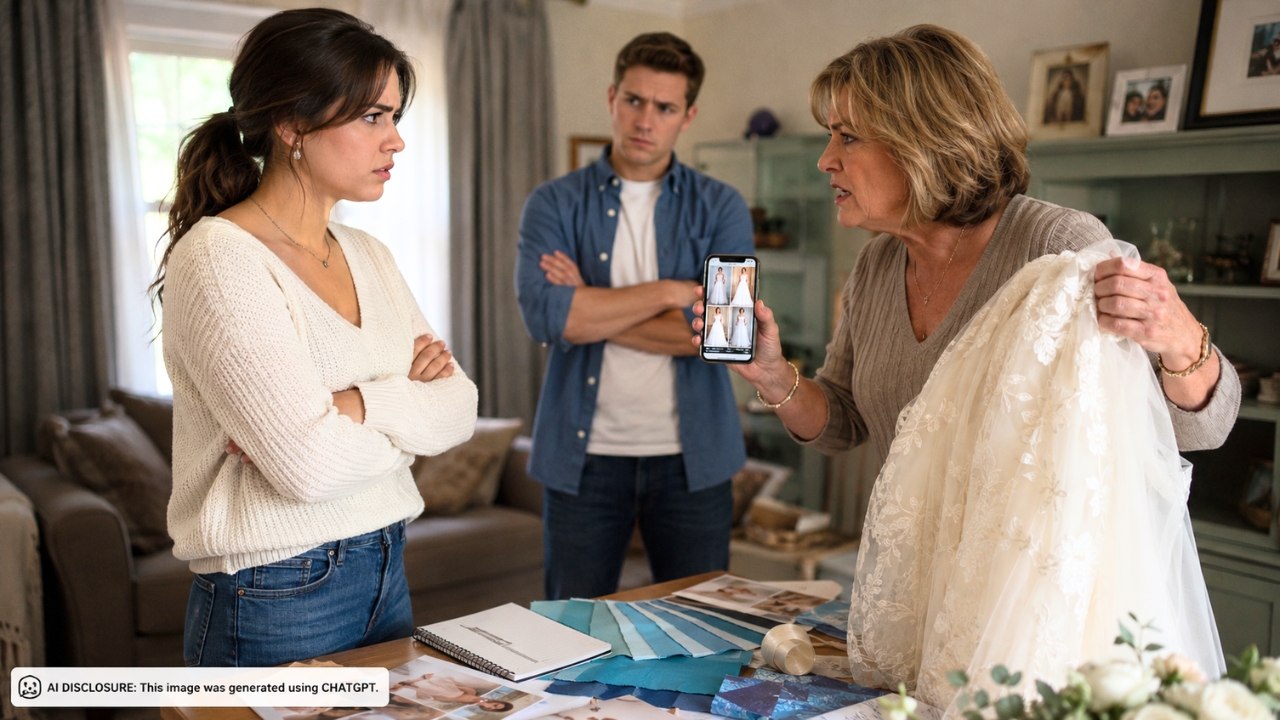
Photo credit: AI-generated image created using ChatGPT.
There’s a special kind of stress that shows up when wedding planning gets treated like a group project. Everybody’s got opinions, everybody’s got “traditions,” and somehow the couple paying the emotional bill is supposed to smile and nod. In the original post, a 23-year-old bride-to-be says her future mother-in-law didn’t just offer input—she started trying to pick the bride’s wedding dress for her.
The bride describes months of pressure: complaints about the guest list, objections to ocean-themed bridesmaid colors, and then a surprise visit where her in-laws arrived with dress photos on a phone. When the bride said the dresses didn’t match her theme and she already had her dress, her MIL reportedly exploded—insisting it was “her day too.” Things got uglier fast: her fiancé backed his mother, threatened to “rethink” their six-year relationship, and later, after the bride ended things, she says he damaged property and threw items, which she states she captured on camera.
Plenty of wedding stories are about bad manners and overbearing relatives. This one is about something more serious: a man who wouldn’t lead his home, and a mother who treated a marriage like an extension of herself. The wedding dress was just the flashpoint.
A wedding dress isn’t a committee decision
Let’s start with the obvious: the bride chooses the dress. Not her fiancé’s mother. Not the aunt with strong opinions. Not the “family friend” who thinks she knows better. A wedding dress is personal, symbolic, and tied to the bride’s taste and comfort—especially when she’s the one wearing it in front of everyone she knows.
In the story, the MIL showed dresses that didn’t fit the stated theme: one light purple, another light blue, short, and lace-topped. Maybe the MIL genuinely liked them. Fine. But the minute the bride said, politely, “No,” that should’ve been the end of it. Adults can be disappointed without becoming demanding.
“It’s my day too” is a tell
When a parent says a child’s wedding is “my day too,” you’re not dealing with normal excitement. You’re dealing with entitlement. A wedding can be meaningful to the families involved, and it’s good for a couple to honor parents where they can. But the wedding belongs to the couple starting the marriage, not the parents trying to relive a spotlight moment.
This line also reveals something else: the MIL wasn’t negotiating; she was claiming authority. If she can dictate the dress, she can dictate the guest list. If she can dictate the guest list, she can dictate the holidays. If she can dictate the holidays, she can dictate how your kids are raised. That’s how it usually goes—control doesn’t stay in one lane.
The real problem was the groom’s loyalty
The most important detail isn’t the purple dress or the ocean theme. It’s the fiancé’s response. According to the bride, he came back after running after his mother and screamed that she should accept the dress because it was his mother’s “day too.” Then he threatened to go to his mother’s house and rethink their relationship if she didn’t comply.
A man about to become a husband has one job that can’t be outsourced: protect the new household. That doesn’t mean being rude to his mom, and it doesn’t mean cutting family off over every disagreement. It means drawing clear lines and standing in them. If he can’t tell his mother “Mom, stop,” he’s not ready to tell the world “This is my wife.”
Marriage requires leaving and cleaving—not abandoning your parents, but changing your primary allegiance. If a man stays emotionally married to his mother, his actual marriage becomes a long, exhausting triangle where the wife always loses.
Pressure tactics aren’t love, they’re control
Notice the pattern in the story: the MIL ignores the bride’s “no,” escalates to screaming, then runs out crying. The fiancé and FIL chase after her, leaving the bride alone with a baby who was woken up. That’s not family closeness; that’s emotional theater that trains everyone to keep mom happy at all costs.
Then comes the next wave: threats from his family, and even a message from the bride’s stepmom telling her it wasn’t a big deal and to “suck it up.” That’s how control systems keep working—by recruiting more people to shame the person holding a boundary. The goal is to make the boundary feel “mean,” so the person drops it just to restore peace.
But peace bought with surrender isn’t peace. It’s a quiet kind of captivity.
Then it crossed into something darker
After the bride says they broke up, she adds a disturbing update: when she told him she wanted to end the relationship, he allegedly had what she called a “full grown man tantrum,” broke vases, threw plants, and threw plates at her. She says she got it on camera and saved the video. She also says he’s talking about aiming for full custody.
We don’t have his side of the story, and it’s wise to keep a level head about details you can’t verify. But as described, this isn’t wedding drama anymore; it’s destructive behavior and intimidation. A man who breaks things and throws objects during a breakup isn’t making a case for trust. He’s making a case for why boundaries and documentation matter, especially with a child involved.
It also clarifies something: the MIL’s behavior wasn’t a random quirk. The fiancé’s reaction suggests a home environment where outbursts get accommodated and accountability gets dodged. That’s a brutal foundation for marriage.
For the men reading: a word about strength and backbone
If you’re a guy and you’re engaged—or you hope to be someday—hear this plainly. Your mother doesn’t get a vote in your bride’s dress. She doesn’t get to run your wedding. And she definitely doesn’t get to demand that your future wife bend the knee to keep the family calm.
Honoring your mother is good. Being controlled by her isn’t. A decent rule of thumb: if your “respect” looks like fear, it’s not respect. If you can’t handle your mom being disappointed, you’ll sacrifice your wife’s dignity to manage your mom’s emotions, and you’ll call it “keeping the peace.” That’s not peacekeeping; that’s cowardice dressed up as politeness.
And if conflict makes you fly off the handle—yelling, breaking things, throwing things—you don’t need a wedding date. You need repentance, discipline, and real change. A husband is called to be steady. A father is called to be safe.
For anyone planning a wedding: boundaries are part of the vows
Weddings have a way of revealing what a marriage will be like under pressure. If parents can’t accept “no” about colors and clothing, they won’t accept “no” about bigger decisions later. If your fiancé won’t defend you when you’re being treated unfairly, he won’t magically grow a spine after the honeymoon.
The bride in this story says her dad and siblings were on her side, while others pressured her to comply. That split often happens when someone finally stops playing along. Still, her decision to end the relationship—especially after the later incident she describes—reads less like “ruining a wedding” and more like refusing to sign up for years of being bullied in formalwear.
A wedding is one day. A marriage is a life. If the price of getting down the aisle is handing your agency to someone else, you’re not starting a marriage—you’re joining a machine.
Some families will call you difficult the first time you say “no” and mean it. Let them. A healthy marriage needs clear lines, a man who can lead with humility, and a woman who doesn’t have to compete with his mother for authority in her own home. The dress was never the real issue, and it never is.
Read more from Thrive Girly:
- Mother-in-Law Expected to Sleep Over After Every Visit — Then the Mom Said Overnight Stays Were No Longer an Option
- Relatives Showed Up to the Wedding Without Being Invited — Then the Couple Refused to Find Them Seats
- Grandma Buckled the Baby Into Her Car and Left Without Telling Anyone — Then the Mom Made Sure It Never Happened Again