Brother Claimed Dad Promised Him the Whole Farm for Caring for Him — Then the Court Found He Never Did and Split It Two Ways
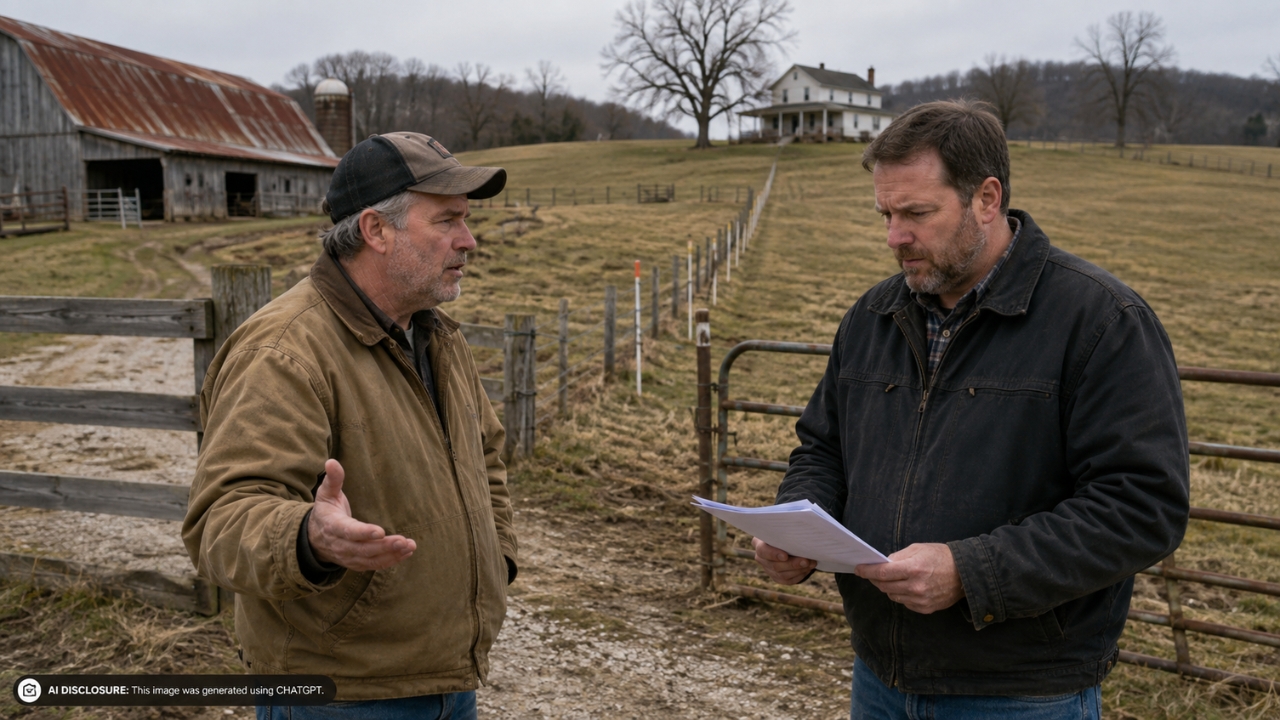
Photo credit: AI-generated image created using ChatGPT. Illustrative only.
Some families can run a farm together for generations, and some can’t make it through one funeral without ending up in court. A Tennessee case between two brothers shows how quickly “Dad always said…” turns into sworn testimony, bank records, and a judge deciding what counts and what doesn’t.
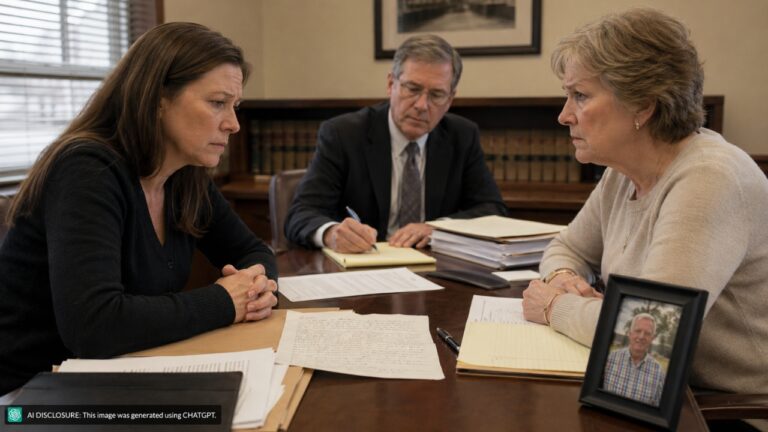
The dispute is laid out in the source material from the Court of Appeals of Tennessee. Their father, George Earl Kitzmiller, died in December 2017 without a will. One brother, Millard, said that meant they owned the property together and asked the court to partition it. The other brother, Roy, said he should get everything because their dad orally promised him the whole farm if he moved there, worked it, and cared for him.
If you’ve been around family businesses or inherited land, you already know the pressure points. People remember conversations differently, old resentments get a second wind, and what felt “understood” in the living room doesn’t survive the rules of a courtroom.
A handshake promise versus a will
Millard’s position was straightforward: their father died intestate, meaning no will, and the brothers were his only heirs. Under that setup, they’d be tenants in common, and Millard wanted a partition by sale because they couldn’t agree on use or disposal of the property.
Roy went the other direction and asked the court for specific performance of an oral agreement. He said his father promised to leave him the entire estate, real and personal, if Roy moved to the farm, ran it, and handled care and support for the remainder of George’s life. Roy also argued equitable estoppel should prevent Millard from using the statute of frauds as a defense.
This is one of those situations where people confuse three different things: a parent’s intention, a parent’s gratitude, and an actual enforceable agreement. A father can say, “Someday this will all be yours,” and mean it in the moment. That doesn’t automatically create a contract the courts will enforce years later.
What witnesses said George told them
At trial, several friends, neighbors, and acquaintances testified about what George said over the years. Some witnesses recalled George saying Roy would inherit the farm, and a few described comments suggesting George had “turned the farm over” to Roy and Roy’s wife, Ann, to work it.
One neighbor said George never mentioned a will or a deed. Another witness recalled a remark about George not repairing a tractor because he’d “given everything” to Roy and Ann, though she didn’t know what he meant and said George didn’t mention a will.
Others were more direct, testifying George told them that if Roy moved to the farm and helped maintain it, the house, farm, and equipment would go to Roy, and that Millard had the same opportunity but declined. The problem for Roy wasn’t a lack of people who remembered hopeful statements. The problem was that these sounded like casual expressions of intent, not proof of a clear, enforceable agreement with definite terms.
Why the court didn’t buy the “contract to make a will” theory
The trial court treated part of Roy’s claim as a “contract to make a will,” which Tennessee law tightly regulates. The appellate opinion points to Tennessee Code Annotated § 32-3-107, which requires specific forms of proof: material provisions in a will, an express reference in a will plus extrinsic evidence, or a writing signed by the decedent that evidences the contract.
Roy didn’t have a will containing the contract terms, and he didn’t have a signed writing from George confirming a deal to leave everything to him. The courts aren’t trying to be cruel here; they’re trying to prevent land from being transferred based on memories, family pressure, and selective storytelling. The Court of Appeals agreed with the trial court and affirmed that Roy didn’t meet the statutory requirements for a contract to make a will or devise.
This is where a lot of families get hurt. People think paperwork is cold or mistrustful, when it’s often the most loving thing you can do for the people you leave behind. A clear will and clear deeds don’t eliminate grief, but they cut down on suspicion and damage.
The “oral agreement” still fell apart on details
Roy also claimed there was a separate oral agreement: he’d move in, manage the farm, and handle extensive personal care for George through the end of George’s life. In exchange, Roy would receive the entire estate. He described the help as including farm management, meals, laundry, equipment maintenance, livestock care, mowing and brush work, and even coordinating medical care and medications.
The trial court found the testimony about an enforceable agreement “unpersuasive,” characterizing the witnesses’ accounts as casual comments about future disposition. The appellate court agreed, noting that Roy’s witnesses described expressions of intent, not a bargain with clear terms.
The court also emphasized vagueness. George’s property consisted of seven parcels, with multiple residential properties on the land. For specific performance, courts expect a contract that’s clear, definite, and complete. If a deal is fuzzy on what exactly is being conveyed, when, and under what conditions, it’s hard to enforce without inviting fraud or unfairness.
Performance mattered, and the court questioned Roy’s claims
Even if a court assumes an oral agreement existed, the person demanding enforcement has to show he did his part. Roy testified that he moved to the farm in 2014, retired in 2017 due to disability, and worked hay on about 20 acres two or three times a year, claiming around 100 hours per month during hay season. The court openly noted that number sounded exaggerated.
Roy also said Ann prepared all of George’s meals, but the trial court found that less credible because George often ate out during the week with friends. On finances, Roy claimed he paid farm operating costs, taxes, and even the mortgage on the property. Yet records introduced at trial showed a $150,000 mortgage was retired at George’s death with George’s money, and the court found financial records did not support Roy’s claim that he paid taxes and costs.
The trial court concluded the arrangement looked more like joint operation than Roy taking over entirely. Both men claimed farm expenses on tax returns, and the evidence didn’t persuade the court that Roy had taken on the kind of burden that would make it inequitable not to enforce a verbal promise. The court also found it was “just as likely” Roy benefited as much or more from living and working on the farm as George did.
Why the statute of frauds kept its teeth
Roy tried to block Millard’s statute-of-frauds defense by arguing equitable estoppel, essentially saying it would be unfair to let Millard rely on the requirement of a writing after Roy relied on George’s promise. In real life, that argument can feel compelling, especially if someone truly rearranged their life and sacrificed for years based on a promise.
But the courts didn’t see the record supporting that kind of substantial, one-way sacrifice. The trial court didn’t find an unconscientious, inequitable benefit that required equity to intervene, and the appellate court affirmed. In plain terms: the story didn’t meet the legal threshold to override the requirement that land deals be in writing.
Hard lesson, but a familiar one: courts don’t enforce sentiment. They enforce agreements that can be proved, especially where real property is involved.
The result: co-ownership and a path to partition
With Roy’s counterclaim dismissed, the courts left the brothers as joint owners, tenants in common, of the property their father owned when he died. The appellate court affirmed the trial court’s rulings and sent the matter back for further proceedings consistent with the opinion, which in practical terms means the partition case can move forward.
The ending isn’t tidy, and it rarely is. A farm is land, but it’s also memory, pride, and identity. When those things collide with unclear planning, the law steps in and makes a blunt cut: split ownership according to the rules, not the stories.
If there’s a sober takeaway here, it’s that “I’ll take care of you and you’ll leave me the place” is a conversation that deserves paperwork, clarity, and witnesses while everyone is alive and thinking straight. Family loyalty is a good thing, but it shouldn’t be held together with vague promises that die the moment they’re needed most.
Read more from Thrive Girly:
- Mother-in-Law Expected to Sleep Over After Every Visit — Then the Mom Said Overnight Stays Were No Longer an Option
- Relatives Showed Up to the Wedding Without Being Invited — Then the Couple Refused to Find Them Seats
- Grandma Buckled the Baby Into Her Car and Left Without Telling Anyone — Then the Mom Made Sure It Never Happened Again