Dad’s New Wife Wanted to Be Called Grandma to His Grandson — Then He Told Her She Wasn’t
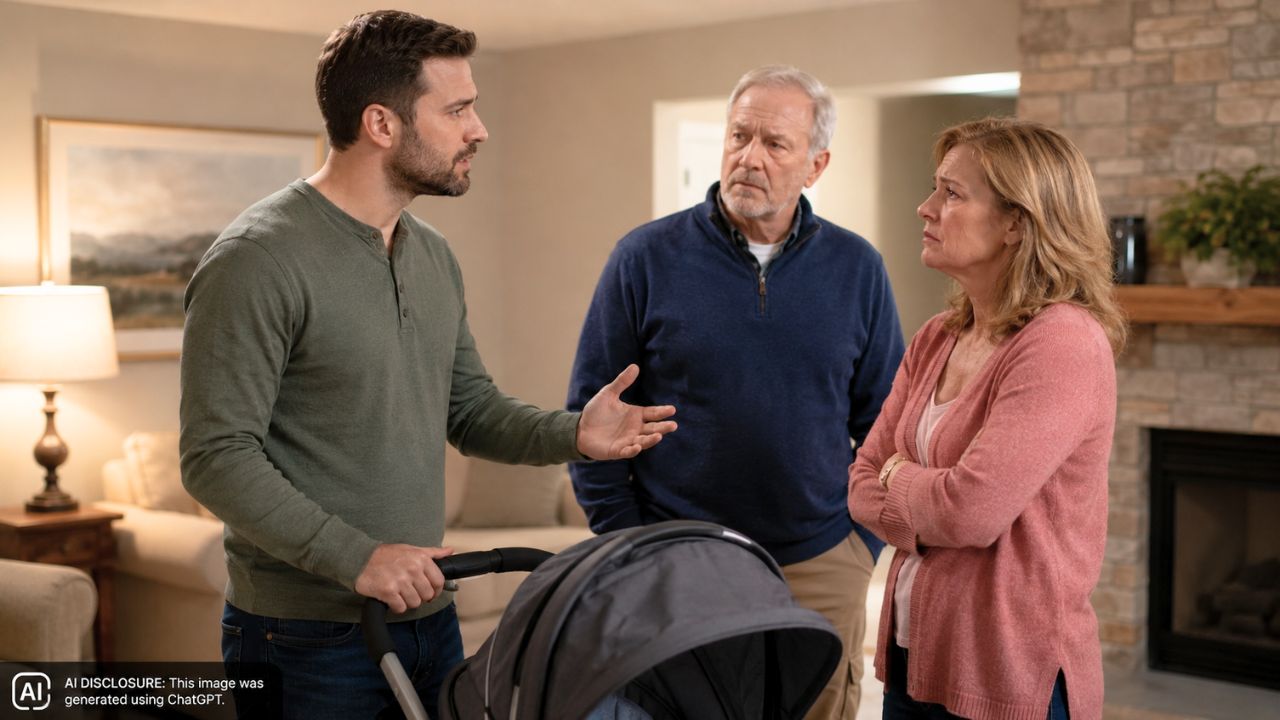
Photo credit: AI-generated image created using ChatGPT
There’s a particular kind of tension that shows up when a family is trying to “move on,” but nobody agrees on what moving on is supposed to look like. A young dad lost his mom five years ago, his father remarried eight months ago, and now the new wife wants a title that carries real weight in a child’s life: Grandma.
In the original post, the 29-year-old explains that his son is six months old, and when they visit he refers to his dad as “grandpa” and his dad’s wife by her first name, “Jane.” The new couple doesn’t like that. They expected “grandpa and grandma,” and the father directly asked whether using her name was intentional. The son said yes, because he doesn’t see her as his child’s grandmother.
If you’ve lived long enough, you’ve seen versions of this. Adults try to force closeness with a label, as if a name can do the heavy lifting that time and trust are supposed to do. And when the label is denied, feelings get hurt, pressure gets applied, and the real issue gets buried under a fight about vocabulary.
A title isn’t just a word in a baby book
“Grandma” isn’t like “Aunt Linda who we see at Christmas.” It’s a role with emotional expectations and a certain authority. For many families, it means history, continuity, and a connection to the child’s parent as they once were.
That’s why the son’s stance makes sense even if it comes off blunt. His mother died only five years ago, right before his wedding, and there’s still a clear line in his mind: his son has a grandma on his wife’s side, and the grandma on his side is his late mother. In his world, that’s not replaceable, and he doesn’t want to pretend it is.
The new wife isn’t wrong for wanting belonging
It’s easy to dunk on the stepmom here, but her desire isn’t hard to understand. She has no children or grandchildren of her own, and she imagined that marrying into the family would include a “matriarchal” place—her word—where she’s welcomed as more than “the lady married to my dad.”
Most people don’t get married hoping to feel like a guest in their spouse’s life. She likely wants to be included in holidays, photos, and the normal rhythm of family life. Wanting warmth and connection isn’t the same thing as demanding control, and it’s worth acknowledging the human side of it.
Still, wanting a thing doesn’t make it yours. Belonging grows with consistent presence, humility, and patience, not with a title issued like a badge.
But the son isn’t obligated to hand over “grandma” on demand
The son’s reasoning is straightforward: he’s an adult, he moved out years ago, and his dad’s wife entered his life long after his childhood was formed. He doesn’t see her as a parental figure, and he doesn’t want to sell his own son a story he doesn’t believe.
That last part matters. Parents can’t afford to be fake about family structure just to keep the peace. Kids grow up and notice what’s forced, who’s walking on eggshells, and which relationships are held together by pressure instead of affection.
There’s also a quiet boundary here that deserves respect: he’s protecting his mother’s place in his family story. He isn’t attacking his dad’s marriage. He’s saying, “I’m not rewriting the family tree because it makes someone else feel better.” That’s a painful line, but it’s a clear one.
Dad’s mistake: trying to solve grief and bonding with a label
The father told his son that calling her “Jane” encourages the baby to see her as “grandpa’s wife” instead of “grandma.” That may be true, but it also reveals what he’s trying to do: manufacture a relationship by controlling the terms of address.
Here’s the problem: if the relationship is real, it doesn’t need to be forced. A child can love “Jane” deeply even if the child calls her “Jane.” And if the relationship isn’t real yet, “Grandma” won’t make it real; it will only raise expectations and magnify disappointment.
There’s also an uncomfortable whiff of loyalty testing. When a parent pressures an adult child to accept a new spouse as “mom” or “grandma,” it can feel like a demand to prove you’re fine with the remarriage. The son explicitly said it’s nothing against his dad remarrying, but the pressure suggests the couple is still looking for validation through the child.
What “grandparent” means in a blended family
Blended families can be good, strong, and honorable, but they have their own physics. In a lot of homes, the kindest approach is to let relationships name themselves over time. Some step-grandparents become “Grandma” because the bond forms naturally. Others become “Nana Jane,” “Miss Jane,” or simply “Jane,” and the affection is no less real for it.
The sticking point here is that the new wife doesn’t just want closeness; she wants the traditional rank of “matriarch” and the recognition that comes with it. That’s a bigger ask. A matriarch isn’t appointed; she’s respected. That respect is earned through years of showing up, serving, and loving people without demanding they salute.
If you’re coming into a family with a late mother who is still deeply loved, wisdom says you tread softly. You don’t compete with a memory. You honor it, you listen, and you become your own kind of steady presence. That’s how trust grows.
A better path: keep the boundary, open the door
The son has a boundary: he doesn’t want to call her “grandma” or teach his son that she is. He can keep that boundary without turning every visit into a cold shoulder. Calling her “Jane” doesn’t have to mean treating her like a stranger.
There are practical alternatives that respect everyone. He could stick with her name while still speaking warmly: “Jane loves you,” “Jane brought you a book,” “Let’s go sit with Jane.” If the couple is willing, they could consider a distinct nickname that isn’t “Grandma” but still signals affection and a special place.
On the other side, the father and his wife need to ease off the leverage. The way to become a “true member of the family” isn’t insisting you won’t be treated like “an in-law.” In-law is a real relationship. Marriage is a covenant, not a costume, and the family bond can be honored without demanding an inherited title from a child who barely knows you.
Where faith and character quietly matter
Families work better when people tell the truth plainly and then behave with patience. The son told the truth: he doesn’t see her as grandma. Now he’s responsible to remain respectful and consistent, not cruel or dismissive.
The father’s wife also has a chance to show a kind of love that isn’t needy. The strongest women I’ve known in families like this didn’t chase titles. They served, they listened, they made space for grief, and they let affection come in its own time.
Humility doesn’t mean pretending you don’t want to be loved. It means you don’t demand it, and you don’t punish people for being honest about where they are.
There’s no perfect solution that makes everyone feel fully satisfied right now. But there is a workable one: keep the language honest, keep the treatment kind, and give the relationships time to become what they actually are—without forcing a six-month-old baby to carry the emotional expectations of the adults in the room.
Read more from Thrive Girly:
- Mother-in-Law Expected to Sleep Over After Every Visit — Then the Mom Said Overnight Stays Were No Longer an Option
- Relatives Showed Up to the Wedding Without Being Invited — Then the Couple Refused to Find Them Seats
- Grandma Buckled the Baby Into Her Car and Left Without Telling Anyone — Then the Mom Made Sure It Never Happened Again