The Judge Dismissed His In-Laws’ Visitation Petition and Then Held Him in Contempt Anyway — Then He Appealed the Ruling He’d Just Won
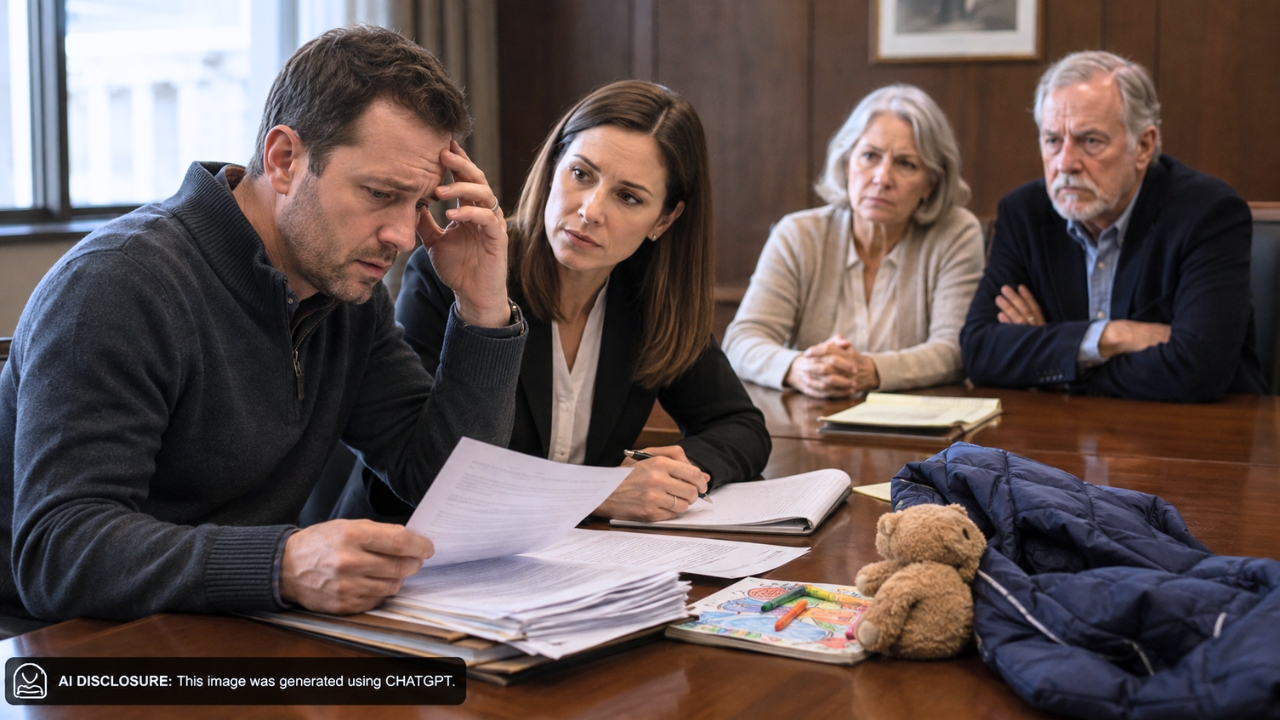
Photo credit: AI-generated image created using ChatGPT. Illustrative only.
There’s a special kind of frustration reserved for the moment you “win” in court and still walk out feeling like you lost. That’s where Rhode Island father Scott Naso says he’s landed after a judge dismissed his late wife’s parents’ petition for visitation with his 4-year-old daughter, then turned around and held Naso in contempt anyway.
As reported in the source material, Naso is now appealing parts of the ruling: the contempt finding and $2,500 fine, the judge’s refusal to make the grandparents cover his legal fees, and even a statement in the judge’s findings suggesting it would be in the child’s best interest to have her grandparents in her life. It’s an unusual posture—appealing after the main petition against you gets tossed—but if you’ve ever dealt with family conflict, you know how quickly “technically right” stops feeling like “actually resolved.”
The money alone explains why this isn’t over. Naso says he’s piled up more than $500,000 in legal fees and related expenses since the trial began in October 2025, and his attorney argues the grandparents should reimburse him because he was, in their view, protecting his daughter.
A dismissal that still came with a rebuke
Judge Felix Gill dismissed the grandparents’ petition seeking visitation with Naso’s daughter, Laila. From the bench, he reportedly said he had to give deference to “a fit and proper custodial parent” who refuses visitation. That’s the part most parents would circle in red pen as a clear win.
But Gill didn’t leave it there. He also criticized Naso’s credibility in portions of his testimony and suggested Naso had put his own interests before his daughter’s. If you’ve ever been in a high-stakes argument, you know how a judge’s tone can matter almost as much as the ruling, because those words don’t just float away—they follow you into the next hearing, the next motion, the next appeal.
Why he was held in contempt after “winning”
The contempt finding goes back to January 2025, when Naso stopped the grandparents’ visits. That decision came after an earlier judge had allowed temporary supervised visitation: one hour every other week. Gill found Naso in contempt for cutting that off.
In plain terms, the court appears to be saying two things at once: the grandparents don’t get court-ordered visitation going forward, but you also can’t ignore a prior court order without consequences. That combination can feel absurd from the outside, but courts tend to take compliance seriously even when an order is later modified or the underlying case changes direction.
Naso’s position is that he feared for his daughter’s safety and did what a father is supposed to do. The grandparents deny wrongdoing and, per the reporting, have not been accused of a crime.
The legal bill fight is its own kind of war
Beyond the contempt fine, the big financial punch is the legal tab. Naso says the litigation has cost him more than $500,000, and his attorney, Veronica Assalone, told PEOPLE she believes it was an abuse of discretion not to order the grandparents to reimburse him. When a case drags on, the legal fees can become the punishment, even if you “prevail” on the main question.
There’s also a practical reality here: the fight for attorney fees often becomes a second trial after the first one ends. People who’ve never been in court assume the judge bangs the gavel and everyone goes home. In family court, it’s more like you get a new stack of paperwork, new deadlines, and a new reason to wake up tense at 3 a.m.
It’s not clear whether the grandparents, Siavash Ghoreishi and Jila Khorsand, will appeal the dismissal of their visitation petition. Their attorney did not return calls to PEOPLE and reportedly advised them not to speak publicly.
A family relationship that collapsed after a hard loss
The backstory matters because this isn’t a casual disagreement over holidays. Naso’s wife, Shahrzad “Sherry” Naso, died of cancer in 2024, and the relationship between Naso and his in-laws deteriorated after her death. Grief can either soften people into patience or sharpen them into suspicion, and in some families it does both at once.
Sherry was diagnosed with breast cancer in 2017. She and Naso married in September 2020 and welcomed Laila via a surrogate the following year, according to the reporting. Later, Sherry’s cancer returned, and Naso blames her parents for influencing her medical decisions in a way he believes contributed to her death.
The grandparents, for their part, have described a close bond with Laila. In testimony referenced by PEOPLE, Khorsand said Laila would get excited to see them and called her “GiGi,” and Ghoreishi testified that he loves Laila “unconditionally.” Those details don’t settle who’s right, but they explain why neither side is treating this like a minor misunderstanding.
The allegations: medical care, prescriptions, and deep distrust
The conflict includes explosive allegations related to medical decisions. Naso complained to the Rhode Island Department of Health in January 2025 accusing his in-laws of Munchausen syndrome by proxy—now called factitious disorder imposed on another—against both his wife and daughter. His attorney pointed to court testimony that Ghoreishi wrote 36 prescriptions for Laila before she turned 3 and billed Blue Cross/Blue Shield for 56 “office and after-hours” visits for her.
Assalone told PEOPLE that Laila allegedly hasn’t been sick or taken prescribed medication since being outside her grandparents’ control. The grandparents have denied wrongdoing. No criminal accusations are described in the reporting, and the story does not indicate any criminal charges.
If you’re reading this as a parent, you can probably feel the temperature of it. Once a family crosses into accusations about medical harm and child safety, you’re no longer arguing about boundaries—you’re arguing about trust, and trust is the hardest thing to rebuild once it’s been lit on fire.
The grandparents’ rights law is still on the table
Even with the petition dismissed, the larger legal question isn’t going away. Assalone has said she intends to keep challenging Rhode Island’s grandparents’ rights law, potentially taking the issue to the U.S. Supreme Court if possible. She also said she’s encouraged that the Rhode Island Supreme Court is reviewing a petition she filed challenging the constitutionality of the statute.
Rhode Island’s law, as described in the reporting, can allow visitation over a parent’s objections if a court finds it is in the child’s best interest. Gill’s statement about deferring to a fit custodial parent suggests there are limits, but Naso’s legal team appears to want a clearer, higher-court ruling about how far the state can go in forcing visitation when a parent says no.
That kind of constitutional fight takes time, money, and a strong stomach. It also tends to keep families locked in conflict longer than anyone expects, because the case becomes about more than just one child’s schedule—it becomes a referendum on the law itself.
Why a “best interest” comment can still matter
One detail that’s easy to overlook is Gill’s finding that it would be in Laila’s best interest to have her grandparents in her life, even while dismissing the petition. Naso is appealing that finding, too. On paper, it sounds like an observation. In real life, those observations can shape future disputes, from custody-related issues to any renewed petition down the road.
If you’ve ever had someone in authority put a negative label on you—“not credible,” “self-interested,” “uncooperative”—you understand why a parent would push back hard. Even if the order today favors you, the language can become leverage tomorrow. A man who’s trying to rebuild a stable home for his child doesn’t want a permanent asterisk attached to his name in court records.
Assalone also noted the appeal could be slow because she must wait for a transcript of Gill’s decision and then follow the steps required before filing can proceed. That’s another reality of court: it moves at its own pace, regardless of what your life needs in the meantime.
Naso told PEOPLE he believes the system is broken and that he refuses to give up. Maybe that’s stubbornness, maybe it’s resolve, maybe it’s both. Either way, this is the kind of fight where nobody walks away untouched, and the child at the center deserves the one thing courts can’t truly order: the adults in her life choosing steadiness over spite.
Read more from Thrive Girly:
- Mother-in-Law Expected to Sleep Over After Every Visit — Then the Mom Said Overnight Stays Were No Longer an Option
- Relatives Showed Up to the Wedding Without Being Invited — Then the Couple Refused to Find Them Seats
- Grandma Buckled the Baby Into Her Car and Left Without Telling Anyone — Then the Mom Made Sure It Never Happened Again