A Colleague Assumed She’d Beaten Out Every Other Candidate for the Job — Then She Chose Not to Correct the Record

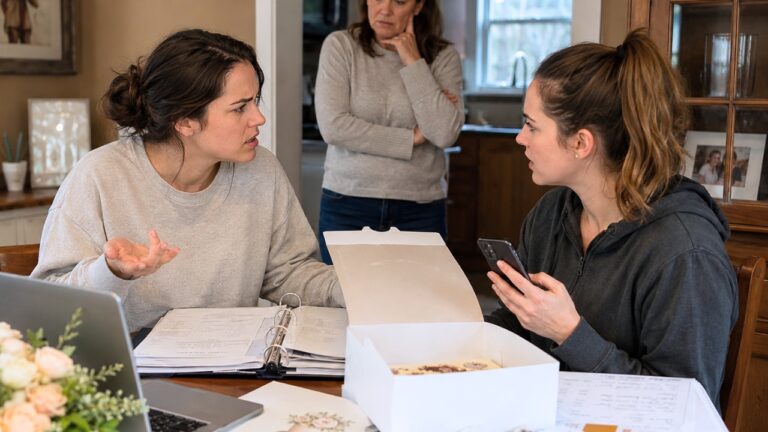
Photo credit: AI-generated image created using ChatGPT. Illustrative only.
It started out like any other office win: a new hire, a fresh start, and that early-week glow of “I did it.” A 29-year-old employee who helped interview candidates for an open role watched a familiar face walk into the team—and felt a small, uncomfortable knot form when she started talking about how she got there.
In the original post, he explains that what she believed about her hiring story wasn’t exactly true. And the awkward part was that she told it to him directly, like it was a shared victory lap.
They had two great candidates… but only one offer to give
The role came down to two people who both impressed the team. It wasn’t one of those situations where they were scrambling for a warm body; these were genuinely strong options.
But one candidate was the clear favorite. So the team did what most workplaces do: they offered the job to their top pick first.
He accepted. Everyone could exhale. The position was filled, the search was over, and the team could move on.
Then the first-choice hire backed out at the last minute
About a week later, the plan fell apart. The candidate who accepted the offer changed his mind after getting a better offer somewhere else.
It’s the kind of thing managers hate and employees quietly understand. People go where the money is, or where the opportunity feels bigger. Either way, the team suddenly found themselves right back where they started—except now the clock was ticking.
So they called the second candidate. The runner-up got the offer, accepted it, and officially became the new teammate.
She walked in feeling like she’d won a competition
This is where it gets personal. The employee who posted wasn’t just an interviewer—he’d known the new hire for a couple of years already.
They weren’t close friends, but they got along. Enough familiarity that she felt comfortable sharing how she felt about the process once she started.
A few days into the job, she told him she was proud she’d gotten it. She admitted she’d been nervous during the interviews, but said it felt good knowing she’d beaten out the other applicants.
And there it was: the story she was telling herself. Not “I’m relieved,” not “I’m grateful,” but “I won.”
He congratulated her… and let her believe it
In that moment, he didn’t correct her. He didn’t add the footnote that she was offered the role only after the first-choice candidate bailed.
He smiled and congratulated her instead.
To him, it didn’t feel like a lie he needed to fix. She was qualified. She did go through the interviews. She did get hired. And if the first candidate hadn’t walked away, she never would’ve known there even was a “first choice” ahead of her.
So he let the moment stay warm. No cold splash of reality. No unnecessary humiliation. Just a simple “congrats” and moving on.
Another coworker insisted she deserved “the truth”
The peace didn’t last long, though—not because the new hire found out, but because someone else decided this was a problem.
A coworker told him he should’ve been honest with her, because technically she wasn’t the first choice.
That word—technically—is where office drama loves to live. On paper, sure, she wasn’t the initial pick. But in real life, she was the person who accepted and showed up and is now doing the job.
He disagreed with his coworker. He didn’t see what good could come from it. Why puncture someone’s confidence during their first week, just to satisfy a detail that changes nothing about her actual performance?
Still, once it was said out loud, it stuck with him. He started wondering if staying quiet was kind… or if it crossed into letting someone believe something false about themselves.
The real question: is it kindness, or is it letting a false story grow?
What makes this messy isn’t the hiring sequence. That part is straightforward. The uncomfortable piece is what her comment revealed: she wasn’t just happy to have the job—she felt validated by the idea that she “beat” other people.
And that mindset can land weird in a workplace, especially if she repeats it to the wrong person. If she tells teammates she outperformed everyone else, it could come off smug. If she says it in front of someone who knows the backstory, it could get awkward fast.
At the same time, the alternative is also awkward: imagine being new, finally feeling settled, and then someone who interviewed you casually drops, “Just so you know, you weren’t our first choice.”
Even if it’s said gently, it has a sting. It can make a person second-guess every interaction afterward. Are people comparing me to the one who got away? Do I have to prove I’m not the backup plan? It’s the kind of comment that doesn’t “correct the record” so much as plant a seed of insecurity.
And there’s another angle here, too: was it even his information to share? Hiring decisions and offer order can be sensitive. What feels like harmless honesty can easily turn into gossip, especially when it’s about who was favored and why.
So he’s stuck in that gray zone so many people recognize: he didn’t lie outright, but he also didn’t clarify. He chose social grace over technical accuracy, and now he’s questioning whether that was the right call.
The strange part is that nothing has actually exploded yet. No confrontation. No HR meeting. No public embarrassment. Just a quiet moment in an office hallway that turned into a moral math problem afterward.
And for now, the new hire gets to keep walking into work believing she earned her spot fair and square—while the people around her are the ones debating whether she should ever know the behind-the-scenes truth.
Read more from Thrive Girly:
- Mother-in-Law Expected to Sleep Over After Every Visit — Then the Mom Said Overnight Stays Were No Longer an Option
- Relatives Showed Up to the Wedding Without Being Invited — Then the Couple Refused to Find Them Seats
- Grandma Buckled the Baby Into Her Car and Left Without Telling Anyone — Then the Mom Made Sure It Never Happened Again