The Bride Called Off Her Wedding for Someone Else and Kept Every Gift — Then Her Bridesmaid Asked for the Dress Money Back
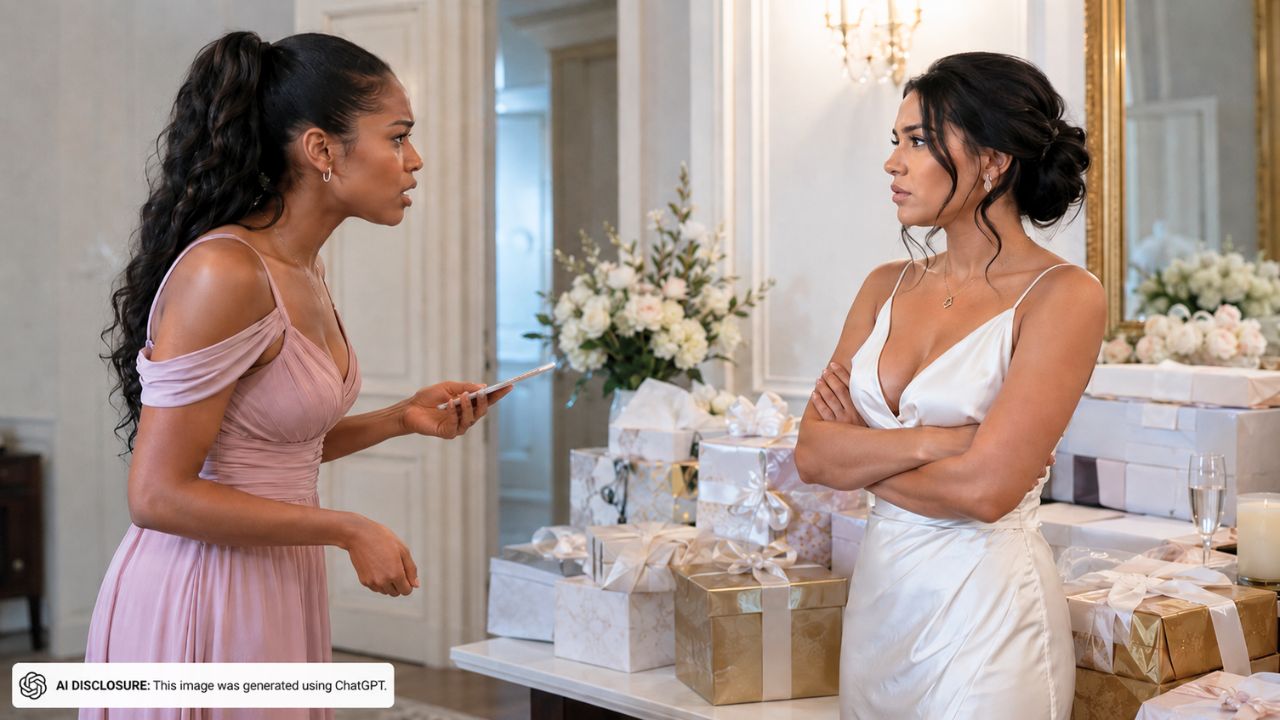
Photo credit: AI-generated image created using ChatGPT. Illustrative only.
It started like one of those full-circle moments: an elementary school friend group reconnecting just in time to celebrate the first wedding in the crew. Two 27-year-old friends—one of them the narrator—were surprised to be asked to be bridesmaids by a friend they hadn’t been close with in about five years, but they said yes anyway. It felt exciting. It felt like a fresh start.
Instead, it turned into the kind of wedding mess that leaves people staring at a dress hanging in their closet, doing mental math and wondering how someone can accept all the love, all the effort, and all the gifts… and still act like nobody else lost anything. The full story was shared in the original post, and the details are the kind that make your stomach drop halfway through.
It wasn’t just a dress—this wedding came with a price tag
From the beginning, this wasn’t a low-key “show up in a matching color” situation. The bachelorette party was a full Cancun girls trip where every day was planned, which meant specific outfits were required—right down to colored wigs.
Then came the bridesmaid dresses. The narrator and her friend “Betty” got fitted and bought theirs, excited to do the whole bridesmaid experience for the first time. And because they were trying to be genuinely supportive, the spending didn’t stop there.
After dress shopping, the narrator took the bride out and bought her earrings the bride chose for the wedding. She also bought part of a vibrating adult toy as an early wedding gift. It wasn’t just obligation; it was that “we’re really doing this, you’re getting married” energy.
The pre-wedding events kept piling on—and so did the effort
Next up was the stag and doe. The way the narrator described it, everyone was expected to sell tickets to their families, and whoever sold the most would win a prize. Betty apparently did really well—she sold a lot to her Italian family—yet the prize ended up going to the bride’s sister anyway.
The narrator also donated bottles to the event. It was another example of the bridal party showing up, participating, and contributing—financially and socially—because that’s what you do when you’re in someone’s wedding.
Then came the bridal shower. The narrator said she, Betty, and another elementary school friend were the only ones who actually bought gifts. They even put together a custom cookbook filled with family dessert recipes because the bride loved to bake. There was also one guy at the shower, which didn’t seem important at the time, but the narrator flagged it because it would matter later.
A month before the wedding, the bride pulled the plug
About a month before the big day, the bride messaged the bridesmaids and said the wedding was canceled. No warning signs, no slow fade—just canceled.
The narrator and Betty tried to respond like real friends. They asked if she was okay and suggested hopping on a call, but the bride said she wasn’t ready. So they planned something in person: a wine night at her house, the kind of hangout that’s supposed to be a safe landing when someone’s life implodes.
During that night, the bride explained her reasoning. She said she never liked her fiancé, felt pressured into saying yes because family was there when he proposed, and that she felt like she was dating her brother. That last detail was the only part the narrator said she fully believed.
Still, the bridesmaids kept asking what happened, because it all felt so sudden. They were looking for something that made it make sense.
The truth came out, and it wasn’t just cold—it was casual
Once the wine kicked in, the bride admitted there was someone else. The “one guy” from the bridal shower? That was him. She’d been seeing him and talking to him about her doubts—confiding in him instead of the friends who were spending money and time trying to support her wedding.
According to the narrator, the bride framed it like this guy “helped her realize her worth,” and she decided to call off the wedding to be with him. What hit hardest wasn’t just the cheating energy of it all—it was the bride’s attitude afterward.
The narrator said the bride didn’t have regrets and didn’t feel bad about anything. And that was the moment the whole thing stopped being “a sad canceled wedding” and started being “wait… did we just get used?”
The bridesmaids were stunned. And they were hurt—not only because the bride hadn’t trusted them with the truth, but because she didn’t seem to acknowledge what her decision cost other people. No real appreciation. Not even a thank you for the trips, the events, the gifts, or the money already spent.
Then came the question she didn’t want to answer
After the cancellation, the narrator tried to keep things civil. She even messaged the bride about doing something together with all the bridesmaids, maybe as a way to close out the whole experience and salvage some kind of friendship from the wreckage.
The bride replied that they would “one day.” Vague, but at least it was a response.
Then the narrator asked the question that made everything uncomfortable: when did the bride think she could pay them back for the bridesmaid dresses?
This time, there was no reply.
And that silence is what pushed the narrator into the “am I wrong for asking?” spiral. She made it clear she wasn’t demanding all the gifts back. She said the bride kept everything—just like she kept the ring—and the narrator wasn’t even trying to reclaim the earrings, the cookbook, or anything else. She just wanted to be reimbursed for the dress, an expense that now felt pointless.
No big blowup—just a friendship cooling in real time
What makes this situation feel so tense is that it isn’t a screaming match. It’s a slow fade with a hard edge. The narrator reached out. The bride ignored the one message that involved money.
And it leaves the narrator stuck in a very specific kind of frustration: she already showed grace by not demanding gifts back, but now she’s wondering if asking again about the dress will make her look petty. At the same time, she’s sitting with the feeling that the bride didn’t just call off a wedding—she walked away from a pile of other people’s expenses and effort without blinking.
The last detail that lingers is how quickly the bride moved emotionally. She shared her reasoning, admitted she’d been leaning on the other guy, and then basically shrugged at the fallout. That’s a tough thing to forget when you’re the friend who bought the earrings, helped fund the events, packed for the themed outfits, and showed up ready to stand beside her.
Now the narrator is left with an unanswered question, a dress she didn’t need, and a friendship that suddenly feels very one-sided—like it only mattered when the bride needed bodies for photos and people to bankroll the party.
Read more from Thrive Girly:
- Mother-in-Law Expected to Sleep Over After Every Visit — Then the Mom Said Overnight Stays Were No Longer an Option
- Relatives Showed Up to the Wedding Without Being Invited — Then the Couple Refused to Find Them Seats
- Grandma Buckled the Baby Into Her Car and Left Without Telling Anyone — Then the Mom Made Sure It Never Happened Again