Her MIL Gave Away Her Late Grandmother’s Handcarved Furniture While She Was on Vacation — Then She Banned Her From the House
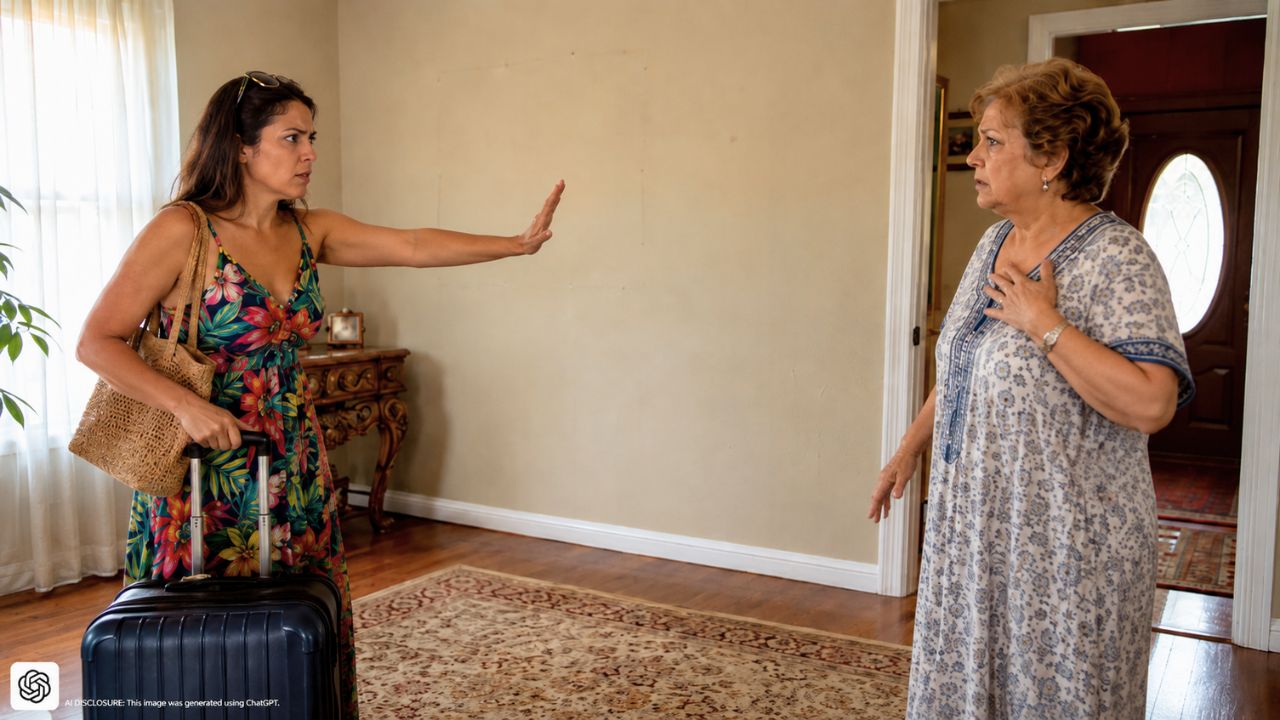
Photo credit: AI-generated image created using ChatGPT.
There’s a special kind of sinking feeling that hits when you walk into your own home and something important is just… gone. Not misplaced, not moved to the garage, but removed like it never mattered. That’s the situation a husband described in the original post, and it’s the kind of family mess that can turn a peaceful vacation into a long, cold week.
He and his wife, Paula, had just taken their first trip since their twin daughter was born. They left a spare key with Paula’s mother, Hakiko, only for “if necessary.” When they came back, Paula’s late grandmother’s handcarved mahogany desk and vanity—two heirloom pieces she treasured—were gone. Hakiko was waiting, smiling, proud of herself for “getting rid of that old dusty junk” and replacing it with cheap flat-pack furniture.
The husband kicked her out, took the keys, and changed the locks. Now extended family members are calling him abusive and controlling, accusing him of isolating Paula from her mother over “some old piece of junk,” and saying Hakiko’s “heart was in the right place.” Paula agrees with the ban, but the family pressure is heavy enough that he’s questioning himself.
This wasn’t redecorating; it was a violation
Let’s be plain: this wasn’t an awkward attempt at helping. A person doesn’t “accidentally” donate someone else’s inherited furniture. That takes intention, effort, and a level of confidence that says, “I decide what matters in your house.”
Those two pieces weren’t just furniture, either. They were a grandmother’s legacy, handcarved mahogany, and specifically named as Paula’s favorite belongings from her grandmother. Even if they were scratched up or out of style, they were hers, and they carried a family story that can’t be replaced by anything that arrives in a cardboard box with an Allen key.
The key was for emergencies, not for authority
A spare key is a trust exercise. It’s you saying, “I’m giving you access, but not ownership.” Most adults understand that boundary without needing it carved into stone tablets, and if they don’t, they shouldn’t have the key.
Hakiko didn’t just cross a line; she treated the house like it was hers to manage. “Modern look” is the language of control dressed up as taste. If she genuinely wanted to help, she could’ve offered to clean, water plants, or let them know she noticed something off, not empty out an entire room and swap in bargain replacements.
Sentimental value isn’t silly; it’s part of stewardship
Some families act like feelings are childish unless they’re the feelings of the loudest person in the room. But sentiment isn’t weakness, and it’s not automatically irrational. A home is more than a showroom, and a marriage is more than a shared budget and a calendar.
Heirlooms matter because they tie you to the people who formed you. They also teach the next generation that family history is worth caring for. In a season where they’ve got newborn twins and they’re probably tired in a way you can’t explain to someone who hasn’t lived it, those heirlooms weren’t clutter—they were stability, memory, and continuity.
And from a practical angle, stewardship includes respecting what you’ve been given. A handcarved mahogany desk and vanity aren’t “junk” just because they’re older. Even if someone personally hates the style, you don’t get to destroy value—emotional or material—just to satisfy your own preferences.
Changing the locks was a protective move, not a power play
The family is tossing around words like “abusive” and “controlling,” which is what people do when they want to win a moral argument without dealing with the facts. But changing the locks after someone misused a key isn’t domination. It’s the basic consequence of broken trust.
If a neighbor borrowed your car and returned it with the seats ripped out because they thought it looked better that way, you wouldn’t hand them the keys again. You’d protect your property and your peace. This is no different, except it’s worse because it involved a wife’s inheritance and a mother-in-law who thinks she has jurisdiction in her daughter’s home.
There’s also a child in the picture—two, actually. Parents have a responsibility to keep the home stable and safe, and that includes keeping chaos agents from having free access. If Hakiko can justify giving away heirlooms, she can justify other “surprises,” and nobody needs to live on edge waiting for the next stunt.
The marriage comes before the extended family’s approval
One detail stands out: Paula is on her husband’s side. That’s not a small thing. A lot of men fold under in-law pressure because they don’t want to be “the bad guy,” and a lot of women have spent a lifetime being trained to keep the peace at their own expense.
Here, the husband did something many couples fail to do in the moment: he defended the marriage and protected what his wife valued. Not with a grand speech, but with action—keys back, locks changed, boundary set. Family systems that thrive on guilt hate that sort of clarity, because it disrupts the usual pattern of “Mom does what she wants and everyone else cleans it up.”
None of this means Paula has to cut off her mother forever. It does mean the couple gets to decide the terms of access to their home and their child. Marriage is its own household, and if the household can be overridden by a parent’s whims, it’s not really a household at all.
A ban can be temporary, but accountability can’t be optional
The question isn’t whether Hakiko feels bad. The question is whether she’s willing to own what she did and make it right. In the story, she was “all smiles” and called the heirlooms “old dusty junk,” which doesn’t sound like remorse. It sounds like she expected applause.
If there’s going to be any path forward, it starts with practical restitution. That could mean doing everything possible to recover the donated pieces, calling the donation center, retracing steps, and not making excuses if it’s inconvenient or embarrassing. It also requires a real apology that doesn’t include “but I was only trying to help,” because that phrase is usually just a way of avoiding responsibility.
After that comes changed behavior: no keys, no unsupervised access, no “projects” in someone else’s home, and no decisions about other people’s belongings. If she can’t agree to those basics, then the boundary isn’t cruel; it’s necessary.
Don’t let guilt-tripping relatives rewrite the story
Extended family members often jump in with strong opinions when they’ve got nothing to lose. They’ll call you names, assign motives, and pretend the issue is your reaction instead of the original offense. It’s an old trick: minimize the wrongdoing, then demonize the boundary.
Notice how they framed it: “over furniture,” “old junkie wood,” “her heart was in the right place,” “banning a grandmother from seeing her grandkid.” That’s all wordplay. The real issue is a mother taking what wasn’t hers, disposing of it, and then acting proud. If the family wants to talk about “heart,” they should start by dealing with the contempt she showed for her daughter’s grief and history.
A steady response helps: “We’re not discussing labels. She gave away Paula’s inheritance without permission, and until trust is rebuilt, she won’t have access to our home.” You don’t need to win a debate. You need to protect your wife, your home, and your peace.
There’s a reason wise men keep their words clean and their boundaries clear. If you allow a person to trample your household once, you’ll be expected to tolerate it again, and the price usually gets higher each time.
As described, banning the mother-in-law from the house wasn’t a tantrum; it was a line drawn after a serious betrayal. If Hakiko wants to be welcomed back, she can start by recovering what she gave away, apologizing without excuses, and showing she understands that being family doesn’t grant you the right to run someone else’s home.
Read more from Thrive Girly:
- Mother-in-Law Expected to Sleep Over After Every Visit — Then the Mom Said Overnight Stays Were No Longer an Option
- Relatives Showed Up to the Wedding Without Being Invited — Then the Couple Refused to Find Them Seats
- Grandma Buckled the Baby Into Her Car and Left Without Telling Anyone — Then the Mom Made Sure It Never Happened Again