Mother-in-Law Kept Calling the Baby “Hers” — Then the New Mom Finally Corrected Her
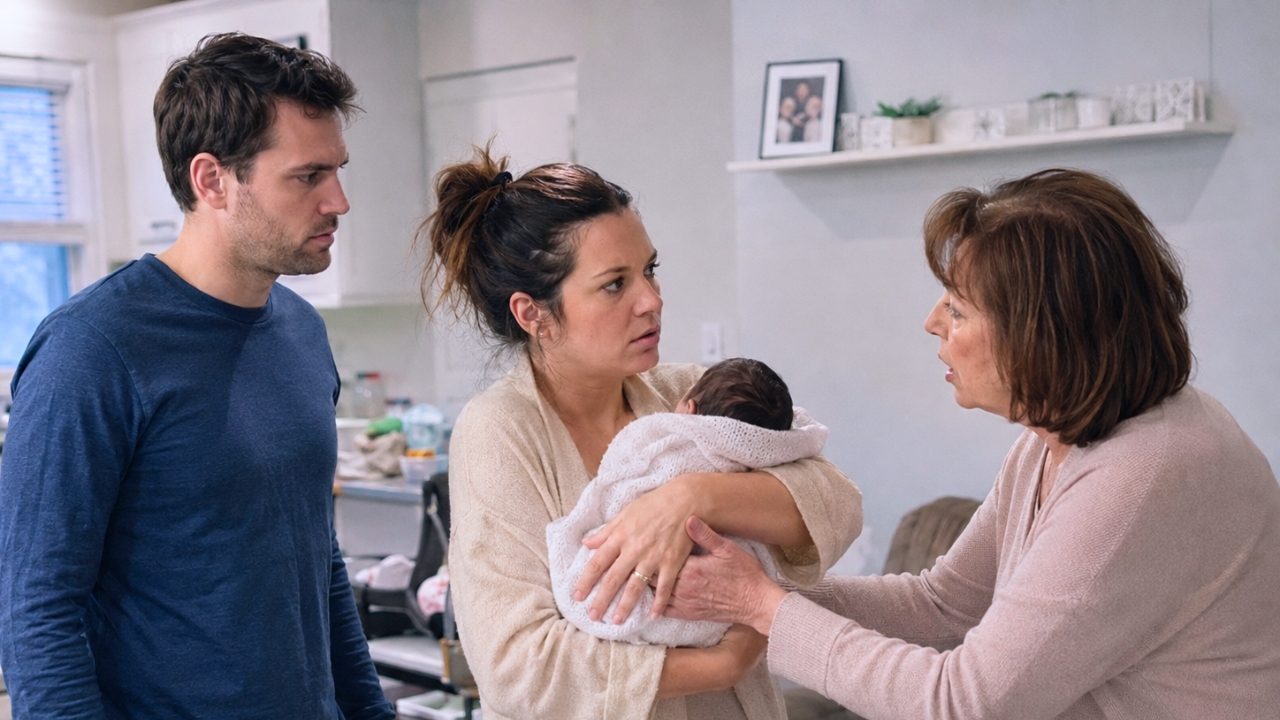
The baby was barely a week old when the new mom realized she was bracing herself every time her phone buzzed. It wasn’t a work email or a friend checking in. It was her husband’s mother, asking for updates and referring to the newborn in a way that made her stomach tighten.
At first it sounded like excited grandparent talk, the kind people shrug off during the foggy days after delivery. But the wording kept coming back—during calls, in texts, and even in front of nurses during a quick pediatric follow-up. And each time, it landed less like affection and more like a claim.
It started as “help” during the hardest week
The couple had agreed to a short visit once they were home, nothing big. The new mom was recovering, learning to feed on a schedule that never stuck, and trying to sleep in 90-minute chunks. Her husband was back and forth between pharmacy runs, laundry, and constant bottle washing.
His mother offered to bring food and do a load of dishes, which sounded like a lifeline. She showed up with a casserole and immediately reached for the baby without asking. When the new mom hesitated, her husband stepped in and said they were sticking to handwashing and short holds for now.
That’s when the first “my baby” comment came out, paired with a laugh like it was nothing. The new mom let it pass, partly because she was exhausted and partly because she didn’t want to start a fight while still in a hospital-grade diaper.
Small comments turned into a pattern
Over the next two weeks, the phrasing kept popping up. It appeared in texts asking for photos, in calls where the grandmother asked if “her” baby was sleeping, and in conversations with relatives on speakerphone. The new mom noticed the tone shift whenever she set a boundary, like asking for a heads-up before visits or limiting time because of the baby’s feeding schedule.
The grandmother began showing up “in the area” and asking to stop by. When told no, she asked the husband instead, as if a different answer might be easier to get. She also started buying items the parents hadn’t asked for—extra bottles, different formula, a swaddle the mom didn’t want—then leaving them with pointed comments about how she’d do things.
One afternoon she posted a close-up photo of the baby’s face on social media, the kind of image that can be saved and shared by strangers. The parents had already said no online pictures. The new mom asked for it to come down, and it did, but the grandmother acted wounded and said she was just proud.
The moment that forced a correction
The tipping point came during a weekend visit that was supposed to be short and calm. The grandmother arrived with a friend the new mom had never met, without asking first. The friend leaned over the stroller, cooed at the baby, and made a comment about how much the newborn looked like the husband’s side of the family.
The grandmother doubled down, telling her friend about “her” baby as if she were the primary parent. Then she tried to carry the newborn into the kitchen while the mother was warming a bottle, saying she wanted a quiet minute and that she’d handle it.
The new mom followed, heart racing, and asked for the baby back. The grandmother didn’t refuse outright, but she didn’t hand the baby over immediately either. That pause—those extra seconds—changed the temperature in the room.
In a steady voice, the mother said the line she’d been rehearsing in her head for days: the baby wasn’t the grandmother’s, and the wording needed to stop. She also said visits would only happen when invited, and no one would be bringing extra people into the home without permission.
Boundaries met pushback, then consequences
The grandmother’s reaction was immediate. She got quiet, then emotional, insisting she “didn’t mean it like that” and saying she’d been a mother longer. She suggested the new mom was being sensitive because of hormones, which made the correction feel even more necessary.
The husband, who had been trying to keep everyone happy, finally picked a side. He told his mother the rules weren’t negotiable and that the priority was his wife’s recovery and their baby’s routine. He also asked her to stop contacting him separately to get around decisions they’d made together.
After she left, the couple changed how they handled access. They stopped answering the door for surprise drop-ins and put a simple doorbell camera up, partly for peace of mind and partly because there had already been a few unannounced visits. The new mom saved the texts where the grandmother used possessive language and where she pushed for more time than was offered.
Within days, the grandmother tried a different tactic: she started calling other relatives to complain that she was being “kept from the baby.” A cousin messaged the new mom asking what was going on, which is how the couple realized the situation had leaked beyond their walls.
Commenters focused on documentation and a united front
When the story made the rounds in a parenting group chat and then in a broader online thread, the most practical responses weren’t about winning an argument. They were about tightening the system around the family so the same conflict couldn’t keep repeating with higher stakes.
People urged the couple to keep everything in writing: texts confirming visit times, messages reiterating the no-drop-in rule, and a clear reminder about photos. Several pointed out that boundary-pushers often behave better when they know there’s a record, and worse when they think it’s all private and deniable.
Others emphasized safety basics: don’t hand off the baby if you’re uncomfortable, don’t let anyone walk out of the room with the newborn, and don’t allow “helper” behavior that turns into taking over. A handful suggested a simple script for future incidents—correct the wording once, then end the visit if it happens again.
Some also mentioned practical steps that can head off bigger problems, like updating daycare pickup lists in advance and keeping pediatric appointments private until trust is rebuilt. A few noted that family conflict can escalate into surprise visits at work or attempts to insert themselves into medical decisions, and the best defense is clarity early.
The hardest part was enforcing it without constant conflict
The new mom didn’t want a lifetime feud. She wanted her home to feel calm, and she wanted her baby to grow up with grandparents who respected the parents. But she also didn’t want to spend the postpartum months negotiating every basic choice like it was a debate.
After the correction, the grandmother didn’t completely stop. She softened the language in direct messages but slipped back into it around extended family. She also started asking for “just a quick visit” more often, testing whether the couple’s resolve would fade.
The couple’s approach became consistent: invite-only, short visits, and immediate intervention when the baby was grabbed for. The husband took over most of the communication, and they kept it brief. The new mom focused on recovery and the baby’s schedule, not on managing an adult’s feelings.
For now, the situation is quieter, but not fully resolved. The grandmother wants the closeness she imagined, and the parents want a relationship that doesn’t come with ownership language and power plays. The correction drew a line, and the next few months will show whether she can stay on the right side of it.