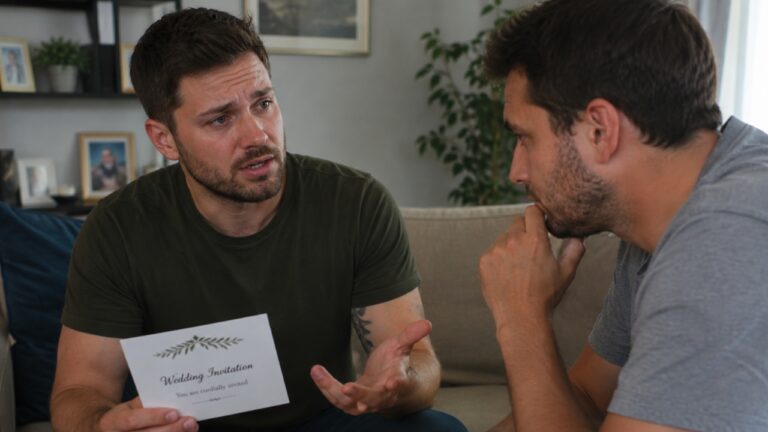
Her Mom and Sisters All Declined Her 40th Birthday Over One Uninvited Guest — Then She Cut Off Her Whole Family

Photo credit: AI-generated image created using ChatGPT.
A 40th birthday party should be simple: a room, some food, the people who know you best, and a little gratitude that you’re still here to celebrate. But sometimes family can turn a straightforward night into a loyalty test. In one recent story, a husband planned a small gathering for his wife, only to watch his mother and sisters boycott the whole thing over one uninvited guest.
In the original post, the man explained that space was tight, so invitations went to close family and their partners, with a clear request to confirm attendance. When his sister’s partner was no longer coming, the couple filled that spot with another family member. Then his sister added a brand-new friend to the guest list without asking, and his wife politely said no. That’s when the dominos fell: his mom and both sisters declined the party, and his mother later unloaded years of pent-up criticism about his wife and parenting—ten years’ worth, by her own admission.
The man walked away from his family after that confrontation. And then the doubt crept in, the kind many men recognize: Did I overreact, or did I finally react the right amount after letting things slide for too long?
The uninvited guest wasn’t the real issue
On paper, this looks like a fight about a plus-one. In real life, it rarely is. Adults don’t usually detonate over a polite “sorry, we can’t fit one more person” unless that “no” hits a deeper nerve—control, pride, resentment, or the fear of not being able to call the shots anymore.
The detail that matters is the sister adding a friend “without checking,” and the wife being the one to enforce the boundary. That combination often sets off families that are used to a certain dynamic: the son stays quiet, the women in the family manage the emotional weather, and the wife is expected to accommodate. When she doesn’t, she becomes the problem, even if she’s being reasonable.
Small guest lists are normal, and so are clear boundaries
A limited-space party requires somebody to make calls that not everyone likes. The couple tried to handle it like grown-ups: invite close family and partners, make it clear space was tight, and ask people to confirm. That’s not controlling; that’s basic hosting. If you’ve ever planned anything in a home or a small venue, you know that one extra person can mean the difference between comfortable and crowded.
What’s also normal is updating the list when plans change. The sister’s breakup created an opening, so another family member was invited. That’s not a slight; it’s logistics. The only odd move here is adding an unknown friend to someone else’s event, then acting offended when the host says no.
Boycotting the birthday party was a message
Declining an invite is one thing. A coordinated decline—mom, sister, other sister—right after the uninvited friend was turned away is something else. That reads less like “we can’t make it” and more like “we’re going to punish you for not giving in.”
This is where a lot of men get tempted to minimize it. You tell yourself, “They’re emotional,” or “It’ll blow over,” or “I’ll smooth it out later.” But the birthday party isn’t the main event anymore. The main event is that a family is willing to withhold presence and affection to force compliance, and they chose a milestone celebration as their battleground.
Ten years of resentment doesn’t appear overnight
The confrontation at the mother’s house is the real turning point. The mother reportedly went on an aggressive rant about the wife, their parenting, and said she hadn’t liked these things for ten years. Think about that. A decade of disapproval stored up, then released when she didn’t get her way about a party guest.
That kind of long-term complaint is hard to hear, but it’s also clarifying. It suggests the birthday party conflict didn’t create the hostility; it revealed it. If the mother truly has held these convictions for a decade, then the family peace was never as solid as it looked. It was more like a ceiling held up by the husband’s willingness to absorb tension and keep things pleasant.
“Choose a side” is a trap, but husbands do have a side
When a mother puts her son in a position to choose between his wife and his family of origin, she’s forcing a crisis. It’s a test of allegiance dressed up as “concern.” And it’s not fair, because it doesn’t leave room for nuance, conversation, or repentance—just submission.
A husband’s first loyalty, under God, is to his wife and the home they’ve built. That doesn’t mean a man becomes cruel or dismissive toward his mother and sisters. It does mean he refuses to let them treat his wife like an outsider or a villain. If a family member wants to raise a concern, it needs to be specific, respectful, and aimed at repair—not a broadside attack with ten years of hidden grievances.
Cutting contact may be protection, but it shouldn’t be the first move
The man said he “walked away” from them after the blowup because you can’t unload like that and expect everything to be fine. That instinct makes sense. When someone comes at your marriage with contempt, distance can be a form of protection—especially if you have kids watching how adults handle conflict.
Still, there’s a difference between stepping back and slamming the door. If he has doubts, that may be his conscience asking whether he’s done what he can before going fully no-contact. Sometimes the wise move is a clean break, but often the first wise move is a clear boundary: “You will not speak about my wife like that. If you have a concern, you’ll bring it respectfully and directly, and we’ll talk. If you can’t, we’ll take space.”
He doesn’t have to accept a family summit or a group argument. He can ask for one conversation at a time, in calm conditions, with the goal of clarity. If they refuse and keep escalating, distance stops being an overreaction and starts being a necessary response.
If reconciliation happens, it has to include accountability
There’s a common mistake men make when they want peace: they try to buy it. They’ll push their wife to “be the bigger person,” they’ll pretend the rant didn’t happen, they’ll let time do the work because confrontation is exhausting. But peace purchased with silence usually just rents you the same problem again later—often at a worse moment.
If this family comes back to the table, accountability matters. The mother’s claims—controlling, manipulative, criticism of parenting—are serious accusations. They require specifics, not labels. And if the real issue is that she didn’t like losing influence when he married, that’s not a parenting critique; that’s a heart issue. Reconciliation without honesty just resets the clock until the next birthday, holiday, or disagreement triggers another boycott.
The wife also shouldn’t be forced into a role where she’s constantly managing his family’s emotions. The hosts set a reasonable guest policy, the sister ignored it, and the mother escalated it. If anyone needs to do repairing work, it’s the people who chose punishment and contempt over a straightforward conversation.
There’s a sober kind of adulthood that comes with turning forty. You start seeing which relationships are life-giving and which ones run on guilt, leverage, and nostalgia. A man protecting his marriage isn’t being dramatic; he’s doing his job. If his family wants access to his home, they can start by showing respect for the woman he built it with.
Read more from Thrive Girly:
- Mother-in-Law Expected to Sleep Over After Every Visit — Then the Mom Said Overnight Stays Were No Longer an Option
- Relatives Showed Up to the Wedding Without Being Invited — Then the Couple Refused to Find Them Seats
- Grandma Buckled the Baby Into Her Car and Left Without Telling Anyone — Then the Mom Made Sure It Never Happened Again