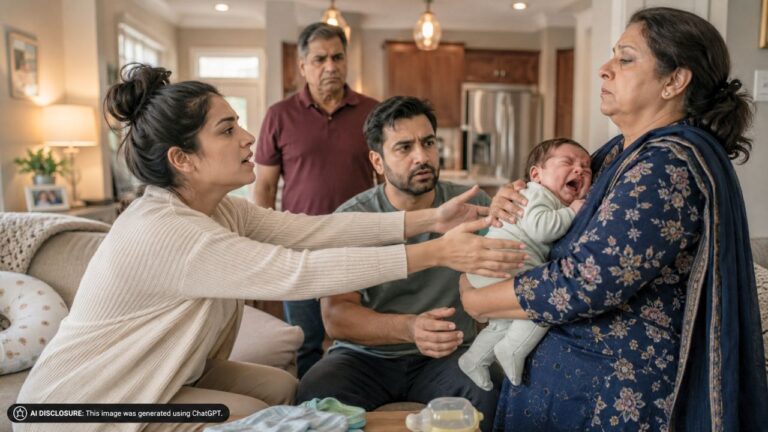
Woman Says Her Family Called It “Tradition” — but It Started Feeling More Like Control

Photo credit: BearFotos/Shutterstock.com
One woman says she kept trying to tell herself the issue was just a difference in values, but the more she looked back, the harder it was to ignore how often “tradition” seemed to show up only when it benefited everyone except her. In the Reddit story, she described being in a relationship where her boyfriend and his family had very firm ideas about what was normal, expected, and respectful — especially when it came to gender roles, family involvement, and how decisions were supposed to be made. At first, she tried to be open-minded about it. Not every family does things the same way, and not every tradition is a red flag. But according to her post, the longer she stayed in it, the more those “traditions” started feeling less like culture and more like control.
What really made the situation click for readers was that the pressure did not seem to come in one giant obvious demand. It came in smaller moments that added up. She wrote that her boyfriend had strong opinions about what a woman should do, how much input her family should have, and what kind of deference was supposed to be normal in the relationship. One of the details that especially bothered her was his comment about her needing to learn how to cook from her mother, which struck a lot of readers as telling all by itself. It was not just practical advice. It fit into a bigger pattern where the expectations seemed to fall heavily on her, while his side got to dress those expectations up as “the way things are done.”
That is why the word tradition started sounding so different to her. In healthy relationships, traditions can be something people talk through, laugh about, adapt, or even keep because they genuinely matter to both people. But in this situation, she said it often felt like tradition only went one direction. It was something she was supposed to accept, not something they were supposed to navigate together. That is the part that hit people hardest. Once a person starts using family custom as a way to shut down conversation instead of having one, the whole thing stops feeling like shared values and starts feeling like a power move. That broader point is an inference from the pattern she described in the post and discussion.
A lot of commenters immediately recognized the trap in that. When someone frames control as tradition, it becomes harder to push back without looking disrespectful. Suddenly you are not just disagreeing with one request. You are “disrespecting the family,” “not understanding the culture,” or “making a big deal out of nothing.” That puts the other person in a really unfair position, because now they are defending themselves not only against the expectation itself, but also against the guilt layered on top of it. Readers seemed to understand that the woman was not mocking tradition in general. She was noticing that in her relationship, tradition kept showing up whenever her own autonomy needed to get smaller. That is an inference, but it is strongly supported by the language in the BORU result.
The reason this story spread is because a lot of people have lived some version of it. Sometimes control does not arrive looking loud or dramatic. Sometimes it arrives sounding reasonable, family-oriented, respectful, even loving. It tells you this is just how things are done. It tells you compromise means you adjusting. It tells you pushing back means you are selfish or difficult. And for a while, that can be confusing enough to keep someone second-guessing themselves. The woman’s post landed because she had started seeing through that fog. By the time she wrote that “it felt more like control than compromise,” a lot of readers were already nodding along.
What really stayed with people is how ordinary the early signs probably looked from the outside. A comment here. A family expectation there. A “traditional” opinion slipped into a normal conversation. None of it may have seemed huge by itself. But once you stack enough of those moments together, the pattern gets harder to explain away. At that point, the question stops being “Am I overreacting?” and starts becoming “Why do their values only seem to matter when they limit me?” That is when a lot of relationships start looking very different than they did at the beginning. That takeaway is an inference grounded in the post summary and the reactions quoted around it.
In the end, what made this story so relatable was not just the family angle. It was that feeling of realizing someone has been using the language of respect and tradition to slowly narrow your choices. Once you see that clearly, it gets a lot harder to call it love. Do you think “tradition” still deserves the benefit of the doubt once it starts sounding like a one-way rulebook, or is that usually the moment you know something deeper is off?