His Late Wife’s Mother Kept Letting Herself Into His House Uninvited — Then He Banned Her Completely
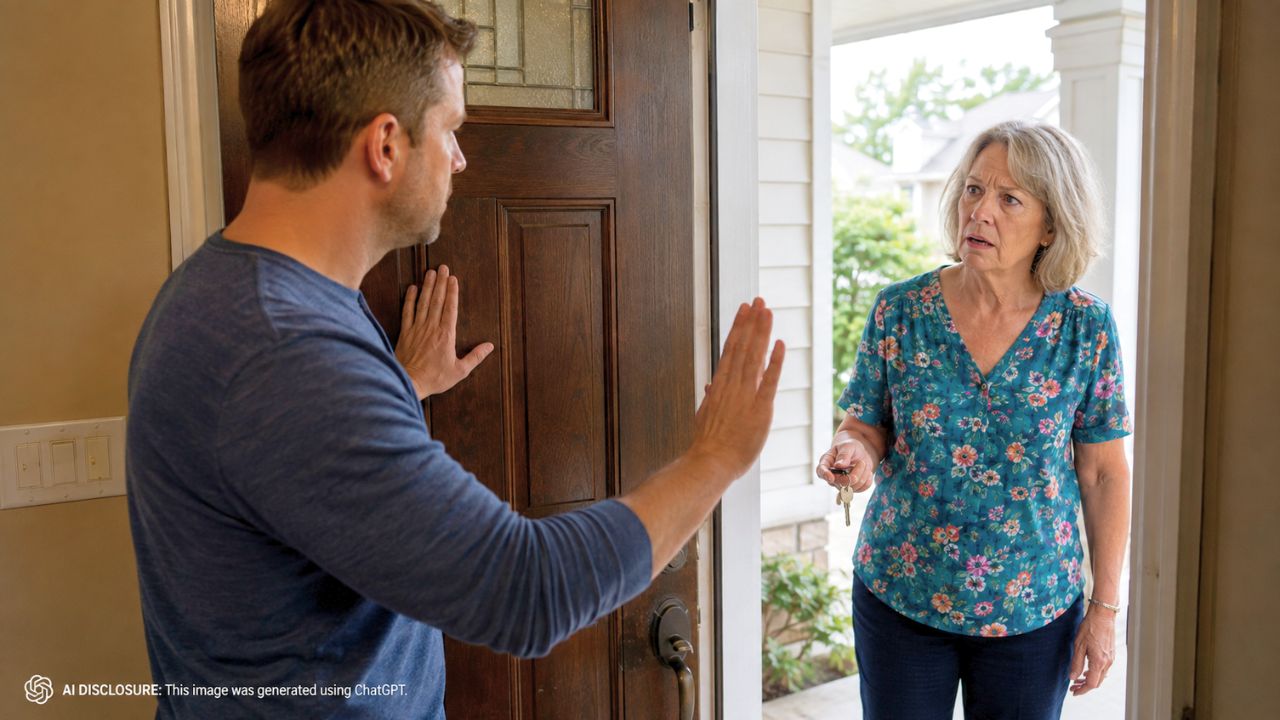
Photo credit: AI-generated image created using ChatGPT.
There’s a particular kind of ache that settles in a house after loss. A man can rebuild his schedule, keep his promises, raise his kid, and still feel like the walls remember. In that kind of home, “family” can start meaning something messy—half comfort, half intrusion.
In the original post, a widowed father explained how his former mother-in-law began letting herself into his house without knocking, calling, or asking. It went on long enough that he tried multiple talks and arguments, and she’d tone it down for a bit—then slip right back into old habits. The blowup came when she walked in while he had his girlfriend over and accused him of cheating on his late wife.
After that, he took his key back, put her out, and told her she was no longer welcome in his home. Now he’s getting pressure from people around him—even his parents—to reconsider, partly because his former mother-in-law “really has no one else.” It’s a painful spot: he doesn’t want to be cruel, but he also doesn’t want to live under somebody else’s rules in his own house.
A man can be compassionate without being controllable
The details matter. This is a 32-year-old father whose wife died when their daughter was still little, and he moved states away to lean on his own parents while he worked. His former mother-in-law later relocated to the same town because her granddaughter is her only grandchild, and her deceased daughter was her only child.
That kind of grief doesn’t just disappear. It can harden into something possessive, especially if a person doesn’t have much else to hold onto. Still, grief doesn’t grant permanent access to someone else’s home, schedule, or private life, and it doesn’t rewrite basic manners.
A Christian man is called to honor others, to show mercy, to be patient. He’s also called to lead his household and protect it. Those aren’t competing values; they’re supposed to work together, and sometimes “protect” looks like a firm boundary instead of another polite conversation.
Letting herself in wasn’t a “quirk,” it was a power move
This wasn’t a one-time misunderstanding at the door. She was in the house “pretty much all day,” including evenings and weekends, and she’d show up while the daughter was at school and no one was home—apparently to clean. That’s not being involved; that’s occupying territory.
The key detail is the pattern: he already had “multiple conversations and arguments” about how inappropriate it was, and she only toned it down temporarily. A slip-up is forgetting to text first once or twice. A slip-up isn’t repeatedly entering a man’s home like it’s her place and acting surprised when he objects.
When someone keeps stepping over a boundary you’ve clearly drawn, they’re not confused. They’re testing whether you mean what you say, and whether you’ll pay the relational cost to enforce it. Many men avoid enforcement because they don’t want to be seen as the bad guy, and people like this count on that.
Why the girlfriend incident changed everything
The last straw happened after he started dating again and invited a woman over while his parents watched his 8-year-old daughter. With restrictions easing, they finally had time together, and things turned physical on the couch. Then the former mother-in-law let herself in and “lost her” mind, accusing him of cheating and disrespecting his late wife.
That moment wasn’t only embarrassing. It was a direct challenge to his right to move forward with his life and to build a future. A man who has buried his wife doesn’t stop being a husband in his heart overnight, but he also doesn’t take a vow of lifelong loneliness to satisfy someone else’s grief.
More importantly, it showed the real danger of the situation. If she’ll barge in unannounced and explode at him, she could do it again—during a conversation with his daughter, during a quiet night, during anything. A household can’t feel safe when another adult believes she has the right to enter and police what happens inside.
His home isn’t a public space, even for “family”
Men sometimes get guilted into treating boundaries like insults. But privacy isn’t a luxury; it’s part of a stable home. A father needs the ability to shut the door, exhale, make dinner, put his kid to bed, and live without bracing for somebody else’s footsteps.
This father already has a full load. He works long hours, he coordinates childcare between a nanny and his parents, and he’s trying to be present for his daughter. He also has a right to adult companionship and a right to grow after loss, provided he’s acting honorably—which includes protecting his daughter and not dragging her through chaos.
The former mother-in-law’s behavior also blurs authority lines. If she’s in the house constantly, cleaning when nobody asked, acting like she has standing to judge his relationships, she’s not acting like a guest. She’s acting like a second head of household, and that’s a recipe for confusion for everyone—especially a child.
Taking the key back was necessary, but it can’t be the only step
He did the correct first thing: he removed access and made the boundary unmistakable. Physical boundaries matter because they take the argument out of it. She can debate your words all day, but she can’t debate a lock.
Still, a ban without a plan can turn into a long, ugly standoff. If he wants this to hold without constant drama, he’ll need to spell it out plainly: no unannounced visits, no entering without permission, and no speaking to him with accusations. If there’s going to be contact, it happens on agreed terms—scheduled time with her granddaughter, in settings that don’t put him in a corner.
He also needs to be realistic about enforcement. If he gives the key back, it will happen again. If he accepts “sorry” without changed behavior, it will happen again. Repentance—real change—looks like different actions over time, not emotional speeches.
Pressure from others doesn’t change what’s right
His parents and others are urging him to reconsider because she “really has no one else.” That’s sad, and it’s worth compassion. It’s also not his responsibility to fill every empty space in another adult’s life at the expense of his own home.
There’s a common trap here for decent men: people confuse kindness with access. You can help someone without handing them a key. You can care about someone without letting them control your home, your dating life, or your peace.
If his parents want her to have more community, they can invite her into theirs. If friends want her supported, they can support her. The widowed father is already carrying enough, and being the only emotional landing spot for his former mother-in-law isn’t a fair assignment.
The daughter’s relationship with her grandmother needs guardrails
None of this means the grandmother should be erased. A child can benefit from knowing the family of the parent she lost, and a grandmother can be a steady presence. But “steady” is not the same as “unchecked.”
A grandmother who barges in, lashes out, and treats her son-in-law like he’s still under her authority can easily become a source of tension for the child. Kids notice tone, conflict, and control, even when adults think they’re hiding it. The father’s job is to keep his daughter’s world stable, and that means visits that are predictable and respectful.
Practically, that may mean daytime visits that are scheduled, a firm rule about knocking and waiting, and no more access when nobody is home. If the grandmother can’t handle those basics, then the relationship isn’t being protected—it’s being sabotaged.
Grief can make people do strange things, but it doesn’t entitle them to walk into a man’s living room and run his life. He can acknowledge her pain without surrendering his home, his authority, or his future. If she wants to be close to her granddaughter, the path is simple: respect the father, respect the house, and act like a guest until trust is earned again.
Read more from Thrive Girly:
- Mother-in-Law Expected to Sleep Over After Every Visit — Then the Mom Said Overnight Stays Were No Longer an Option
- Relatives Showed Up to the Wedding Without Being Invited — Then the Couple Refused to Find Them Seats
- Grandma Buckled the Baby Into Her Car and Left Without Telling Anyone — Then the Mom Made Sure It Never Happened Again