Their Bridesmaid Nearly Got the Wedding Shut Down — Then the Couple Cut Her Off Completely
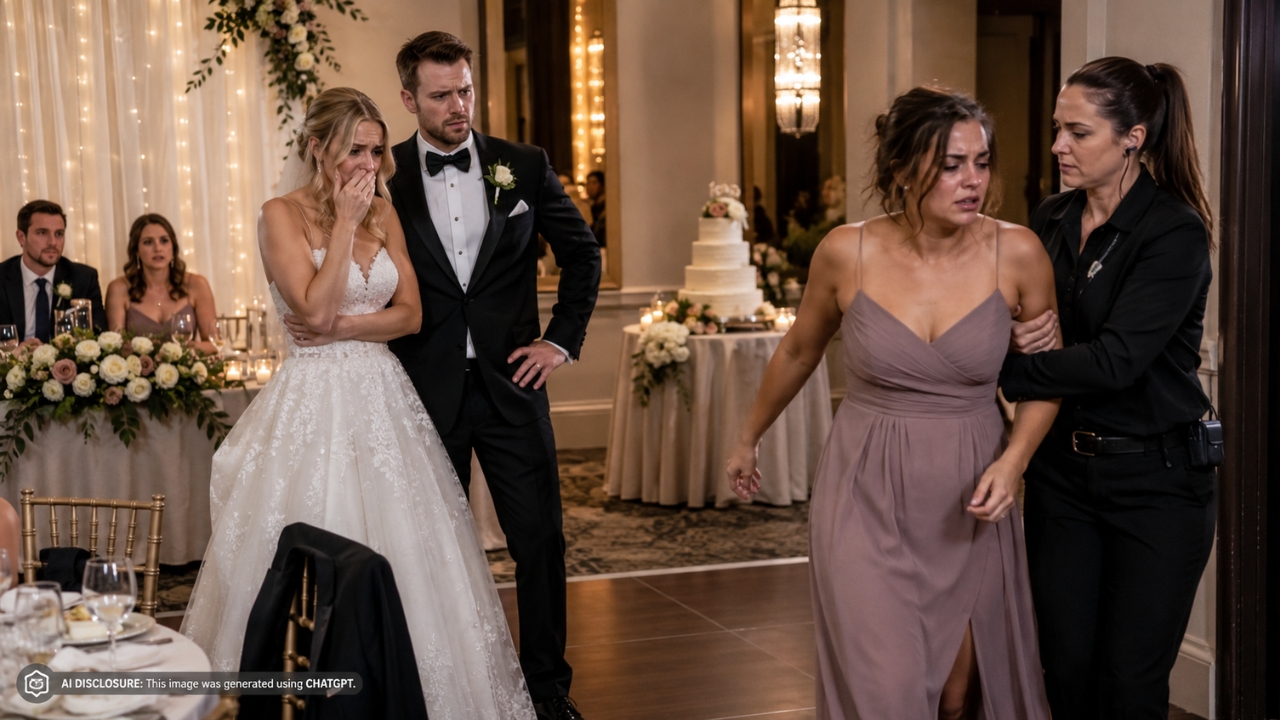
Photo credit: AI-generated image created using ChatGPT. Illustrative only.
There’s a special kind of stress that shows up on wedding days: you’re trying to honor your people, keep the schedule moving, and not lose your mind over details you’ll barely remember in ten years. Then one person decides the day is actually about their appetites, their impulses, and their feelings. That’s when the “celebration” starts to feel like crowd control.
In the original post, a newly married couple describes exactly that scenario with a bridesmaid they trusted—right up until she nearly got their reception shut down. After the dust settled, the bride chose to cut the bridesmaid off completely, and now even her husband wonders if she’s being too harsh.
I get why people hesitate here. Ghosting feels immature, and Christians in particular have a conscience about forgiveness. But forgiveness doesn’t mean you keep handing someone the keys to your life while they’re still driving drunk—sometimes literally. This situation isn’t about hurt feelings; it’s about repeated disrespect, broken agreements, and a wedding day that came close to ending early because one adult wouldn’t act like one.
They made a generous decision, then tried to set a simple boundary
The couple originally asked their mutual friend “Addy” to be the “DogsMaid,” essentially the person responsible for their dog during the ceremony. Later, because she was their only mutual friend, they invited her to be a full bridesmaid even though it made the wedding party uneven. They didn’t spring it on her either—they explained the costs and responsibilities and even gave her an out.
They also named the elephant in the room: Addy had a history with alcohol. So they set one clear rule—no drinking until after the speeches—and she agreed. It’s not fun to police adults, but in a wedding party you’re not just a guest; you’re part of the machine that keeps the day running.
Then they went a step further and helped her financially since she was added late. They covered her dress deposit and later fronted bachelorette costs with the expectation she’d pay them back. That kind of generosity is admirable, but it also increases the sting when the person acts entitled instead of grateful.
The bachelorette weekend showed the problem wasn’t “a slip,” it was a pattern
Before the bachelorette trip, Addy said she couldn’t afford her share, so the bride covered it again, bringing the total to about $350. Addy also couldn’t drive due to her alcohol issues, so the bride drove her and others to the cottage. If you’ve ever been the guy who gives someone rides, money, and chances, you know how quickly that turns into resentment if the other person treats it like an entitlement.
Once they arrived, Addy secretly drank an entire bottle of vodka, then accused the other women of “talking” about her. She was drunk again by late morning the next day. The weekend included more scenes: arguing over a Jeopardy-style game about the couple, calling the husband to “correct” the bride, passing out in a hot tub, and lashing out at the maid of honor when she expressed concern.
By the end, friends pulled the bride aside with concerns—not just about Addy’s drinking, but about how she spoke about the groom. Addy also accused the group of stealing her alcohol (they hadn’t), flipped off the camera in every group photo, and generally turned what should’ve been a supportive weekend into a babysitting job.
The “mutual friend” started acting like she had a claim on the groom
After the trip, the bride tried to rationalize Addy’s behavior as social anxiety. Plenty of people are awkward or insecure, and grace can cover a lot. But as the weeks went on, a troubling pattern emerged: Addy would cancel plans that were just with the bride, but would show up if there was a chance the husband might be around.
The bride tested it by inviting her to a movie and mentioning her husband might join. Addy came, but when the husband stayed home with a headache, Addy suggested skipping the movie to go “lounge” at the couple’s house with him resting in the other room. At the theater, Addy got drunk and passed out 20 minutes in.
Two weeks before the wedding, Addy even asked what her role would be if the dog couldn’t participate, as if she hadn’t been made a bridesmaid. The couple had to bring her over and re-explain, again, what she had agreed to. At that point, it’s fair to wonder whether she was confused or simply not paying attention to anything that didn’t serve her interests.
The rehearsal dinner was a warning flare they should’ve taken seriously
The day before the wedding, Addy helped decorate and insisted she was “sober” while clinging to a water bottle in a way that raised suspicion. At the rehearsal dinner, she asked if she could have a drink and was told yes, with a reminder that everyone needed to be up early. She got so drunk she fell and hit her head on someone’s car when the bride walked her inside.
Later that night, while the bride was finishing her vows, Addy wandered in and asked to watch a movie. When the bride declined, Addy asked what she’d do if her husband “stood her up” or said no at the altar. It’s hard to read that as anything but bitterness, projection, or a desire to plant insecurity the night before a wedding.
Then the bride did something else generous: because the sister’s plus-one had to back out due to a family emergency, she invited Addy’s boyfriend to attend the ceremony and dinner too, even though he’d only been invited to the reception originally. Addy agreed she’d still fulfill her role. That detail matters, because it shows the bride was still trying to keep the peace and keep everyone included.
On the wedding day, she abandoned her duties and tried to get around the rules
The bride even brought non-alcoholic champagne for Addy at the salon so she wouldn’t feel singled out. Addy didn’t like that, and she kept disappearing for cigarette breaks. The bride suspected she had alcohol hidden in the car but couldn’t prove it.
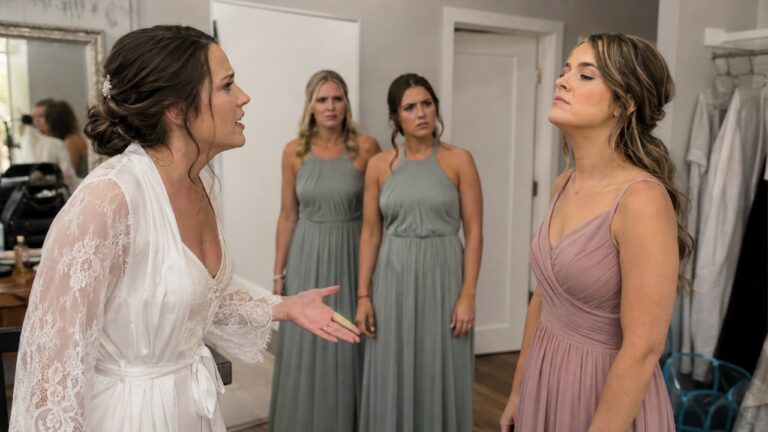
At the house where everyone got dressed, the bride wanted a photo of her bridesmaids helping with her dress. Addy vanished as soon as she got dressed and her boyfriend arrived. She then announced she was heading to the venue with him less than an hour before the ceremony, leaving the rest of the bridal party to cover responsibilities and cueing.
After the ceremony, when it was time for photos, Addy disappeared again. The group eventually found her trying to get her boyfriend to buy her alcohol; he refused because he knew the rule. Even after being found, she took the opportunity during a “funny faces” photo prompt to suggest flipping off the groom by name. It wasn’t an accident. It was disrespect, in front of the photographer, in the middle of the wedding.
The reception almost got shut down, and that’s where the line gets drawn
During dinner, Addy cried at her table, which only added to the sense that she wasn’t celebrating the couple so much as stewing in her own mess. Then, after the cake cutting, she disappeared again right when speeches were beginning. That’s when the venue coordinator got involved.
Addy had gone to the bar and ordered eight shots. The bartender assumed it was for a group because the boyfriend was nearby, but Addy took all eight herself. The post says this violated smart-serve laws in their province (no more than three shots served at once), and the venue’s liquor license was put at risk.
The contract explicitly stated that if any guest endangered the liquor license, the venue could shut down the entire event. The couple had warned Addy repeatedly and even warned the venue about her in advance. Addy was cut off, threw a tantrum, and was escorted out. The only reason the wedding wasn’t shut down was because the coordinator gave them a single warning and chose not to enforce the full consequence.
Why “no contact” isn’t petty in a situation like this
The morning after, more details came out. Addy had been filling her water bottle with wine outside, bragging about how “stupid” everyone was for not noticing, and she called the bride’s mother a vulgar name for pointing out which champagne was non-alcoholic. Then she texted the bride claiming she left due to an emergency at her boyfriend’s rental—no apology, and the boyfriend later confirmed it wasn’t true.
She even showed up twice at the groom’s workplace to apologize to him, which tells you where her priorities were. He told her plainly that the apology needed to go to his wife, and that he couldn’t be friends with a woman his wife wasn’t okay with. Addy later messaged the bride saying she “misses” her and knows she’s “mad,” still without a direct apology.
At that point, “polite but distant” isn’t cruelty; it’s wisdom. Adults can forgive someone in their heart and still decide they’re not safe to keep close. A marriage needs unity and protection, not constant re-litigation of whether a volatile friend deserves another shot—no pun intended.
If Addy ever gets serious about changing, she’ll start by owning what she did without excuses, paying back what she owes, and accepting that rebuilding trust happens on the couple’s timeline, not hers. Until then, the couple already did their part: they tried grace, they set boundaries, they offered help, and they absorbed the chaos. Sometimes the most loving thing you can do—for your spouse, your home, and even for the other person—is to stop enabling and let distance do its quiet work.
Read more from Thrive Girly:
- Mother-in-Law Expected to Sleep Over After Every Visit — Then the Mom Said Overnight Stays Were No Longer an Option
- Relatives Showed Up to the Wedding Without Being Invited — Then the Couple Refused to Find Them Seats
- Grandma Buckled the Baby Into Her Car and Left Without Telling Anyone — Then the Mom Made Sure It Never Happened Again