Family Kept Handing Him the Kids at Every Gathering Without Asking — Then he Arrived at the Next One Hands-Free

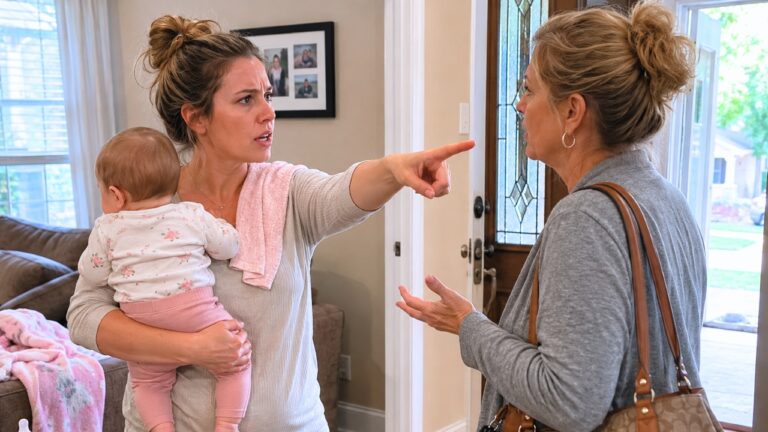
Photo credit: AI-generated image created using ChatGPT. Illustrative only.
By the time the cars were pulling up and the food was hitting the table, Jaime already knew what was coming. Not the “How have you been?” or the “Did you eat yet?”—the handoff. A baby on a hip. A toddler tugging at his sleeve. Someone saying he’s “so responsible” while quietly sliding away toward the wine and the grown-up conversation.
It wasn’t a one-time favor. It was every single family get-together, on repeat, until it started feeling less like helping out and more like being assigned a job he never applied for.
The “responsible young man” routine was really a babysitting schedule
Jaime described a pattern that had become almost automatic: he’d show up, and within minutes he’d be watching his little cousins—ranging from a baby up to about 8 years old. The adults in the room, especially his aunts, framed it like a compliment. “Ay, Jaime, you’re such a responsible young man!” they’d say.
But Jaime heard the translation loud and clear: they wanted to drink wine, gossip, and enjoy the gathering without kids “wrecking the vibe.” And because he was there, and because he was the youngest guy in the family, the solution apparently became: hand the kids to him and keep the party moving.
It’s the kind of setup that can look harmless from the outside. Everyone’s together, the kids are safe, and Jaime is “good with them.” Except he wasn’t volunteering. He was being designated.
What made him finally snap
At the most recent family event, the same thing happened again—and this time, Jaime couldn’t swallow it. He finally said no. Not a soft “maybe later,” not a “give me five minutes.” Just a clear refusal: “Nah, I didn’t sign up for this.”
It wasn’t a dramatic speech. It was a sentence that pulled the curtain back on what the routine really was: an expectation. And the second he said it out loud, the mood shifted.
Because when a family has been treating someone like built-in childcare, the biggest disruption isn’t the refusal itself—it’s the fact that the refusal forces everyone to admit they were assuming.
The backlash didn’t stay at the party
Instead of the moment passing with a quick “Okay, we’ll figure it out,” the reaction followed Jaime home. The family group chat lit up, and the tone wasn’t subtle.
He was called “selfish” and “disrespectful,” as if declining to supervise multiple kids—babies to elementary-age—was the same as rejecting the family itself. It wasn’t framed like, “We could really use help.” It was framed like he’d violated a rule.
That part matters, because it shows the difference between a request and a role. Jaime didn’t just say no to babysitting. He said no to a label that had been slapped on him: the default helper whose plans and preferences were secondary.
Even his brother’s reaction came with a critique
One of the most telling responses came from Jaime’s brother, Jon, who’s 23. Jon had gone off to college and, in Jaime’s words, “never looks back,” meaning he’s not around for these gatherings or the family’s usual expectations.
Jon didn’t exactly jump into the chat to defend Jaime. Instead, he told him the relatives were “wildin’,” but also added that Jaime “could’ve been smoother.”
It’s the kind of comment that sounds neutral, but lands as pressure. Like the problem wasn’t that Jaime kept getting volunteered—it was that he finally objected in a way that made people uncomfortable.
And that’s what made Jaime wonder if he’d crossed a line. Not because he thought babysitting was automatically his responsibility, but because families can be good at turning a “no” into a character flaw.
Why this felt personal: the “only young guy” expectation
Jaime’s frustration wasn’t just about one afternoon of chasing kids around. It was about what the expectation said about him. He summed it up bluntly: was he supposed to be “built-in daycare” just because he’s the only guy under 25 who hasn’t “knocked someone up yet”?
In other words, he felt punished for being available. He wasn’t arriving with children of his own, so he got assigned everyone else’s. He wasn’t older, so he wasn’t treated like someone whose time was valuable. He was simply the easiest person to tap.
And once a family decides you’re the one who will always step in, it becomes a self-sustaining system. Parents get used to checking out. Other adults get used to not offering. The handoff becomes so normal that asking starts to feel optional.
He showed up next time with nothing to carry—and it changed the vibe fast
After being treated like the designated babysitter and then dragged in the group chat for refusing, Jaime did what a lot of people end up doing when words don’t work: he changed the conditions.
At the next get-together, he arrived hands-free—no diaper bag, no toys, no “I’ll help with the kids” energy, no hovering near the play area like a substitute parent waiting to be deployed. Just him, showing up as a guest.
That’s the thing about roles in families. They’re often held together by small habits: where you stand, what you pick up, who you make eye contact with. When those habits change, everyone notices, even if nobody says it directly.
And while Jaime didn’t describe every reaction in detail, the message was clear: he wasn’t playing along anymore. If someone wanted childcare, they would have to actually ask—and be prepared for him to say no.
For anyone curious about Jaime’s original framing of the situation, you can read the original post.
The family, meanwhile, was left with an inconvenience they hadn’t planned for: parents who wanted to relax now had to take turns actually parenting at the event. And the relatives who were used to Jaime quietly making it easy had to sit with the fact that “easy” was coming from one person doing unpaid work.
Jaime didn’t claim he’d never help. He didn’t say he hated the kids. He just stopped accepting a system where “responsible” meant “available for free, indefinitely, without being asked.” And judging by the way the group chat reacted, that shift was never going to be seamless.
Sometimes the loudest part of a family gathering isn’t the kids at all. It’s the silence that hits when the usual helper finally sits down and acts like they belong at the table, too.