Sister Refused to Come to Christmas If She Was There — Then She Cut the Whole Family Off
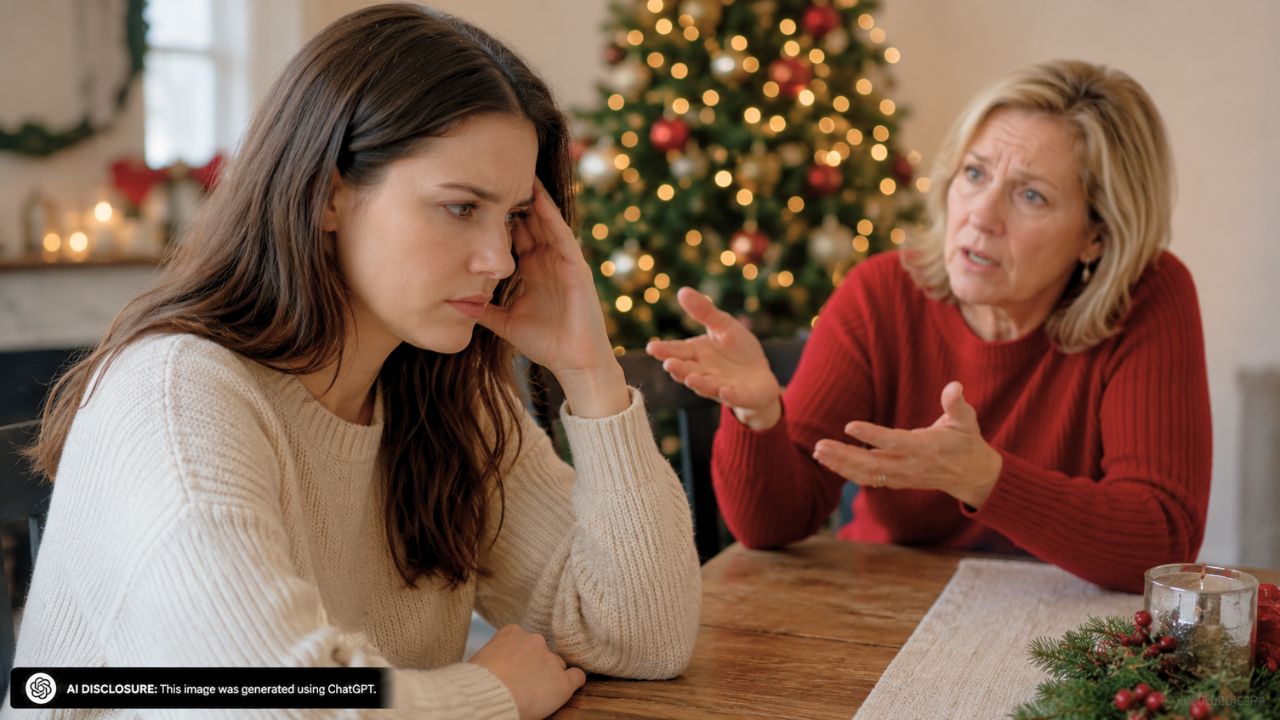
Photo credit: AI-generated image created using ChatGPT.
Family holiday plans have a way of turning grown adults back into nervous teenagers. One minute you’re figuring out travel and what dessert to bring, and the next minute you’re learning there’s a quiet vote happening about whether you’re “allowed” to be in the room.
In the original post, a 20-year-old woman explains that she and her 21-year-old husband usually spend Christmas Eve at her grandmother’s house with her mom and siblings. This year, her grandmother called to say her 18-year-old sister “refuses to come” if she’s there. The result felt less like a scheduling conflict and more like a family choosing sides, and she responded by blocking everyone and going silent.
It’s easy to read a story like this and think it’s just sibling drama. But beneath it is something most men recognize: the family system that would rather manage emotions through avoidance and backchannels than deal with the uncomfortable work of honest, direct conversation.
The backstory that never really got handled
The tension didn’t start at Christmas. Six months earlier, the younger sister was supposed to be the maid of honor, but three days before the wedding she texted that she wasn’t coming—after the dress and plans were already paid for. Her explanation was strange: she’d gotten sunburned “last month” and didn’t want it again, and she didn’t like the beach or weddings.
Whether that excuse was genuine, immature, or a cover for something else, it landed like disrespect. Most people would feel embarrassed and abandoned, especially right before a wedding. The older sister says she was angry then but tried to let it go for the sake of Christmas, because she wanted family togetherness more than she wanted to keep score.
How families turn one conflict into a whole atmosphere
Then came the call: sister won’t attend if you’re present. And what made it sting wasn’t only the sister’s stance, but the way the rest of the family carried it. The older sister tried to tell her grandmother she wasn’t even mad anymore, but the grandmother kept pressing, repeatedly asking if she was “okay,” almost as if she was expected to fall apart.
That part matters. Families sometimes decide who the “fragile” one is, who the “angry” one is, and who the “reasonable” one is, and then they treat you like the role they assigned. Once they’ve decided you’re a problem, they stop listening to what you’re actually saying.
And if you’ve been the guy in the room who knows the temperature just changed—everybody smiling too hard, everybody speaking too carefully—you know how dehumanizing it feels. You’re not a person at that point; you’re a liability they’re trying to manage.
The nuclear option: blocking everyone
So she didn’t announce a big family meeting or deliver a speech. She just blocked everyone and cut contact. If you’ve ever done something similar—maybe not literally blocking, but emotionally shutting the door—you understand the logic: “If I’m not welcome, I won’t beg. If you can drop me, I can drop you.”
There’s also the marriage angle. At 20, newly married, you’re learning what it means to be a unit. A lot of men have had to draw a line somewhere between “keeping peace” and protecting the dignity of your home. If your wife is being treated like an optional guest in her own family, you’re not crazy for wanting to step away from the whole circus.
Still, the clean feeling of a hard cut can wear off. Blocking can be a boundary, but it can also be a way to avoid saying the hard sentence out loud: “What you did hurt me, and I need you to own it before we pretend things are fine.”
What the update reveals: one person stirred the pot
Then the story changed with an update. The sister reached out through the grandfather’s phone, and they talked for about 30 minutes. The sister admitted she had said she didn’t want her there “at first,” but that this happened days before the older sister was told she couldn’t come.
According to the update, the grandmother was the “dramatic one” who took a slight truth and turned it into an overblown story, apparently as a way to explain why she couldn’t come pick them up—because the older sister’s truck broke down right before the initial post. In other words, a messy blend of logistics, family anxiety, and somebody choosing the most explosive explanation instead of the simplest one.
That kind of manipulation doesn’t always look like evil plotting. Sometimes it’s a person who hates discomfort so much that they’ll invent a bigger problem to avoid admitting a smaller one. It’s still wrong, and it still damages trust, but it’s worth naming accurately.
When gifts show up after the damage is done
The update also says the grandmother paid to fix the broken truck as an “I’m so sorry” present. That’s generous, and in a family it can be a meaningful act. But the older sister also felt like it might be an attempt to buy forgiveness.
That instinct isn’t petty. Money can’t repair what dishonesty breaks. A repaired truck helps with transportation; it doesn’t automatically restore confidence that the next holiday won’t come with another fabricated story and another round of people treating you like you’re unstable.
A good apology has a backbone. It says what happened, admits it plainly, and doesn’t rush the other person to “be fine now.” A gift can be part of making things right, but if it replaces confession and change, it becomes a shortcut—and shortcuts don’t build trust.
A better way to handle family pressure next time
If you’re watching this and thinking, “Man, that’s messy,” you’re right. But it’s also familiar. The practical move here isn’t endless punishment or instant reconciliation; it’s clarity. Before the next holiday or birthday, somebody needs to say, calmly and directly, what is and isn’t acceptable.
For the married couple, that likely means choosing a simple standard: no triangulation, no secret ultimatums, no messages delivered through third parties. If someone has a problem, they speak to the person involved. If transportation is the issue, say transportation is the issue. People can work with truth, even when it’s inconvenient.
And if the family can’t handle that, then distance may be the wise choice—but as a deliberate boundary, not as a silent explosion. Cutting contact without explaining can feel powerful in the moment, but it often leaves the story in the hands of the most dramatic storyteller in the room.
Forgiveness doesn’t mean pretending nothing happened
The question hanging over the update is whether to forgive the grandmother, cut contact with her only, or keep everyone at arm’s length. Forgiveness, especially for Christians, isn’t the same as pretending the pattern is harmless. You can forgive and still require honesty. You can forgive and still change how much access someone has to your life.
If the grandmother truly fabricated a story that isolated her granddaughter from Christmas, that’s not a “whoops.” That’s a breach of trust. The next step isn’t rage; it’s discernment: watch whether she takes responsibility without excuses, and whether she stops using drama as a tool.
Family can be a gift, but it’s not meant to be an idol. A man learns this the hard way: peace at any price isn’t peace—it’s surrender. Real peace is built on truth, humility, and the kind of accountability that makes holidays feel lighter instead of heavier.
For now, things are “okay,” and that’s not nothing. But okay doesn’t mean finished. The healthiest families aren’t the ones who never blow up; they’re the ones who can clean up a mess without rewriting the past, bribing people to move on, or labeling the honest person as the dangerous one.
Read more from Thrive Girly:
- Mother-in-Law Expected to Sleep Over After Every Visit — Then the Mom Said Overnight Stays Were No Longer an Option
- Relatives Showed Up to the Wedding Without Being Invited — Then the Couple Refused to Find Them Seats
- Grandma Buckled the Baby Into Her Car and Left Without Telling Anyone — Then the Mom Made Sure It Never Happened Again