Mother-in-Law Expected to Be in the Delivery Room — Then the Mom Told Her Exactly Where She Would Be Waiting
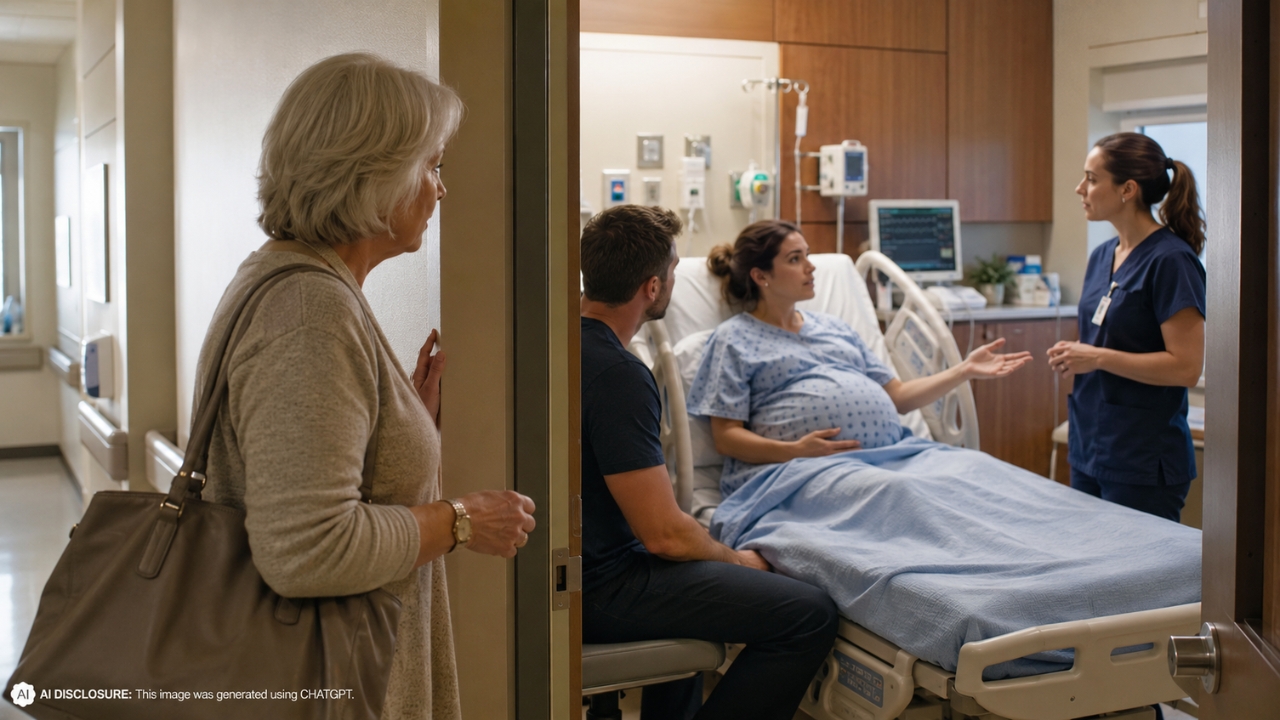
Photo credit: AI-generated image created using CHATGPT. Illustrative only.
She thought the exciting part would be the baby announcements, the tiny onesies, and finally getting to tell her own family. Instead, a newly pregnant 27-year-old found herself doing damage control before she’d even had a first real chance to breathe.
Her husband was thrilled, his family was already celebrating, and his mom was acting like she’d been handed a VIP pass to every major moment—from the hospital room to their living room couch. And all of it came to a head at one dinner table, when the mom-to-be finally said the quiet part out loud: no, you will not be in the delivery room.
The problem started before the big blowup
The woman, 27, said she and her husband (also 27) married in May and recently found out they’re expecting their first baby. They were happy, nervous, and still very early in the pregnancy—early enough that she hadn’t even figured out exactly how far along she was.
But she already knew what could be coming, because she’s watched it play out in her husband’s family. They’re a large, close-knit group, and she described it as the kind of closeness that can turn into everyone feeling entitled to everything.
She contrasted that with her own side: she’s one of three sisters, and both her siblings already have kids. She’s used to respecting the rules parents set—like being careful about what goes on social media, posting a hand or the back of a head instead of a full face.
Her husband’s family, she said, doesn’t operate that way. They “will post whatever,” and that alone had her paying attention to how quickly her privacy could disappear once a baby was involved.
A casual comment made her realize what was coming
Before her own pregnancy news even hit the family, something her mother-in-law said about someone else’s baby made her pause. A friend of theirs was due to give birth soon, and her mother-in-law announced she couldn’t wait to meet the baby before leaving on a New Year’s trip that had been planned long ago.
The mom-to-be admitted she pushed back—she asked why her mother-in-law assumed the friend would want visitors right away, especially during the holidays when people get sick. Her mother-in-law didn’t answer, just gave her a look.
It wasn’t a screaming match, but it was the first little preview: this wasn’t going to be a “we’ll wait until you’re ready” kind of situation. It was a “we’ll show up when it works for us” energy.
The pregnancy news spread before she was ready
Then came the moment she actually did become pregnant. She told her husband, he was excited, and he immediately shared the news with his parents and sister. From his perspective, it was joy spilling over. From hers, it was the start of losing control of her own story.
Not long after, she said she was flooded with congratulations texts from his extended family. And that’s when it really hit her—she hadn’t even told her own parents or sisters yet. She also wasn’t comfortable with how early it was, explaining she didn’t feel “out of the woods” when it came to the possibility of miscarriage.
Her husband got defensive at first. But when she told him how hurt she was that she didn’t even get to tell her own family, he apologized quickly.
They decided to have dinner at his parents’ house, partly to celebrate, but also to set expectations going forward—privacy, news-sharing, and the kind of access different relatives would have. Basically: a reset before things got bigger.
Then the delivery room “plan” was announced for her
Once dinner was underway, her mother-in-law started asking questions that didn’t sound like curiosity as much as scheduling. She asked about birth plans, when she’d be due so she could request time off, and what hospital they’d picked.
Then she said she “couldn’t wait to be in the room.” And before the mom-to-be could even respond, the conversation kept rolling—her mother-in-law also mentioned having a room ready in the couple’s house so she could help with the baby.
The pregnant woman said she looked to her husband, then back to his mom, because she felt steamrolled. She waited for a pause that never came. Finally, she cut in and laid it out plainly: only she and her husband would be in the delivery room.
And she didn’t stop there. She told her they wanted a full week at home after the birth with just the two of them and the baby—no visitors. As for the live-in help plan, she thanked her mother-in-law for the kindness, but said she would not be staying with them.
Her mother-in-law looked offended and argued that her son would want her there. That could’ve been the moment the husband stayed silent and let it become a “wife vs. mom” standoff. But he didn’t. He told his mom he agreed: it should be only the two of them in the room, no one else.
Her father-in-law tried to cool things down by telling his wife it was okay and that “times are different.” The discussion simmered, but it didn’t really end. It just shifted to the next demand.
The conversation moved on, but the entitlement didn’t
After the delivery room was shut down, her mother-in-law pivoted. She asked if she could at least do a gender reveal once they found out what they were having.
The pregnant woman said they weren’t planning to find out the gender at all—they wanted it to be a surprise. That should’ve been the end of it. Instead, her mother-in-law responded with, “that’s okay bring me the ultrasound photos and I’ll know.”
It was the kind of comment that’s half joke, half warning. Like she was already plotting her way around the rules she’d just been given.
The mom-to-be said she wanted to respond, but she was emotionally drained and stayed quiet the rest of the night. Even afterward, she felt herself pulling away a bit, including being distant with her husband—probably less because he handled the moment wrong, and more because the whole evening was exhausting in a way that’s hard to shake.
For anyone who’s ever been pregnant—or supported someone who is—there’s a specific kind of tired that comes from having to defend your choices before you’ve even made them.
The next day, a relative jumped in and called her the bad guy
If the dinner felt tense, the next day made it feel personal. She received a text from one of her husband’s relatives saying she was a bad person for telling her mother-in-law she couldn’t be in the delivery room, and that she was “robbing her from that experience.”
That message changed the situation from a private disagreement to a family pile-on. It also confirmed the thing she was worried about from the beginning: news and opinions don’t stay contained in this family.
It wasn’t just that her mother-in-law wanted to be present for the birth. It was that her mother-in-law apparently felt comfortable enough to recruit someone else to scold the pregnant woman for saying no.
In her the original post, the mom-to-be asked the simple question she’d been pushed into asking: was she wrong for telling her mother-in-law no?
For now, the baby is still on the way, the husband has shown he can back his wife up when it counts, and the mother-in-law has made it clear she’s not planning to take “no” as a final answer. The only thing that seems certain is this: if they don’t lock in their privacy plans early, someone else will happily make them for them.