Sister-in-Law Rejected Every Bridesmaid Dress Over Her Insecurities — Then the Bride Told Her to Wear It or Step Down
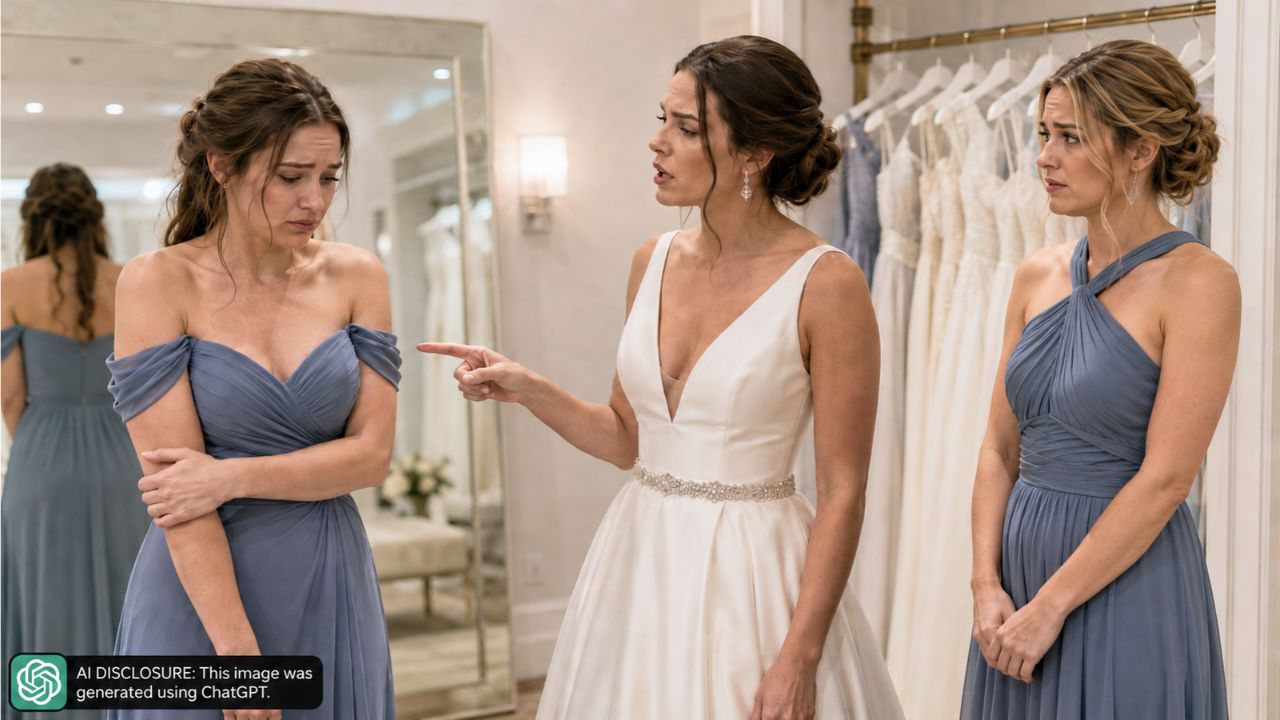
Photo credit: AI-generated image created using ChatGPT. Illustrative only.
Wedding planning has a way of taking small personal insecurities and turning them into full-blown scheduling disasters. One bride, trying to keep things simple, found herself stuck in a loop of dress shopping, second-guessing, and family pressure—all because one bridesmaid couldn’t get comfortable with any option that landed in front of her.
In the original post, the bride explains that her sister-in-law “Jen” has rejected multiple bridesmaid dresses, largely because she feels insecure about her weight and how different styles draw attention to parts of her body. After several shopping trips and even trying a “multiway” dress meant to flatter different body types, the bride finally chose a long, off-the-shoulder blue dress and hit a wall again—this time because Jen worried it highlighted her arms.
The breaking point came after the bride offered the bridal party a choice: either the bridesmaids buy their own blue dresses with more freedom, or the bride pays and chooses the dress. Everyone, including Jen, chose the “bride pays, bride decides” option. When Jen called to protest anyway, the bride told her she could wear the dress or step down from the wedding party, and now the mother-in-law is upset.
A bridesmaid role isn’t a blank check for endless revisions
There’s a difference between reasonable accommodation and endless negotiation. Bridesmaids aren’t mannequins, but they also aren’t creative directors. Once you agree to be in someone’s wedding, you’re signing up for a bit of inconvenience, a few awkward photos, and at least one outfit you wouldn’t have chosen on your own.
The bride in this situation tried to meet people halfway. She went to multiple stores, considered different styles, and even explored convertible dresses designed to suit different shapes. At some point, “I’m uncomfortable” stops being a solvable problem and starts being a veto power that holds the whole group hostage.
The bride’s poll was a fair line in the sand
The poll mattered because it clarified expectations. The choice was simple: freedom and responsibility (buy your own blue dress), or convenience with less control (the bride pays and selects a single dress). That’s not cruel; that’s leadership. Weddings involve groups, timelines, budgets, and vendors, and somebody has to make decisions that not everyone will love.
Jen choosing the “bride pays” route and then pushing back after the fact is what makes this messy. It puts the bride in a no-win position: either cave again and reopen the entire process, or look like the bad guy for enforcing the rules everyone already agreed to.
Insecurity can be real without being everyone else’s responsibility
Jen’s discomfort sounds genuine. Plenty of people, men included, know what it’s like to feel exposed in formalwear—tight collars, odd fits, sleeves that pull, photos from unflattering angles. But insecurity doesn’t automatically grant the right to repeatedly derail a shared plan, especially after the group has already done the legwork to accommodate.
The bride also noted something important in her edit: this wasn’t simply about Jen being heavier. Two other bridesmaids are her size or larger, and they weren’t creating conflict over every option. That detail doesn’t invalidate Jen’s feelings, but it does show the core issue may be how she’s handling those feelings, not her body itself.
“Wear it or step down” is blunt, but it’s not automatically wrong
The bride’s line—wear the dress or leave the wedding party—sounds harsh on paper. In real life, it’s the kind of boundary people set when they’ve run out of patience and time. It’s not poetic, but it’s clear, and clarity is underrated during wedding season.
Could she have delivered it with more grace? Probably. Most of us can. But the underlying message is reasonable: the role comes with a uniform, and if you can’t wear the uniform, you can’t hold the role. That’s not personal; it’s practical.
The mother-in-law pressure is predictable—and still needs managing
A mother-in-law getting involved is as old as weddings themselves. From her angle, she likely sees her daughter feeling embarrassed and wants her protected. The problem is that “protecting” someone in this moment might mean enabling the same cycle that’s already worn everyone out.
This is where the groom needs to be awake at the wheel. Not to scold his sister, and not to “side” with his bride like it’s a team sport, but to help set a calm family expectation: the dress is chosen, the bride tried to accommodate, and everyone needs to stop turning a bridesmaid outfit into a family referendum.
A cleaner solution: offer an exit with dignity, not punishment
If Jen truly can’t wear an off-the-shoulder dress without feeling miserable, forcing it might create more fallout than it’s worth. But the alternative shouldn’t be letting her rewrite the plan for everyone else. A middle road exists: give her a graceful off-ramp from bridesmaid duties while still honoring her place in the day.
That can look like stepping down from the bridal party but still being included in family photos, being invited to get ready with the group if relationships are good, or having another small role that doesn’t require the same dress. Not every wedding role needs a matching outfit, and not every inclusion has to happen on the bridesmaid roster.
The key is framing. “You’re out” lands like rejection. “I love you, but this role is making you miserable and it’s creating stress for the group—let’s find a way for you to be part of the day without this pressure” lands like maturity. Same boundary, different delivery.
What this reveals about marriage preparation, not just dress shopping
Underneath all the fabric and color swatches is a basic adult lesson: weddings reward decisiveness and punish people-pleasing. If you try to make everyone happy, you end up making everyone tired. A future marriage needs the same skill—making clear decisions, carrying them with humility, and not letting extended family steer the ship.
It also reveals how quickly “I’m insecure” can become “I need everyone to rearrange their plans around my insecurity.” Compassion is good. Enabling is not. A healthy family learns the difference, and a couple about to marry does well to practice that distinction early.
The bride isn’t wrong for wanting one dress and an end to the chaos, and Jen isn’t wrong for feeling self-conscious. The mistake is letting insecurity run the schedule and letting relatives turn a simple boundary into a character trial. If the dress is chosen and paid for, the cleanest path is simple: wear it, or step back with grace—and let the wedding be about a marriage, not a sleeveless neckline.
Read more from Thrive Girly:
- Mother-in-Law Expected to Sleep Over After Every Visit — Then the Mom Said Overnight Stays Were No Longer an Option
- Relatives Showed Up to the Wedding Without Being Invited — Then the Couple Refused to Find Them Seats
- Grandma Buckled the Baby Into Her Car and Left Without Telling Anyone — Then the Mom Made Sure It Never Happened Again