New Mom Said No Visitors During Recovery — Then Her In-Laws Treated the Boundary Like a Challenge
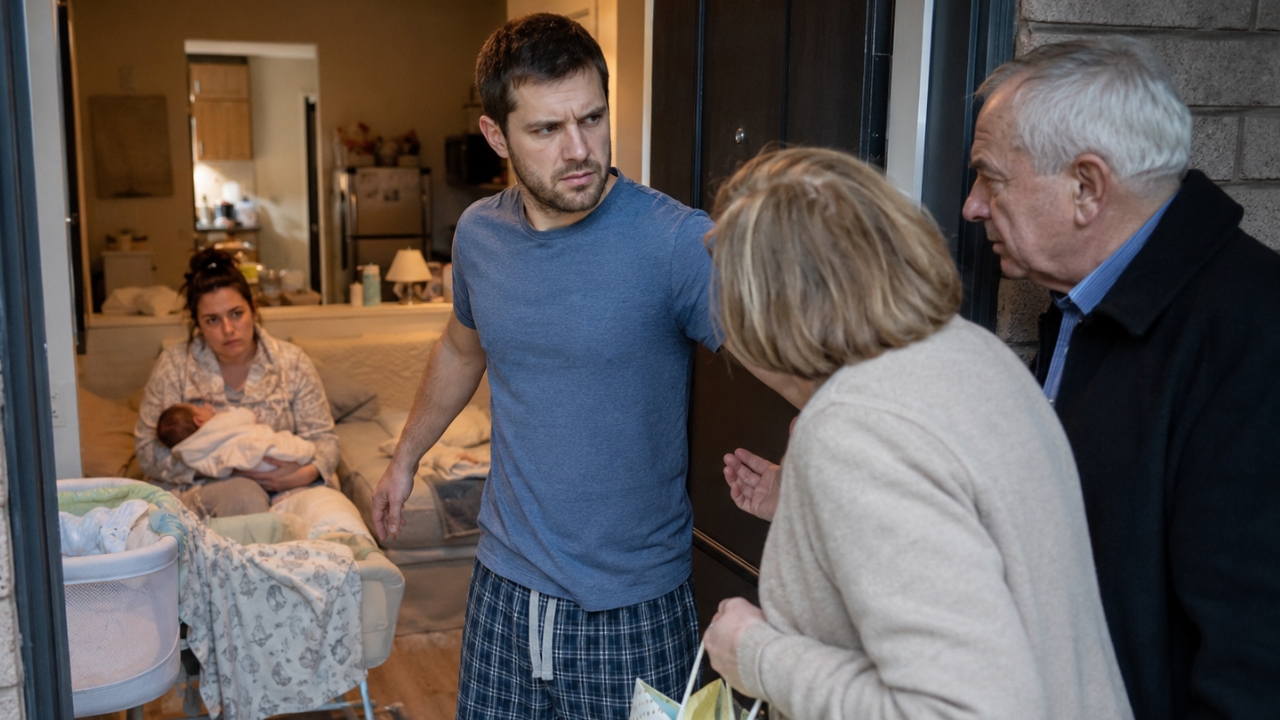
Two days after giving birth, the new mom was still moving carefully around her apartment in soft socks, wincing every time she sat down. The baby had finally fallen into one of those fragile, quiet naps that feel like borrowed time. Then the door buzzer sounded—long, impatient presses that didn’t match a delivery or a neighbor.
She didn’t answer. She and her husband had made one rule for the first couple of weeks: no visitors while she recovered and they figured out feeding and sleep. They’d sent the message to both families before the due date, hoping it would prevent exactly this kind of moment.
They set one boundary, and it turned into a test
The plan was simple. Her doctor had warned her to treat the early postpartum period like recovery from a major medical event, because that’s what it was. They’d offer video calls, send photos, and invite immediate family over once she could walk comfortably and the baby had settled into a routine.
Her parents took it well. His parents didn’t. His mom replied with a long note about “grandparent rights” and how she wouldn’t be “kept away,” while his dad called it “dramatic” and suggested they were being influenced by “social media parenting.”
Her husband tried to smooth it over. He repeated the same message: they loved them, but they needed time. The answer came back in the form of a surprise visit to the building.
The first drop-in visit was awkward, the next ones were disruptive
That first time, they stood in the lobby and called and texted, asking to be let up “just for five minutes.” When they didn’t get a response, his mom started buzzing other units, hoping someone would open the main door. A neighbor let them in, assuming they belonged there.
They made it to the couple’s door and knocked—hard. The baby startled awake and began crying, the kind of crying that sounds panicked and contagious. The new mom sat on the bed, frozen, while her husband whispered that he’d handle it.
He cracked the door, kept his body in the frame, and repeated the boundary. His mom tried to push a gift bag through the opening and lean in to see the baby. When he stopped it, she accused him of shutting them out and threatened to “just come back later.”
They did. Again and again. Morning. Early evening. Once close to 9 p.m., when the baby had just stopped screaming after a long cluster-feeding stretch.
The building and neighbors got pulled into it
After the third visit, the couple got an email from building management. A resident had complained about strangers being buzzed in and wandering the hall. The message wasn’t accusatory, but it was pointed: don’t allow non-residents to tailgate inside, and remind guests to respect quiet hours.
That’s when it became more than an annoying family dynamic. It was now a housing problem. The new mom worried they’d be labeled as tenants who brought drama into the building, right when they were exhausted and vulnerable.
The next time the in-laws showed up, the husband met them downstairs to stop them from entering the hall. His dad started recording on his phone, demanding to know why he was being treated like a threat. His mom tried to walk past him toward the elevator, insisting she had “every right” to see her grandbaby.
A neighbor stepped out to check the noise. Someone else called the concierge. The husband, trying not to escalate, asked them to leave or he’d have to call for help. They eventually left, but not before his mom announced that they’d “be back with support.”
The couple started documenting everything, and it changed the tone
That night, they pulled up the doorbell camera feed they’d installed months earlier. It captured the knocks, the door-handle jiggle, and the raised voices outside. They exported clips, saved text messages, and started a simple log: date, time, what happened, and whether the baby was asleep.
They also wrote one clear message and sent it once: no unannounced visits, no attempts to enter the building, and any further drop-ins would be treated as trespassing. They offered a scheduled video call on the weekend and said they’d revisit in-person visits after the doctor cleared her.
His parents responded with a mix of guilt and pressure. His mom said she was “worried about the baby” and hinted that the new mom might be keeping the child from the family. His dad said it was disrespectful to “threaten police” over “grandparents trying to help.”
Then the twist: they showed up with another relative in tow, as if a bigger group would force the issue. This time, the husband didn’t go downstairs. He called building security first.
When they tried to push past the boundary, official help entered the picture
Security met them in the lobby and told them they couldn’t go upstairs. The in-laws argued loudly, saying they’d been invited and were being unfairly blocked. Security asked for proof. They had none.
When security threatened to call the police for trespassing, the group finally left. But not before his mom slipped a note under the apartment door upstairs later that evening—someone had gotten in again. The note said the new mom was “hurting the family” and claimed they’d keep coming until they were “allowed to see the baby.”
That was the moment the new mom stopped treating it as a misunderstanding. She emailed management with screenshots and asked whether the building could flag their names at the desk and remind residents not to buzz in unknown visitors. She also asked about changing the lock cylinder, because the repeated door-handle checks made her feel unsafe.
Her husband filed a non-emergency report so there’d be a paper trail if it continued. The officer who took the report didn’t mediate family dynamics, but explained the basics: if someone is told not to come and continues showing up, that can become harassment, and the documentation matters.
People around them kept coming back to the same practical advice
Friends and relatives who heard about it didn’t focus on who was “right” in the abstract. They focused on keeping the situation from getting worse. Several urged the couple to stop explaining and start repeating a single sentence in writing, because every extra detail invited debate.
Others emphasized the building angle: if neighbors kept buzzing the in-laws in, the problem would never fully stop. A few suggested posting a polite note near the intercom reminding residents not to let strangers tailgate, while management handled the more formal warnings.
The most common advice was to make the husband the only point of contact with his parents for now. The new mom was healing, sleep-deprived, and dealing with hormonal swings that made every confrontation feel ten times heavier. The last thing she needed was a running argument in her inbox.
Some also warned them not to let the in-laws “catch” them outside with the baby. If they needed fresh air, go at odd times, take a different exit, or have a friend join them. Not because anyone expected violence, but because an ambush in the parking lot could turn into a grabbing-for-the-stroller moment they’d regret forever.
By the end of the week, the hallway was quiet again, but it didn’t feel resolved. The couple had their documentation, building management was aware, and the in-laws had been told in writing to stop. The new mom was still recovering, still learning her baby’s cues, and still listening for the buzzer—hoping the next sound wasn’t another “five-minute” visit that never really ends.