His Mom Criticized Their Newborn Rules Online — Then the Couple Posted One Calm Response
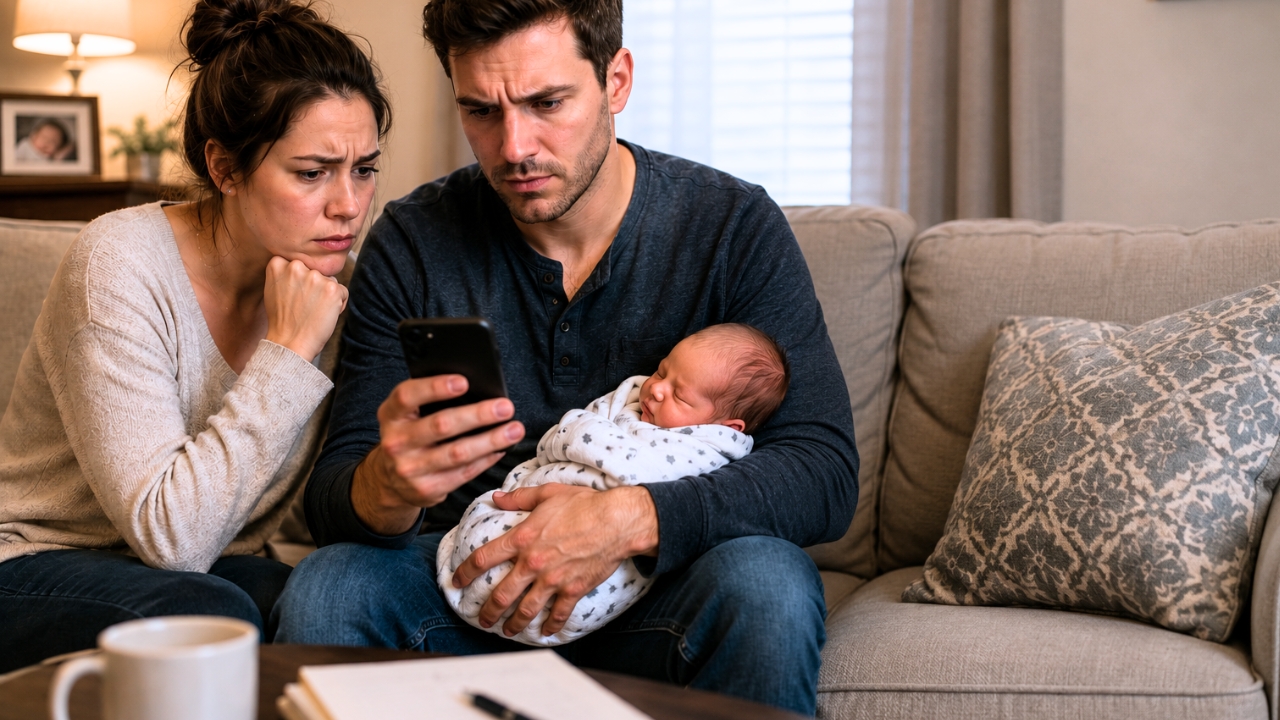
Photo credit: Thrivegirly
The couple thought they were doing something simple: keeping the first few weeks with their newborn quiet and manageable. They’d sent a short message to both sides of the family with a few basic house rules—wash hands, no unannounced visits, and if you feel even a little sick, wait. They also asked that any photos stay off social media until they were ready.
It worked for about a day. Then the husband’s mother started posting vague-but-specific complaints online about “new parents with a list of demands,” tagging relatives and dropping enough details that anyone in the family could tell who she meant. By the second post, she was screen-capping parts of the private message and framing it like the couple had “banned” her from meeting her grandchild.
The rules were basic, but the delivery became the fight
The couple’s message wasn’t dramatic, but it was firm. They’d just come home from the hospital, the baby was still learning to feed, and the mother was recovering and sleeping in short stretches. They were also following their pediatrician’s advice about limiting exposure early on, especially with a newborn in peak cold and flu season.
Most relatives replied with some version of “totally understand.” The husband’s mom didn’t. She called first, then sent a stream of texts—asking why she needed to “schedule” time, why she had to wear a mask, and why she couldn’t “just stop by for a minute.”
When the couple didn’t respond quickly, she took it public. Her posts weren’t openly naming them, but they mentioned a newborn, a “ridiculous rule list,” and a son “being controlled.” That was enough for cousins, aunts, and even a few family friends to start chiming in.
Online posts turned into real-world pressure fast
Within a weekend, the conflict wasn’t just on a screen. The husband started getting calls at work from relatives who had seen the posts and thought they were “helping” by mediating. His wife’s phone lit up with messages from people she hadn’t spoken to in years, asking if she was “okay” and whether she was “keeping the baby from grandma.”
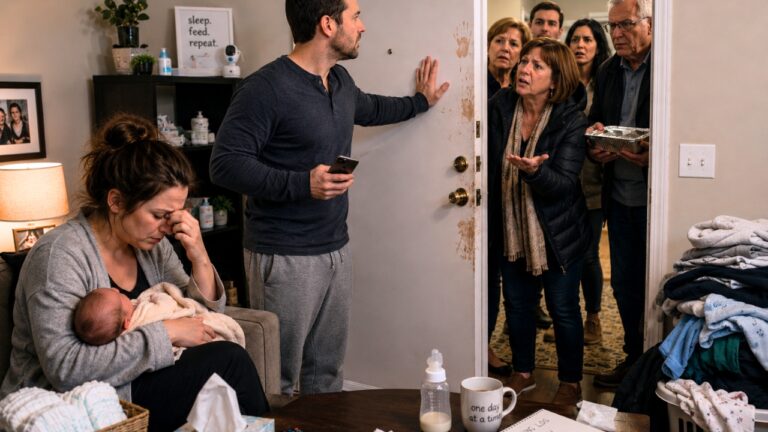
Then came the drop-ins. The first time, the husband’s mom showed up mid-afternoon and rang the doorbell repeatedly. The couple didn’t answer, partly because the baby was finally asleep and partly because they didn’t want to reward surprise visits after explicitly asking people to coordinate.
She stayed long enough that a neighbor peeked through their blinds. After she left, she posted again—this time about “sitting outside a locked door” and being treated like “a stranger.”
The couple’s stress started to move from annoyance to actual safety concerns. They lived in a townhouse complex where noise carried, and the repeated doorbell ringing and porch pacing made them worry about complaints from neighbors or a confrontation in the driveway.
The couple decided to respond once, calmly, and in writing
They didn’t argue in the comments. They didn’t post their own rant thread. Instead, they wrote one measured response and shared it where family could see it: a single statement sent by group message to close relatives and posted once on their own page, with comments turned off.
They kept it short. They said they weren’t punishing anyone, they weren’t singling her out, and the same expectations applied to everyone. They explained that the rules were about health and recovery, not control. They also asked that screenshots of private messages stop, and that any concerns be brought to them directly instead of online.
Most importantly, they laid out the boundary and the consequence in plain language: if someone publicly criticized them or showed up unannounced, visits would be delayed. If someone respected the plan, they’d schedule time to meet the baby when the parents felt ready.
It wasn’t a clapback. It was a reset. And it made it harder for anyone to pretend they didn’t understand what was actually being asked.
The biggest escalation wasn’t the posts—it was the access problem
The husband’s mom didn’t take the calm response as a truce. She treated it like a challenge. The next week, she tried a new angle: contacting the building’s front office, saying she was “family” and had an “urgent delivery.” The office didn’t let her in, but the attempt rattled the couple.
They installed a video doorbell that same night, saved screenshots of the posts, and started keeping a dated log of each incident. It wasn’t about building a case for court. It was about having a clear record in case things got worse—especially if there were accusations later about threats, neglect, or “being kept away.”
They also told the hospital’s pediatric clinic not to discuss appointments with anyone but the parents, just in case a well-meaning relative called fishing for information. It was a small step, but it made them feel less exposed.
When the husband’s mom showed up again, the couple didn’t open the door. He spoke through the camera, reiterated that visits were by appointment, and asked her to leave. She stayed on the porch long enough that another neighbor asked if everything was okay.
That was the moment it stopped being an online family drama and started becoming a neighborhood problem.
Commenters focused on documentation and reducing contact points
People watching the situation unfold, including extended family who didn’t want to get pulled into the fight, tended to focus on practical steps. The most repeated advice was to keep everything in writing and avoid phone calls that could be misrepresented later.
Others suggested a single point of contact—one parent handling communication—so the mother recovering from birth wasn’t absorbing every message. A few recommended sending one final note that future posts or harassment would mean a longer pause on visits, then sticking to it without negotiation.
Some pointed out that the couple’s quiet, single response was smart because it didn’t feed the cycle. It clarified the rules without insulting anyone. It also gave reasonable relatives something concrete to reference when the husband’s mom tried to retell the story in a more dramatic way.
There was also a lot of emphasis on home security and boundaries: door cameras, no surprise access, and not letting anyone “talk their way” into the home just because they’re family. The underlying theme was the same—newborn time is not a public resource, and parents aren’t obligated to manage other adults’ feelings on demand.
The tension didn’t disappear, but the couple regained control
In the days after the calm statement, the online posting slowed. A few relatives backed away from the conversation entirely once they saw the private message had been taken out of context. Others reached out privately to apologize for piling on.
The husband’s mom didn’t fully stop, but the couple’s boundaries began to limit the impact. With comments turned off, she couldn’t use their page as a stage. With a door camera and a consistent refusal to answer surprise visits, she couldn’t force a confrontation at the threshold.
The couple still had to live with the unresolved family strain, and they knew holidays and future milestones would bring the issue back up. But they’d made one thing clear: access to their baby wasn’t going to be negotiated through public pressure. For now, the house stayed quiet, the newborn’s schedule stayed the priority, and the couple kept their response where it belonged—calm, written, and on their terms.