Neighbor Claimed Decades of Rights to the Shed Blocking the Shared Alley — Then the Court Found She’d Owned the Land Just 16 Months
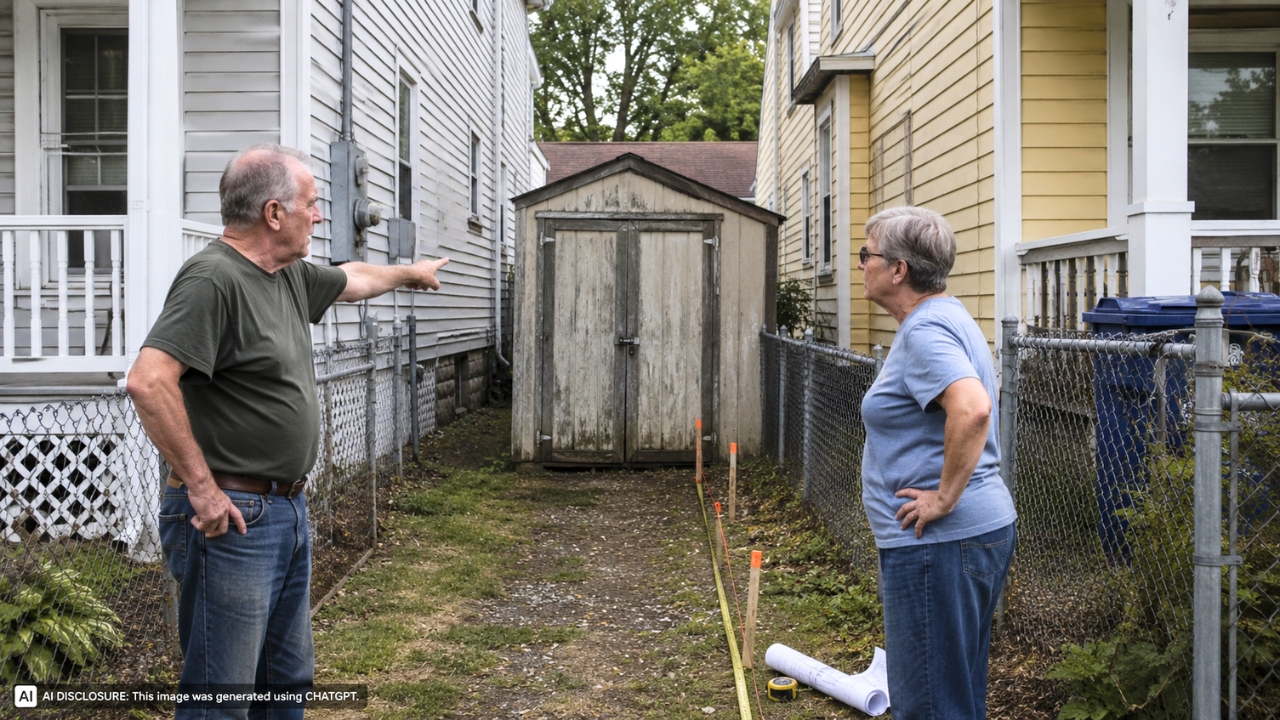
Photo credit: AI-generated image created using ChatGPT. Illustrative only.
There’s a special kind of neighbor dispute that starts small and then turns into a full-time hobby. A shared alley, a shed that’s “always been there,” and two households staring at the same property line like it’s a personal insult. In Ohio, that kind of standoff landed in court after a village vacated a 12-foot alley that used to sit between two homes.
The case is Slentz v. Hasington, L.L.C., decided by Ohio’s Seventh District Court of Appeals, and the details are laid out in the source material. The neighbor who wanted to keep the shed argued she’d gained rights through long use, but the court said the timeline that actually mattered was shockingly short.
If you’ve ever watched grown adults get weird over fences, driveways, or “my side of the line,” you’ll recognize the energy here. This one also carries a sober reminder: the stories we tell ourselves about what we “deserve” don’t always survive contact with a deed, a survey, and a judge.
A 12-foot alley that used to belong to the village
The properties sat side-by-side on West Plain Street: one owned by Susan Slentz and others (101 W. Plain St.), and the other owned by Hasington, LLC (103 W. Plain St.). Between them was a 12-foot-wide alley owned by the Village of Minerva. That alley ran between their homes and continued behind them through other properties, though those rear parcels weren’t part of this appeal.
At some unknown point—nobody could pin down exactly when—a shed was built toward the back end of the alley. The opinion describes it as centered in the alley’s width, with a garage door and siding, and it looked to be in fair to good condition. Hasington’s renters used the alley as a driveway, and the shed ended up being the problem that wouldn’t go away.
Then the alley got vacated, and “public” became “private” overnight
Here’s the turn that changed everything: on June 28, 2023, the village vacated the alley. Instead of the alley being village property, the land was split—six feet to one side, six feet to the other—so each neighboring owner gained half of the former alley along their boundary.
Once that happened, the shed wasn’t just blocking a public alley in some vague, tolerated way. It was now physically sitting partly on the Slentz side of the newly conveyed land. The opinion says the Slentz group demanded the shed be removed, and things got tense enough that there were allegations they threatened to cut the shed in half.
No matter how tough you talk in the moment, that’s the kind of threat that tells you the relationship is already cooked. Once you get to “I’ll just cut your building,” the reasonable conversation usually ended months ago.
The lawsuit: trespass, ejectment, and a claim of prescriptive easement
In November 2024, Slentz and the other plaintiffs sued. They brought claims including trespass and ejectment and sought injunctions—meaning they wanted the court to order the shed removed and keep it off their property.
Hasington, LLC answered and countersued, arguing it had a prescriptive easement. In plain terms, a prescriptive easement is a right to keep using land because you’ve used it long enough in a way the law recognizes. It also raised “unclean hands,” an equitable defense that essentially says the other side shouldn’t get relief because of their own behavior.
But this case had a brutal complication for the prescriptive easement argument: for years, the alley belonged to a political subdivision—the village. And Ohio law doesn’t let you rack up prescriptive rights by encroaching on government-owned property.
The “decades” argument ran into a legal wall: government land doesn’t count
The opinion gets to the heart of it in a way that’s easy to miss if you don’t slow down. Hasington’s position leaned on long use—implying the shed had been there a long time and the alley had functioned as part of their access. But the appellate court pointed out a key rule: time spent encroaching on property owned by a political subdivision does not count toward a prescriptive easement.
So if the alley was village property until it was vacated in June 2023, then any “we’ve done this forever” story doesn’t create a private right against the neighbors for that period. The legal clock, for purposes of a prescriptive easement against the private owners, could only start once the neighbors actually owned that half of the alley.
That’s where the “just 16 months” reality comes in. From June 28, 2023 (vacation of the alley) to the filing of the complaint on November 12, 2024 is about sixteen and a half months. Even if the shed had been there for ages, the neighbors’ ownership—and therefore the relevant window for a prescriptive claim against them—was very short.
A procedural detour: the continuance fight and IVF travel
The appeal didn’t just challenge the shed decision. Hasington also argued due process problems because the trial court wouldn’t grant an additional continuance beyond an already-extended schedule. The LLC was owned by a single attorney, Hwa Lumley, who represented the LLC herself at the trial court level (new counsel handled the appeal).
Lumley told the court she would be traveling to Korea for IVF treatment. A scheduling order entered April 15, 2025 set deadlines far out—cross-motions for summary judgment due October 1, 2025, with briefing running into November. Plaintiffs later moved to accelerate, and the court briefly accelerated the calendar, reasoning counsel likely had internet access, before reinstating the original, delayed schedule.
Even after the schedule was restored, Lumley asked for more time—either an indefinite stay or another 120 days. The appellate court wasn’t persuaded. It emphasized the trial court’s broad discretion, the already generous schedule, the straightforward nature of the issue, and the fact that Lumley could have retained other counsel given the length and uncertainty of her trip.
This part reads like a cautionary tale for anybody who insists on doing everything themselves while life is already heavy. Pride and pressure can make a man cling to the steering wheel even when he’s exhausted, distracted, or just not available. Courts aren’t built to pause indefinitely because one party’s calendar got complicated, even for serious reasons.
Summary judgment and the order to remove the shed
The trial court granted summary judgment for the plaintiffs and ordered the shed removed within thirty days. The trial court later stayed its ruling pending appeal, but on July 13, 2026, the appellate court affirmed the trial court’s judgment.
Hasington argued that summary judgment shouldn’t be granted merely because a motion is unopposed, and also argued there wasn’t enough evidence. The appellate court walked through the summary judgment standards and concluded the plaintiffs were entitled to judgment as a matter of law, given the record and the legal limits on prescriptive claims involving time on village-owned land.
There are places in life where you can negotiate, compromise, and find a creative solution. A structure sitting on somebody else’s land after the land has been legally conveyed is not one of those places, especially if the only defense depends on time that the law refuses to count.
The everyday lesson: paperwork beats tradition, and conflict gets expensive fast
If you’re a homeowner, this is the kind of dispute that should make you take a slow walk around your own property lines. A shed, a fence, a driveway edge, or a “shared” strip you’ve treated casually for years can turn into a mess the minute ownership changes. People get attached to routines and start confusing routine with right.
It’s also a reminder to handle disputes like an adult before they turn into a court order. Threats, passive-aggressive moves, and “we’ve always done it this way” speeches usually don’t age well once lawyers and judges get involved. And if you’re the one asking the court for grace on scheduling, it helps to show you’ve made responsible choices—like getting backup help—rather than asking the whole system to stop and wait.
The court didn’t weigh who was more likable or who sounded more offended. It weighed ownership, timelines that legally count, and whether the moving party was entitled to judgment. That’s often how these things end: not with satisfaction, but with a removal deadline and a bill you didn’t want.
Read more from Thrive Girly:
- Mother-in-Law Expected to Sleep Over After Every Visit — Then the Mom Said Overnight Stays Were No Longer an Option
- Relatives Showed Up to the Wedding Without Being Invited — Then the Couple Refused to Find Them Seats
- Grandma Buckled the Baby Into Her Car and Left Without Telling Anyone — Then the Mom Made Sure It Never Happened Again