His Sister Expected to Be Named Godmother Without Being Asked — Then She Found Out Who Was Chosen at the Baptism
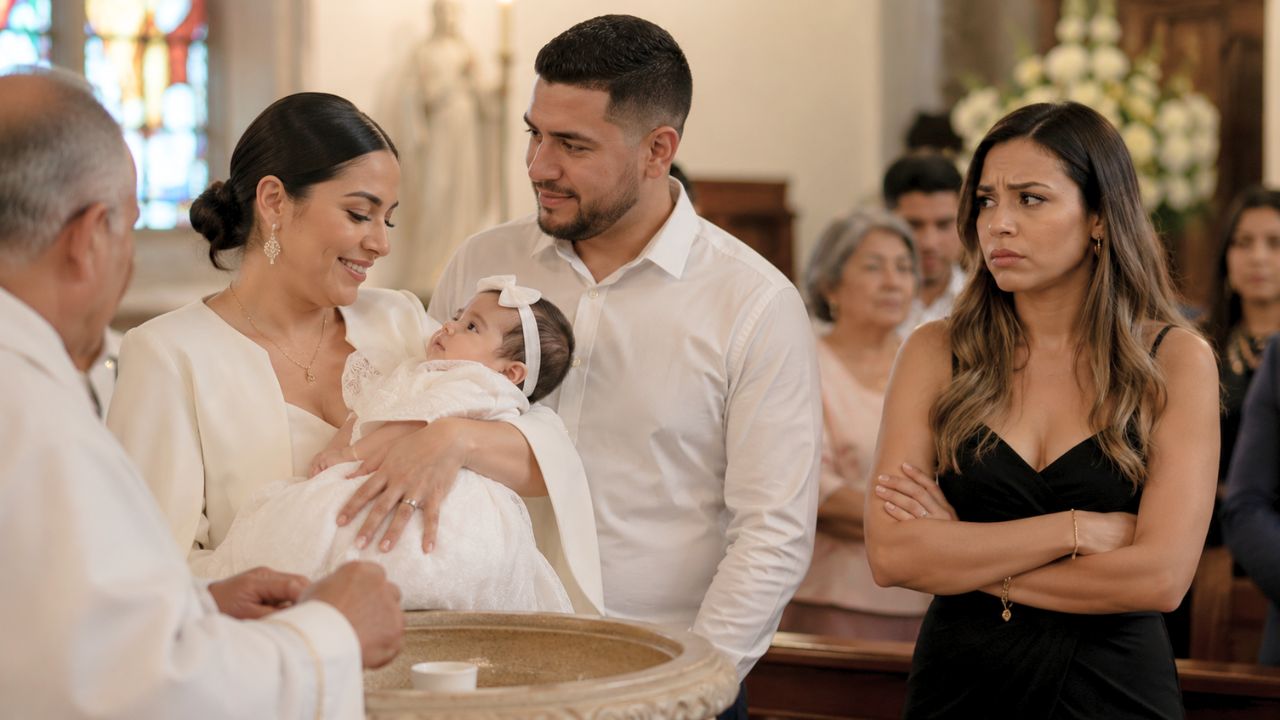
Photo credit: thrivegirly.com
By the time the baby’s baptism invitations went out, Mark thought the hardest part was over. He and his wife, Elena, had survived the sleepless nights, the family drop-ins, and the constant unsolicited advice that comes with a first child. The ceremony itself was supposed to be simple: a Sunday service, a small lunch afterward, and a quiet moment that felt like a fresh start.
Instead, the tension started weeks earlier with Mark’s sister, Dana. She acted like the godmother role was already hers, talking about it at family dinners and even asking Elena what color she should wear “for the pictures.” Mark assumed it was just enthusiasm, until Dana began making plans that didn’t match anything he and Elena had said out loud.
She started acting like the decision had already been made
Dana was the kind of relative who showed up with a casserole and a strong opinion, and the family had long treated it as part of her personality. After the baby was born, she came by often, sometimes with gifts and sometimes with a running critique of how the nursery was organized or how the baby should be fed. Mark and Elena tried to keep it polite, even when it wore them down.
When the baptism came up, Dana took on a new level of certainty. She asked what responsibilities she’d have, whether she’d be expected to attend certain church events, and if she should open a savings account for the baby “like a real godparent.” She wasn’t asking if she’d be chosen; she was asking how it would be done.
Mark and Elena hadn’t asked anyone yet. They were still deciding between Elena’s longtime friend, who had supported her through college and health problems, and Mark’s cousin who was active in their parish. They wanted someone steady, not someone who treated the role like a prize.
The couple kept delaying the conversation, and it backfired
Mark thought the easiest path would be to gently steer Dana away without a blowup. He tried saying they were still thinking, that they wanted to talk to their priest, that they didn’t want to rush. Dana responded by doubling down, telling their mother she didn’t want to be “left out” and telling cousins she hoped they’d be able to travel because she’d be “up front.”
The pressure spilled into logistics. Dana offered to host the lunch after the service, but with conditions: she wanted a specific restaurant, specific seating, and she pushed for a speech. Elena, already stressed, declined and booked a private room at a small place near the church, paying a deposit with money they’d set aside for baby expenses.
That’s when Dana began showing up in less helpful ways. She would drop by unannounced, then complain when the baby was napping. One afternoon, she brought a bag of decorations and started talking about how she’d place them at the lunch. Elena asked her to stop rearranging plans. Dana left in a huff, and Mark got a series of texts about “respect” and “family roles.”
The moment at the church turned awkward fast
On the morning of the baptism, Mark and Elena arrived early with the baby and the paperwork. They had chosen Elena’s friend, Sabrina, as godmother and Mark’s cousin, Luis, as godfather. Both had agreed quietly weeks earlier, and the couple had asked them to keep it low-key to avoid drama.
Dana arrived dressed like she was part of the ceremony, carrying a small box that looked like a gift meant to be presented in front of everyone. She greeted people with the kind of smile that assumes the room is on her side, then positioned herself near the front. Mark noticed his mother looking uneasy but said nothing.
When the priest asked the godparents to come forward, Sabrina and Luis stood. Dana didn’t move at first, then turned her head sharply as if she’d misheard. A second later she stood too, as if to join them, but Mark’s cousin gently stepped into place and the priest continued without acknowledging the confusion.
The service kept going, but the atmosphere changed. Dana’s face stayed fixed, her hands clenched around the box. People avoided looking at her. Elena, holding the baby, felt her arms start to shake from stress and adrenaline, trying to stay focused while the prayers continued.
The lunch turned into damage control
At the restaurant, Dana waited until drinks were poured before confronting Mark. She didn’t yell, but she spoke loudly enough that nearby relatives went quiet. She questioned why she hadn’t been told, why “outsiders” were chosen, and why the family was being “humiliated.”
Mark took her into the hallway to keep it from turning into a scene, but that didn’t help much. Dana accused Elena of pushing her out and accused Mark of choosing his wife’s side over his sister. When Mark said the decision was about stability and boundaries, Dana told him he’d regret it and walked back in without him.
Then she did something that made the situation feel less like a family squabble and more like a public disruption. She went table to table, whispering about the decision and inviting people to step outside to “talk.” A few relatives left early, citing long drives and tired kids. The room that was supposed to feel celebratory started to empty out in awkward waves.
When Mark and Elena got home, they found a long message from Dana in their shared family chat. It framed the day as a betrayal and suggested that she’d been promised the role, even though nobody had asked her. Mark’s mother privately texted him to smooth things over and asked if he could “just apologize for how it happened,” which only made Mark feel like the blame was being reassigned to him.
The fallout got practical: gifts, access, and boundaries
Over the next week, Dana escalated in smaller, more pointed ways. She returned a few baby items she’d bought, dropping them off in a grocery bag on the porch. She also asked Mark’s mother for a copy of the house key “for emergencies,” even though Mark and Elena had never given anyone a key.
Elena grew anxious about unannounced visits, especially because Dana had shown she’d ignore polite requests. Mark installed a doorbell camera and told his wife they would keep the porch light on at night. It felt extreme for a family conflict, but Elena didn’t want the baby caught in the middle of surprise confrontations.
They also started putting everything in writing. When Dana texted asking to “come by and clear the air,” Mark replied with a neutral message and offered a time at a public coffee shop. Dana rejected that and demanded to come to their house. Mark said no, and the back-and-forth ended with Dana telling him he was choosing “strangers” over family.
The hardest part wasn’t just the relationship strain; it was the way the conflict bled into childcare. Mark’s mother had been helping two afternoons a week, but now she started hinting that it was “hard to be in the middle.” Mark worried that standing firm would cost them support they relied on, yet giving in would reward the behavior that caused the problem.
People zeroed in on documentation and keeping the peace without caving
Friends and extended relatives who heard about the lunch didn’t spend much time debating who “deserved” the title. Most focused on what Mark and Elena could do to reduce contact without igniting a bigger family war. The doorbell camera, they said, was a smart move, not because they expected a crime but because it prevented arguments about what happened at the doorstep.
Others urged them to keep communication simple and consistent, avoiding long explanations that could be forwarded or twisted. A few pointed out that godparent roles are a personal decision tied to faith and responsibility, not a birthright, and that Dana’s assumption was the real issue. Several suggested looping in the priest for pastoral guidance if Dana kept disrupting church events, especially if she tried to confront Sabrina and Luis directly.
What remained unclear was whether Dana would cool off once the initial embarrassment faded, or if she would keep pressing until someone gave her a symbolic consolation prize. Mark and Elena weren’t interested in making up a new title to soothe her. They wanted their home calm and their baby’s first months free from ongoing battles.
By the end of the month, Mark had stopped taking Dana’s calls and kept responses to short texts. Elena focused on the baby’s routine, and they leaned more on friends than family for help. The baptism photos still looked peaceful, but the story behind them had turned into a lesson they didn’t want to repeat: if you don’t set expectations early, someone else will set them for you.