Her In-Laws Broke the One Safety Rule Set for Their Kids — Then She Ended Every Unsupervised Visit
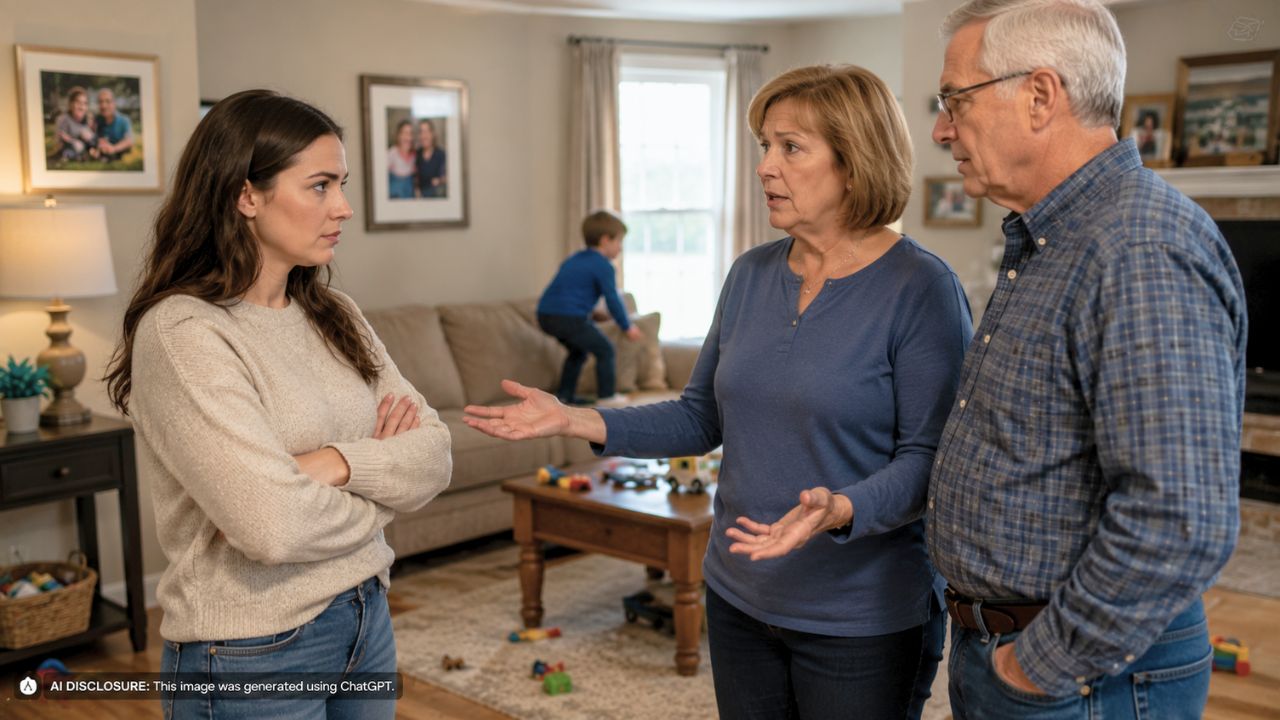
Photo credit: AI-generated image created using ChatGPT. Illustrative only.
There are families where you can roll your eyes at a few bad habits and move on. Then there are families where one “small” decision can get a kid hurt. This story sits firmly in the second category, and it’s the kind of thing that makes a parent’s stomach drop.
In the original post, a mom explains that she and her husband had one major safety rule with the in-laws: their kids can’t be around the sister-in-law’s household unless the parents are present. Not because of a petty feud, not because of politics, but because there have been serious concerns in that home—dangerous childcare practices, talk of medicating kids to keep them docile, and reports of violence and instability serious enough that multiple mental health professionals supported the boundary.
Then the in-laws broke it. The husband dropped their toddler off at his parents’ place, and only after he left did they text to say the sister-in-law’s family was coming over. The parents were hours away, unable to intervene in real time, and the in-laws now claim they “forgot” the one rule they’ve been told repeatedly. So the couple drew a clear consequence: no more unsupervised visits.
The difference between “strict” and “serious”
Some grandparents hear any boundary and translate it as, “You don’t trust us.” And sure—sometimes new parents overcorrect. They read too much online, they get spooked, and they start treating normal life like a hazardous materials site. But this situation isn’t about screen time or sugar cereal.
This is a parent saying, “We have credible reasons to believe this environment is unsafe for our child unless we’re physically present.” When you’re talking about babies left unattended in baths or toddlers locked alone for hours, you’re not in the realm of preferences. You’re in the realm of stewardship and protection, the plain old job description of motherhood and fatherhood.
The “we forgot” excuse doesn’t hold water
Forgetting the one rule that matters most is a problem all by itself. Not because people are machines, but because the stakes tell you what deserves a sticky note on the fridge and a reminder alarm on your phone. If a grandparent truly understands, “This is the line that keeps the peace and keeps the kids safe,” they don’t “forget.” They build their plans around it.
What makes it worse is the timing. The text came after the father had already left and couldn’t simply turn around. Whether it was deliberate or just cowardly, it created a situation where the parents would either accept the violation or look like the bad guys for objecting. That’s not an accident you shrug off; it’s a trust issue.
Trust is the real currency of unsupervised time
Unsupervised visits aren’t a right. They’re a privilege built on years of proven judgment. Most of us learned this as kids in a different way: you got more freedom when you showed you could handle it. Adults aren’t exempt from that logic, and grandparents don’t get a special pass because they feel offended.
If you can’t follow the parents’ one safety rule, you can’t be alone with the kids. That isn’t revenge. That’s cause and effect. And if someone is more upset about being corrected than they are about putting a child in a risky situation, they’re telling you what they value.
Family pressure has a way of flipping the script
The mom in this situation describes something a lot of couples recognize: once the boundary is enforced, suddenly the conversation isn’t about the child’s safety anymore. It becomes about the grandparents’ feelings, the sister-in-law’s anger, and “keeping the family together.” It’s amazing how quickly the kid at the center of it all becomes an afterthought.
The sister-in-law’s household reportedly reacted with threats—saying the mom wasn’t “allowed” to speak to the sister-in-law and that they’ll never talk to them again. That’s not the response of people interested in repair. That’s a power move. And once families start playing power games, your job as a parent is to refuse the table.
What a healthy consequence actually looks like
There’s a clean, adult way to handle consequences, and it doesn’t require shouting matches or dramatic ultimatums. The couple here isn’t cutting off the grandparents. They’re not weaponizing the kids. They’re simply saying, “We’ll be present for visits from now on.” That’s measured and it’s directly connected to what happened.
Consequences should match the offense, and this one does. The offense was allowing a prohibited situation to happen when the parents weren’t there. The new rule is that the parents will be there. It’s hard to argue with that unless you’re arguing for the right to override the parents.
Husbands have to lead here, not outsource the conflict
This is the part a lot of men would rather avoid: the husband needs to be the primary voice to his parents. Not because his wife can’t speak for herself, but because in-law conflicts have a way of turning into “your spouse is controlling you” narratives. A man who loves his wife and kids doesn’t let that story grow legs.
His job is to be clear, calm, and consistent: “Mom, Dad, you broke the one rule. We’re not debating whether the rule is valid. You showed us we can’t trust you unsupervised, so visits will be supervised.” No long speeches. No courtroom cross-examination. Just steady leadership and follow-through.
It also helps if the couple agrees on the script ahead of time. Families under pressure tend to poke at any daylight between husband and wife. Unity doesn’t mean you never disagree privately. It means you don’t negotiate your children’s safety in public.
How to handle the “helicopter parent” label
When people don’t like your boundary, they’ll try to rename it. “Helicopter.” “Overprotective.” “Controlling.” Sometimes those labels are deserved, but often they’re just a way to make you feel silly for taking responsibility.
A useful question is simple: if something went wrong, who would carry the consequences? Not the grandparents. Not the sister-in-law. The mom and dad would be the ones living with it, explaining it, paying for it, and wrestling with the guilt. Parents get veto power because parents carry the weight.
And if faith has anything to say here, it’s that children aren’t props for family harmony. They’re lives entrusted to you. Peace at the cost of protection isn’t peace; it’s denial with good manners.
Supervised visits might feel awkward for a while, and the extended family may keep pushing for things to “go back to normal.” But “normal” is what created this mess. When someone proves they can’t honor a clear boundary, the loving move is to reset the structure and remove the opportunity for repeat offenses.
Read more from Thrive Girly:
- Mother-in-Law Expected to Sleep Over After Every Visit — Then the Mom Said Overnight Stays Were No Longer an Option
- Relatives Showed Up to the Wedding Without Being Invited — Then the Couple Refused to Find Them Seats
- Grandma Buckled the Baby Into Her Car and Left Without Telling Anyone — Then the Mom Made Sure It Never Happened Again