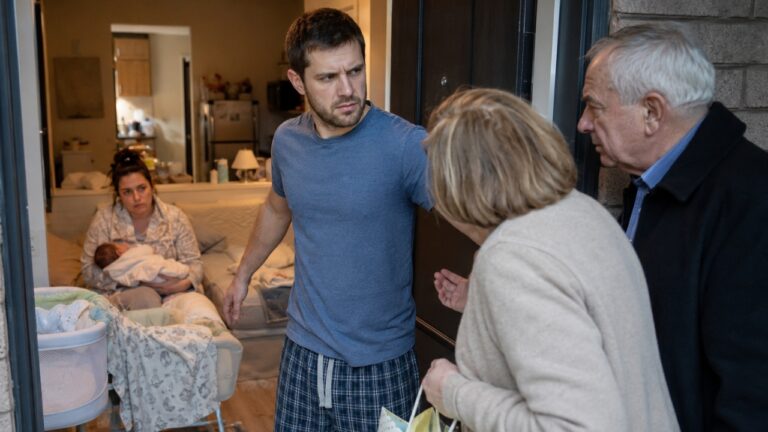
Her Husband’s Ex Showed Up Uninvited to the Wedding Reception — Then the Bride Had Her Removed

Photo credit: AI-generated image created using ChatGPT. Illustrative only.
There’s a particular kind of awkward that only shows up at weddings. Not the harmless “best man forgot the rings” kind, but the kind that makes grown adults stare at their drinks and pretend they didn’t see what just happened. A bride recently found herself in that exact spot when her husband’s ex walked into their reception dressed up and acting like she belonged there.
As described in the original post, the couple had a tight guest list and the ex wasn’t invited—not out of spite, but because she simply wasn’t part of their lives. The groom was reportedly shocked when she appeared about an hour into the reception, and some of his friends greeted her warmly, which poured gasoline on an already tense moment. The bride held it together for about twenty minutes, then pulled the ex aside and calmly asked her to leave.
The ex got teary, said she thought it would be fine since she and the groom were “still friends,” and left. The groom backed his wife up, but a few friends gave the bride looks afterward, and the mother-in-law suggested she could’ve let it slide for one night. That combination—outside opinions and post-wedding adrenaline—can make anyone second-guess themselves, even if they handled it cleanly.
Showing up uninvited isn’t “bold,” it’s disrespectful
Let’s start with the obvious part that people love to blur: a wedding invitation is not a vibe, it’s a boundary. If you aren’t invited, you don’t attend. You don’t “stop by,” you don’t “just want to say congrats,” and you don’t make yourself comfortable because you used to belong in that circle.
Plenty of folks want to frame this as romantic nostalgia or harmless friendliness, but it’s neither. A reception isn’t an open house. It’s a hosted event with seating, food, a schedule, and—more importantly—a clear meaning: this couple is publicly beginning a new household. Crashing that moment, especially as an ex, is a choice.
The bride handled it privately, which is the grown-up move
If you want to judge a situation fairly, pay attention to how it was handled. She didn’t grab a microphone. She didn’t marshal bridesmaids like security. She didn’t humiliate the woman in front of the room. She waited, kept her composure, and then pulled her aside quietly.
That matters because weddings are emotional pressure cookers. People imagine the bride “making a scene” anytime she enforces a boundary, but the scene began the second an uninvited ex walked in like it was normal. A calm, direct request in private is about as respectful as it gets, especially in a moment where most people would be shaking with anger.
The groom’s reaction and support should carry more weight than the crowd
The groom being “genuinely shocked” is an important detail. It suggests this wasn’t some secret invite or quiet permission he forgot to mention. If he had told her to come, you’d expect something closer to nervous guilt than surprise.
More importantly, he backed his wife up completely afterward. In marriage, that’s not a small thing. A man doesn’t have to be perfect, but he does need to be loyal and clear about who his family is now. If he saw the problem, agreed with the boundary, and supported his bride, then the couple was aligned where it counts.
The looks from friends can sting, but friends aren’t the ones building a life together. And if a friend group has a habit of catering to the comfort of an ex at the expense of the spouse, that’s not friendship—it’s immaturity dressed up as “we’re all cool.”
Those “warm greetings” from his friends made it messier than it needed to be
Some of the groom’s friends greeting the ex warmly is one of those small details that tells you a lot about the room. It created social permission for her to stay. Even if nobody meant harm, their friendliness communicated, “She belongs here,” which undercut the bride in front of her own guests.
This is where men need to be sharper. If one of your buddies’ exes walks into his wedding reception uninvited, you don’t treat it like a reunion. You don’t make it a social moment. You take your cue from the couple, and you help protect the day. A simple, polite “Hey, I don’t think you’re on the list—maybe check with the coordinator” would’ve shut it down without drama.
Instead, their warmth pushed the bride into a corner: either swallow it and feel disrespected all night, or enforce the boundary and risk being painted as the villain. That’s not fair, and it’s not how a good community acts around a marriage.
The mother-in-law’s comment is common, and still off
“You could have let it go for one evening” sounds reasonable until you translate it. It usually means, “Your comfort matters less than avoiding awkwardness.” And if a man’s mother is more concerned with keeping the peace than honoring the couple’s boundaries, it can create a long, slow drag on the marriage.
Peacekeeping has its place, but it can become a coward’s virtue. Weddings are one of the first public moments where a couple learns who will respect their decisions and who will pressure them to bend for appearances. If the price of “peace” is letting someone crash the celebration and change the mood, it’s not peace—it’s surrender.
It’s also worth saying: a mother-in-law may only see the surface. She might not have felt the tension of watching an ex walk in confidently, being greeted, and taking up emotional space that doesn’t belong to her anymore. The bride was in the blast radius. That changes how the moment lands.
“We’re still friends” isn’t a hall pass, especially with an ex
There are exes who genuinely become friendly acquaintances, and that can be fine with the right maturity and boundaries. But “we’re still friends” doesn’t override the couple’s guest list. It doesn’t create an automatic invitation, and it definitely doesn’t justify showing up without checking.
If Reese truly wanted to wish him well, there were about a dozen respectful ways to do it. She could’ve sent a card. She could’ve messaged congratulations. She could’ve asked beforehand, through proper channels, whether it would be welcome. What she did instead put the couple in a bind and forced the bride to play bouncer at her own reception.
Tears don’t automatically mean innocence, either. People cry for lots of reasons: embarrassment, regret, feeling rejected, or realizing their plan didn’t work. The bride doesn’t have to interpret tears as proof she was wrong. She can acknowledge the emotion and still hold the line.
If you don’t guard the early boundaries, you’ll pay for it later
One of the quiet tests of a new marriage is whether the couple can set boundaries together and keep them, even when other people don’t like it. This situation wasn’t just about a reception. It was about who gets access, who gets influence, and who gets to interrupt important moments.
Letting an uninvited ex stay “just this once” trains everyone in the room, including the ex, that the couple’s preferences are negotiable under pressure. That’s how you end up with years of blurry lines: unexpected drop-ins, overfamiliar texts, friend groups that never fully shift their loyalty, and a spouse who feels like they’re constantly competing with the past.
A steady marriage isn’t built on being endlessly agreeable. It’s built on clarity, unity, and the willingness to disappoint the right people. The groom supporting his bride was the correct instinct, and it should be reinforced, not questioned.
The bride didn’t create the problem; she solved it as quietly as she could. If a few people wanted her to smile through disrespect so they could enjoy their cake without discomfort, that says more about their priorities than it does about her character.
Read more from Thrive Girly:
- Mother-in-Law Expected to Sleep Over After Every Visit — Then the Mom Said Overnight Stays Were No Longer an Option
- Relatives Showed Up to the Wedding Without Being Invited — Then the Couple Refused to Find Them Seats
- Grandma Buckled the Baby Into Her Car and Left Without Telling Anyone — Then the Mom Made Sure It Never Happened Again