Her Friend Uninvited Her From the Wedding to Cut Costs — Then Asked Her to Help Pay for the Overage, and She Said No
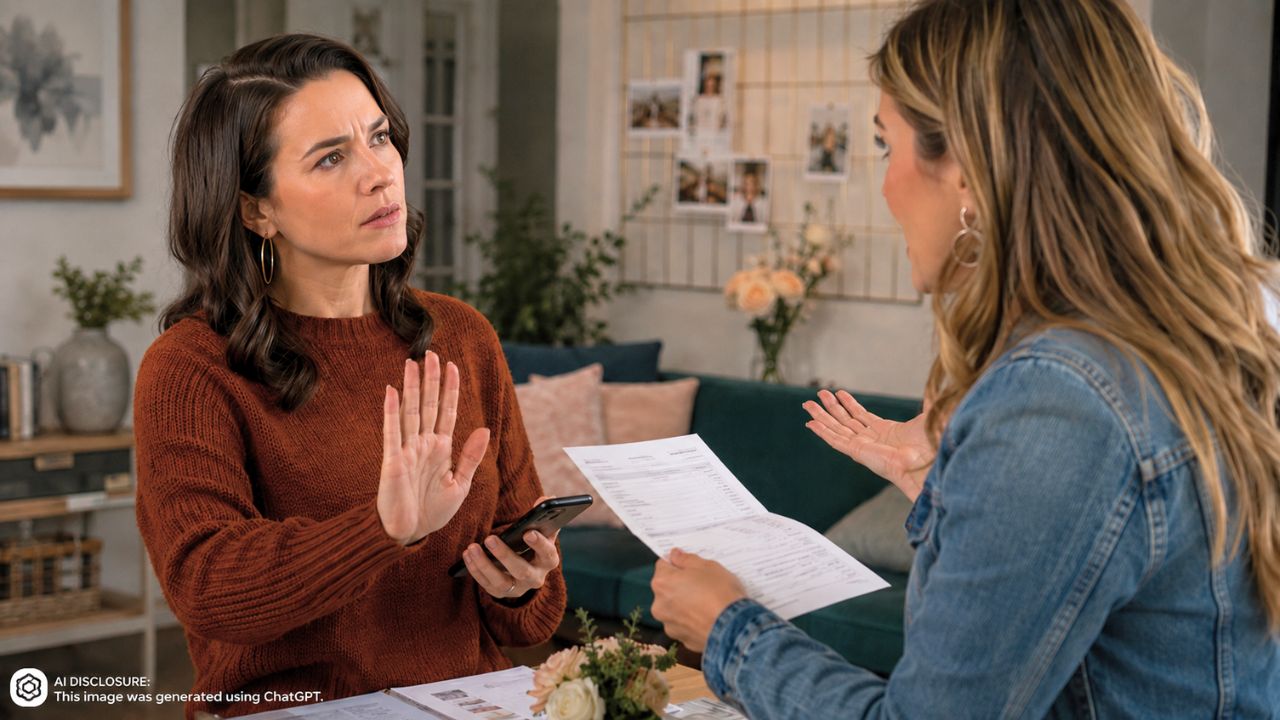
Photo credit: AI-generated image created using ChatGPT.
Every wedding has a budget, and every budget has a moment where somebody panics. Sometimes it’s the caterer’s quote. Sometimes it’s the florist. Sometimes it’s the guest list, because each extra name feels like another invoice sliding across the table.
In the original post, a woman says she’d been close with her friend “Sarah” since high school and was excited to RSVP after receiving the wedding invitation. Then, a few months before the wedding, Sarah texted to say the guest list had to be cut for budget reasons—and she was being uninvited. Later, after the wedding, Sarah asked her for money to help cover the overage, explaining they’d gone over budget and were asking people who didn’t attend to chip in.
It’s hard to read that without feeling the sting. Being uninvited is embarrassing and personal, even if the reason is financial. Getting asked to help pay afterward adds a second insult, like someone taking away your seat and then passing you the bill for the meal.
Uninviting someone isn’t just “a numbers thing”
Couples do have to make cuts. Weddings aren’t cheap, and sometimes families pile on expectations like they’re not the ones swiping the card. But there’s a difference between not inviting someone in the first place and inviting them, letting them celebrate with you in their head, and then pulling the rug out.
An uninvite communicates something whether you mean it to or not. It says, “You’re optional,” and it lands even harder when it’s a long-term friend. If you’re going to make that call, you’d better do it with humility and clarity, and you’d better accept the relational cost without pretending it’s painless.
Asking non-guests to cover the overage is backward
Sarah’s request wasn’t, “We’re stressed, could you pray for us?” It was money. And not money in a way that made sense, either—she asked people who didn’t attend to help cover costs after the fact.
That flips the basic order of responsibility. A wedding is a voluntary event, planned by the couple. If they go over budget, it’s on them to adjust, downsize, or absorb the hit. Passing the hat afterward—especially to someone you already cut—turns celebration into a shakedown.
If you want to fundraise, do it honestly and upfront, and don’t call it a wedding. Even then, you don’t aim the ask at the very people you told, “Sorry, you’re not included.” That’s not stewardship; that’s trying to outsource consequences.
Friendship doesn’t mean being available for someone else’s poor planning
People get confused about loyalty. Loyalty isn’t the same as compliance, and friendship isn’t a blank check. A good friend is supportive, yes, but also not easily manipulated by guilt.
In the post, the woman said she refused to pay “a single dime,” and Sarah responded by calling her selfish and unsupportive. That accusation is doing a lot of work. It tries to turn a reasonable boundary into a character flaw, so the person setting the boundary feels like the problem.
There’s a simple way to test it: if the roles were reversed, would Sarah send money to help cover a party she was uninvited from? Most people wouldn’t. Not because they’re petty, but because it’s an unreasonable request.
What a responsible ask would’ve looked like
Sometimes couples really do get hit with unexpected expenses. Vendors change pricing, family pressures get weird, and people make decisions they shouldn’t have made. But if you’re asking for help, how you ask reveals whether you understand dignity—yours and theirs.
A responsible ask would’ve been private, specific, and optional, directed toward people who were still included in the day or toward family members who were actively involved in the decisions. It also would’ve been paired with ownership: “We miscalculated, and we’re figuring it out.” Not, “We went over, so send money,” especially not to someone who didn’t even attend.
Even better, the couple could’ve done the most adult thing available: scale back, negotiate, or accept a smaller honeymoon and pay the bill. Starting married life by asking sidelined friends to subsidize your overage is a rough habit to build.
There’s a character issue hiding under the budget issue
Money problems have a way of exposing what’s already there. Stress doesn’t create character; it reveals it. In this situation, the troubling part isn’t only the uninvite or the over-budget wedding. It’s the entitlement to other people’s money, paired with the moral pressure that followed.
A wedding is supposed to be a public promise of covenant faithfulness. You don’t have to preach a sermon at the reception to understand that a marriage asks for maturity: honesty, restraint, and the ability to own mistakes without making them someone else’s problem.
If a couple can’t say, “We overspent, and that’s on us,” it raises questions about how they’ll handle bigger financial storms later. Rent, kids, medical bills, job loss—those don’t care about the aesthetics of your big day.
How to say no without turning it into a war
The woman in the post already said no, and that’s the right call based on what we’re given. Still, there’s a way to refuse that keeps your spine straight without sharpening every word into a weapon.
Keep it plain: “I’m not able to contribute, and I was hurt by being uninvited.” If the friend escalates, don’t match the volume. Repeat the boundary. The goal isn’t to win a debate; it’s to be clear and honest.
And if the friendship survives, it will survive because Sarah eventually owns her part. If it doesn’t, it won’t be because someone refused to pay for a wedding they weren’t allowed to attend. It’ll be because one person tried to turn a friendship into a funding source.
A wedding can be beautiful, and a marriage can be holy, without being expensive. The painful part here is watching celebration get tangled up with pride and poor stewardship. Saying no to a backwards request isn’t selfish; it’s sanity, and it might be the only honest thing left in the room.
Read more from Thrive Girly:
- Mother-in-Law Expected to Sleep Over After Every Visit — Then the Mom Said Overnight Stays Were No Longer an Option
- Relatives Showed Up to the Wedding Without Being Invited — Then the Couple Refused to Find Them Seats
- Grandma Buckled the Baby Into Her Car and Left Without Telling Anyone — Then the Mom Made Sure It Never Happened Again