Her FIL Told Her Husband to Pick Up His MIL and Host Her for Days Without Ever Asking — Then the New Mom Said No
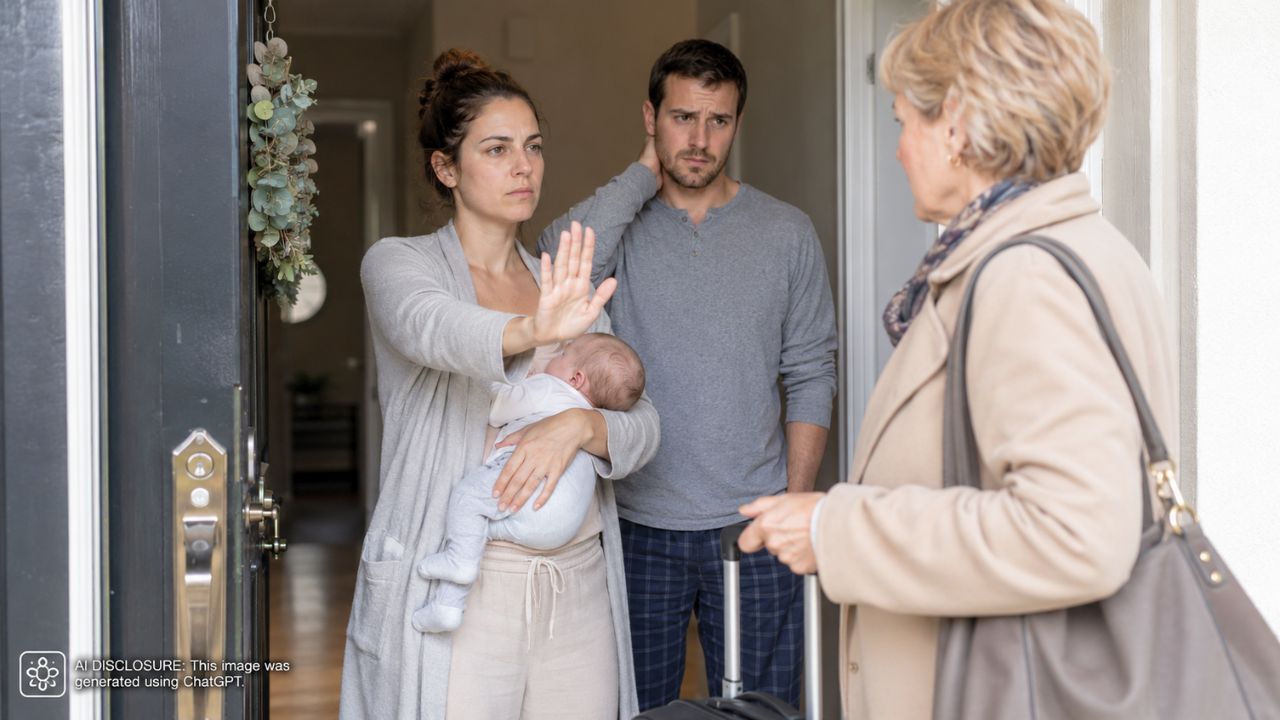
Photo credit: AI-generated image created using ChatGPT.
A new baby has a way of turning small family habits into big family problems. The sleep is scarce, the emotions are close to the surface, and everybody suddenly has an opinion about what should happen in your home. Add a few pushy relatives and a spouse who doesn’t check in before agreeing to things, and you’ve got a recipe for a fight.
In the original post, a woman with a three-month-old said she and her husband had finally found a workable rhythm with his parents: about once a week, either a short visit at their place or a few hours at the in-laws’ home. Postpartum has already been overwhelming, especially with a mother-in-law she describes as possessive with the baby, and those boundaries were keeping things steady.
Then her father-in-law called and told—didn’t ask—her husband to pick up his mother-in-law and host her for several days while he and the brother-in-law went out of state. Her husband agreed immediately without checking with her, which kicked off an argument. He later told his mom to go with the men instead, but he also told his wife he felt sad and worried that one day, when his parents are older or sick, she might not “let” him take care of them.
The part that would set any marriage off
Let’s start with the obvious: a parent doesn’t get to assign houseguests to a married couple like it’s a chore chart. You can love your parents, honor them, and still say, “You don’t get to command my home.” A grown man being told what to do by his dad might feel familiar, even normal, but that doesn’t make it healthy.
The bigger issue, though, is the husband’s immediate “yes” without talking to his wife. Overnight guests are a two-yes decision, especially with a three-month-old in the house. If one spouse has anxiety about the situation, that doesn’t mean they “win,” but it does mean you slow down and handle it together instead of handing out commitments like you’re still single.
Postpartum isn’t a minor detail
Three months in is still early. A lot of moms are still physically healing, still figuring out feeding and sleep, still trying to feel like themselves again. Even if everything looks “fine” from the outside, it doesn’t take much to overwhelm a home where the margin is already thin.
When the mother says her MIL tends to be possessive and wants to hold the baby constantly, that’s not a petty complaint. It can feel like someone is trying to take your place in your own house, and that’s a uniquely unsettling feeling for a new mom. Some grandmothers “help” by doing dishes and folding laundry; others “help” by planting themselves on the couch with the baby while you host them, feed them, and manage your stress.
Hosting isn’t just providing a bed
A lot of men hear “she’ll stay with us a few days” and picture a simple arrangement: spare room, extra towel, no big deal. But hosting usually means more than square footage. It changes the whole atmosphere of the house—when you can rest, how you dress, whether you feel watched, whether you can have a quiet moment with your spouse, and how much emotional energy you spend navigating somebody else’s preferences.
Now add the baby. A houseguest who “mostly just wants to hold the baby” can turn mom into a gatekeeper all day long. She’s either handing the baby over and feeling sick about it, or she’s keeping the baby close and feeling like the bad guy. Either way, it’s stress on repeat, and it’s happening in the one place that’s supposed to be her safe ground.
The father-in-law’s move was about control, not logistics
If the only issue were that MIL would be alone, there were options: she could go with them, she could stay with another relative, or they could simply ask—politely—what worked for the young family. Instead, the father-in-law issued a directive to his son. That’s not how adults treat adults, and it’s not how you treat a household with a brand-new baby.
The mother suspects the real motive was more baby access, and she may be right, or she may be reading it through the lens of earlier overwhelm. Either way, the result is the same: someone outside the marriage tried to steer the family schedule without consent. If a couple doesn’t correct that pattern early, it becomes the permanent background music of their life.
A husband’s job: protect the home, not manage his parents’ feelings
His sadness after redirecting his mom doesn’t automatically make him wrong. A decent man doesn’t like disappointing his mother, and he may feel stuck between loyalty and peace. But marriage means your first loyalty is to your wife and child, and “honor your father and mother” was never meant to mean “give them full access to your home whenever they demand it.”
What he did right, eventually, was course-correct. He called his mom and told her to go with his dad and brother instead. What he did wrong was agreeing in the first place without a quick huddle with his wife, and then making the conflict about a future scenario—aging parents—rather than the immediate issue: an unasked-for multi-day stay in a postpartum home.
That “someday you won’t let me take care of them” comment needs cleanup
His worry about the future isn’t imaginary. Many couples do face hard seasons with aging parents, illness, and caregiving decisions. A wise wife doesn’t want a husband who abandons his parents in their final decades, and a wise husband doesn’t want to marry someone who treats his parents like inconveniences.
But he stacked the emotional deck by tying a present boundary to a future crisis. Saying no to a possessive grandmother’s multi-day visit with a three-month-old is not the same thing as refusing to care for a sick parent. Those are two different categories, and mixing them will poison the conversation because it turns a practical “not this week” into a character accusation.
If they want peace, they’ll separate the topics. Handle today’s boundary like adults, then have a calm, separate conversation about what caregiving might look like someday: finances, living arrangements, expectations, and the difference between emergency help and open-ended household takeover.
What a reasonable boundary sounds like in real life
This couple already had a workable pattern—weekly visits, limited duration—and it was helping. A reasonable next step is to make the “overnight rule” explicit: no one stays in the home unless both spouses agree, and last-minute demands default to no. That protects the marriage from being pressured by surprise and it prevents the more passive spouse from getting steamrolled into instant compliance.
It also helps to define what “help” actually means postpartum. If MIL ever stays in the future, the couple can be clear ahead of time: mom decides when the baby is held, the parents keep their routines, and the guest is there to support the household, not to monopolize the child. That might sound blunt, but unclear expectations are how resentment grows in the dark.
And for the husband, a simple script goes a long way: “Dad, you need to ask us, not tell us. I’m going to talk to my wife and we’ll let you know.” Not rude. Not dramatic. Just a grown man placing his family in the proper lane.
Saying no here wasn’t selfish; it was stewardship. A three-month-old and a recovering mom aren’t a hotel, and a marriage can’t run on outside demands and inside guilt. The best outcome is the one where the husband learns to pause before committing the household, the wife feels protected in her own home, and the in-laws learn that time with the grandbaby is a gift—not an entitlement.
Read more from Thrive Girly:
- Mother-in-Law Expected to Sleep Over After Every Visit — Then the Mom Said Overnight Stays Were No Longer an Option
- Relatives Showed Up to the Wedding Without Being Invited — Then the Couple Refused to Find Them Seats
- Grandma Buckled the Baby Into Her Car and Left Without Telling Anyone — Then the Mom Made Sure It Never Happened Again