Her Family Downsized to a Smaller House and Pushed Her Out to Make Room for Her Stepbrother — Then She Refused to Babysit Him
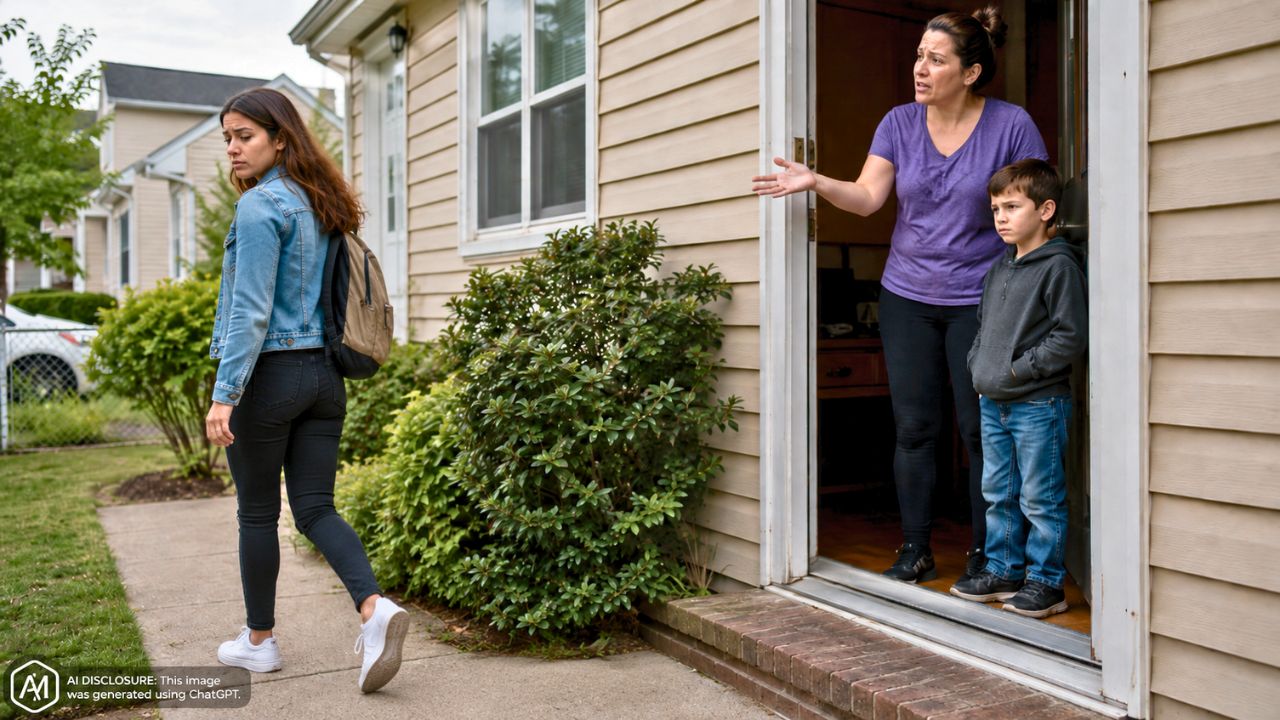
Photo credit: AI-generated image created using ChatGPT.
There’s a particular kind of insult that doesn’t come with yelling or slammed doors. It comes quietly, dressed up as practicality, and it leaves you standing outside looking in—wondering when you became optional.
A 26-year-old man recently laid out that exact scenario in the original post. His family had to move because their landlord wanted the property back for her son, and while there were three-bedroom rentals available in their budget, his mum and stepdad chose a two-bedroom place instead. The math was simple: there was no room for him, so he was told to find somewhere else to live.
He and his girlfriend are now accelerating their plan to buy a home by about a year, which means more stress and financial pressure sooner than expected. Then, right after pushing him out, his mum and stepdad asked him to come back for a week to stay in the new house while they go on holiday—so his 18-year-old stepbrother “won’t get lonely.” He’s not refusing to help a toddler. He’s refusing to play substitute parent and emotional support roommate for an adult who still has a bedroom in the house he no longer fits inside.
A “housing decision” that says more than it should
Downsizing happens. Families lose leases, rents go up, life gets tight, and sometimes you have to take what you can get. But this wasn’t a case of “we can’t afford more space.” By his account, three-bedroom options were on the table within the same budget, and they still picked the two-bedroom.
That’s the part that stings because it turns a logistical problem into a relational one. A family can be forced into hard choices and still work to protect everyone’s dignity. Choosing the option that removes one child’s place in the home—while leaving another comfortably settled—communicates a priority, even if nobody says it out loud.
He also mentions this isn’t coming out of nowhere. He’s felt for years that the stepbrother is the favorite, and this move made those suspicions feel less like insecurity and more like confirmation.
“Babysitting” an 18-year-old isn’t a thing
Calling it babysitting is almost comical, but not in a fun way. An 18-year-old is legally an adult, and practically speaking, he can feed himself, lock a door, and spend a week without company. If the concern is loneliness, that’s not an emergency. That’s life.
Sometimes parents don’t want an empty house with a teen or young adult in it, and sometimes that’s about trust. But if trust is the issue, it should be addressed honestly. Asking the older stepchild—who they just displaced—to move back in temporarily to keep the younger one company is a strange mix of entitlement and denial.
It also turns the older son into a utility. You don’t live here, but we’ll need you to act like you do when it benefits us. A man can handle a lot, but being treated like a spare part wears thin fast.
The real issue: being included only when you’re useful
The request isn’t just inconvenient. It’s loaded. He wasn’t important enough to warrant a bedroom, but he’s important enough to provide free labor and emotional cover for their holiday plans.
This is how resentment gets planted. Not by one big dramatic betrayal, but by a pattern of decisions that say, “We’re fine without you… until we need you.” You can love your family and still recognize when the relationship has become one-directional.
And yes, it’s only a week. But “only a week” is how people minimize the principle. A week is long enough to disrupt his life, long enough to reopen the wound, and long enough to teach everyone involved that pushing him out had no consequences.
What a reasonable boundary looks like here
Saying no doesn’t require a speech or a manifesto. A clean boundary can be calm, short, and firm: “I’m not available to stay at the house.” No insults. No scorekeeping. Just clarity.
If he wants to add a sentence for honesty, he can, without turning it into a courtroom closing argument: “After being asked to move out, it doesn’t feel appropriate for me to come back to house-sit.” That’s not cruelty; that’s reality.
He’s already dealing with the ripple effects of their decision—accelerating a home purchase, taking on pressure he didn’t plan for yet, reorganizing his life. Asking him to absorb more inconvenience for their comfort isn’t a small ask, even if they frame it that way.
If you do help, do it with terms—not guilt
There is a version of this where he helps without betraying himself, but it requires terms and clear-eyed expectations. For example: he could agree to check in once or twice, or swing by if there’s a specific practical need, without moving back in. That keeps him from being drafted into the role of stand-in parent.
If they truly need someone in the house, they can ask another relative, a family friend, or simply trust that an 18-year-old can handle a week. The point is that “help” should be tied to a real need, not to soothing someone’s discomfort with the consequences of their own choices.
And if he chooses to do it anyway, it should be because he’s decided it’s the right thing—not because he got pressured into proving he’s still loyal after being sidelined. A man who lives by conviction can be generous, but he shouldn’t be manipulable.
What the parents are missing about adulthood
Parents sometimes struggle with the shift from “my kids under my roof” to “my adult children building their own lives.” In this case, the irony is thick: they forced that transition early for the older one, but they’re still hovering over the younger one as if he can’t be alone for a week.
Part of raising men is letting them shoulder normal discomfort. An 18-year-old being a little lonely for a week is not a crisis; it’s an opportunity to grow up. Call a friend. Make plans. Go to the gym. Learn to sit with yourself without panicking. Those are normal muscles to build.
Meanwhile, the older son is already doing the grown-man work: taking on financial responsibility sooner than planned, coordinating with his girlfriend, and figuring out housing under pressure. The least his family could do is respect that new season instead of treating him like a convenient add-on.
A faith-shaped take: honor doesn’t mean being a doormat
For a lot of men, family requests come wrapped in the word “honor,” and it can get twisted into automatic compliance. Honoring your mother doesn’t mean pretending unfairness is fairness. It doesn’t mean accepting a role where you’re valued only for what you can provide.
Healthy honor tells the truth plainly and keeps bitterness from taking over. It also recognizes that enabling poor behavior isn’t kindness. Sometimes the most respectful thing you can do is refuse to play along with a situation that encourages immaturity and rewards favoritism.
He can speak respectfully, keep his conscience clean, and still decline. Those things can coexist, and a lot of men need to hear that.
If your place in the family home disappears the moment it’s inconvenient, you don’t owe the household your presence the moment it’s convenient again. A fair response here is a calm no, a steady focus on building his own home with his girlfriend, and the quiet decision to stop auditioning for a role his parents should’ve never made him compete for in the first place.
Read more from Thrive Girly:
- Mother-in-Law Expected to Sleep Over After Every Visit — Then the Mom Said Overnight Stays Were No Longer an Option
- Relatives Showed Up to the Wedding Without Being Invited — Then the Couple Refused to Find Them Seats
- Grandma Buckled the Baby Into Her Car and Left Without Telling Anyone — Then the Mom Made Sure It Never Happened Again