Her Best Friend Dropped Her as Maid of Honor Over Her Looks — Then She Said She Wouldn’t Go to the Wedding at All
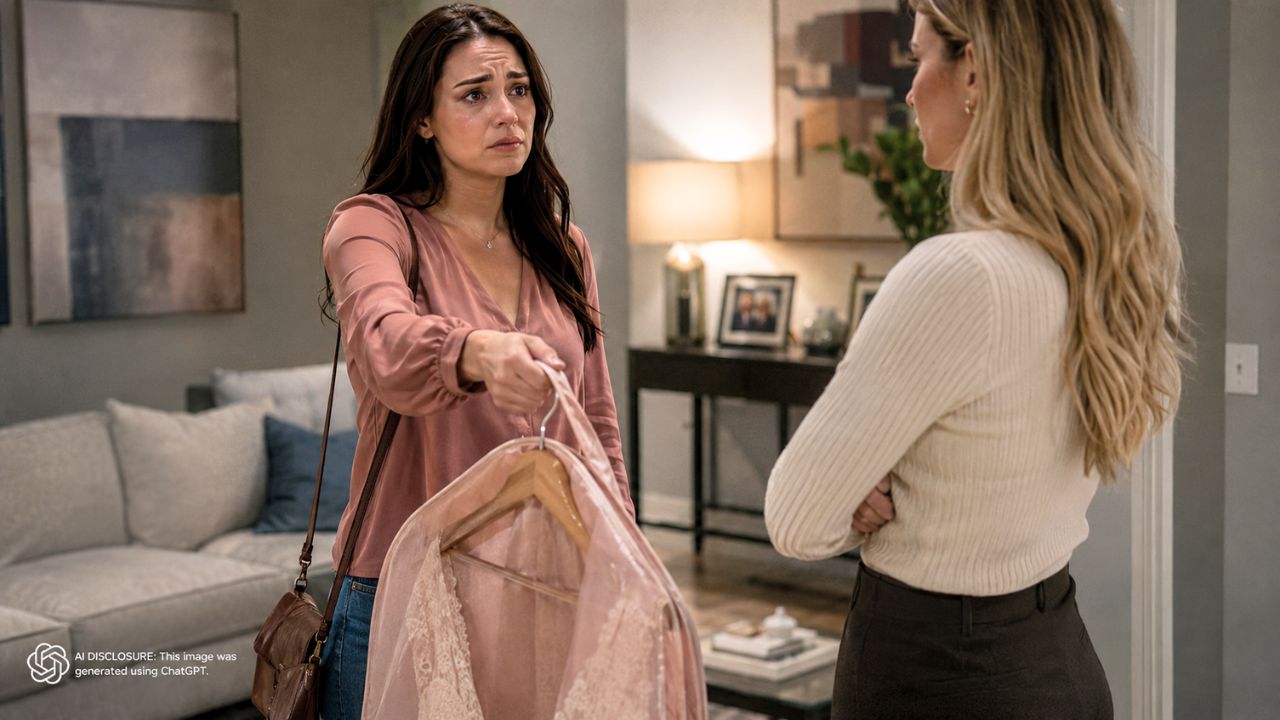
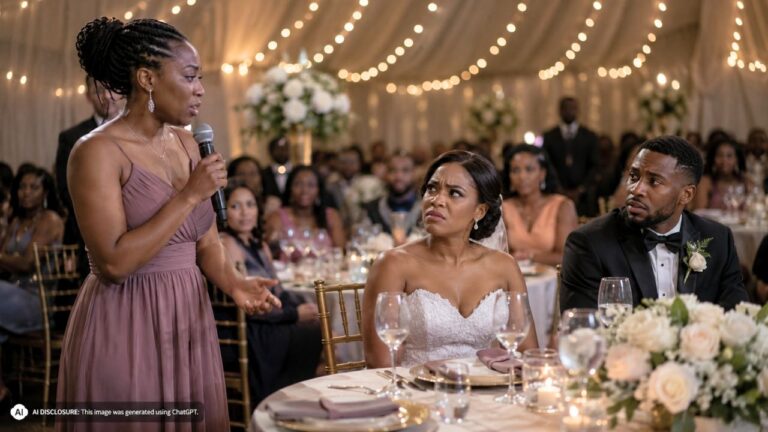
Photo credit: AI-generated image created using ChatGPT.
There’s a special kind of pain when a lifelong friend treats you like a prop. Not an enemy, not a stranger—someone who’s been in the picture since childhood, whose family feels like your extended family, who knows your history and still chooses to make you smaller so she can feel bigger.
That’s the knot at the center of a wedding story shared in the original post. A 27-year-old woman says her best friend Sophie asked her to be maid of honor, then later pulled her aside after dress shopping and asked her to step down—because seeing her in the bridesmaid dress made the bride worry she’d “steal focus” and be compared to her. The maid of honor, hurt and blindsided, told Sophie she wouldn’t attend the wedding at all if her mere presence was going to be a burden.
Now she’s stuck between a boyfriend who’s horrified but still planning to go (he’s friends with the groom) and parents who think she should swallow it for the sake of the friendship. Add in the money she’s already spent on the bachelorette, dress, and jewelry, and it starts to feel less like “wedding stress” and more like being used.
When a bride turns her friend into a threat
Let’s be plain: asking someone to step down from maid of honor because of her looks is not a normal request. It’s not “aesthetic preference” or “just wedding nerves.” It’s insecurity dressed up like event planning, and it turns a friendship into competition.
Sophie didn’t say, “I’m overwhelmed and need to simplify.” She didn’t say, “We’ve drifted and I don’t want to pretend we haven’t.” She said the quiet part out loud: she’s worried people will compare them, and she doesn’t like how that makes her feel on the altar and in photos. That’s not about the maid of honor’s behavior; it’s about the bride’s fear.
The weird logic of “I still want you there, just not up front”
What makes this extra painful is the bride’s attempt to keep the benefits while avoiding the discomfort. She wants her friend present, but not prominent. She wants the friendship, but on terms that protect her image.
She even asked her to tell others she stepped down because she was “too busy,” which is another layer of unfair. Now the maid of honor is supposed to absorb the humiliation quietly and manage the bride’s reputation, too. There are a lot of ways to handle a bridal party change; asking someone to lie so you can look gracious isn’t one of them.
It’s also telling that Sophie framed it as being willing to “put aside her feelings” so her friend could still attend as a guest. That’s a backwards kind of generosity. If you’re the one who created the wound, you don’t get to act like the hero for allowing the injured person to sit in the pews.
Money, effort, and the feeling of being used
Weddings have a way of revealing how people think about stewardship and sacrifice. The maid of honor says she already paid for the bachelorette party, bought the bridesmaid dress, and contributed to wedding jewelry. Those aren’t small gestures, especially at 27 when most people are still building their financial footing.
That spending was done under an assumption of shared honor: “I’m standing beside you because we’re sisters in all but blood.” Once she’s pushed out for superficial reasons, it’s natural to look back and wonder if the friendship has been one-sided in ways she didn’t want to see. Even if Sophie didn’t plan to use her, the result can still feel like a transaction: pay, plan, support, then disappear for the photos.
If there’s any practical takeaway here, it’s this: big life events don’t excuse bad character. They magnify it. And they often bring hidden resentments to the surface, whether anyone wants them there or not.
What her parents are missing about “just letting people be irrational”
Her mom and stepdad are telling her to go, partly because they think Sophie has always been insecure and this is her chance to “be the princess.” I get the instinct. Families hate conflict, and long friendships create a sense of obligation that can feel heavier than the actual relationship.
But “let people be irrational” only works when the irrationality isn’t targeted cruelty. If Sophie had a meltdown over table linens, you nod, change the subject, and let it pass. If she starts ranking her closest friend by attractiveness and assigning her a smaller role so she can feel superior, that’s not a harmless mood. That’s a choice that says something about what she values.
Marriage is supposed to be the beginning of a household built on truth. It’s hard to watch someone step into vows while demanding lies from the people closest to her. You can have compassion for insecurity without rewarding it, and you can love an old friend without accepting disrespect as the price of admission.
Skipping the wedding isn’t petty if the boundary is honest
The question isn’t whether the bride “has a right” to choose her wedding party. Of course she does. The question is whether the maid of honor has a right to respond honestly when that choice communicates, “I don’t want you seen near me.” She does.
Refusing to attend isn’t automatically a tantrum. It can be a clear boundary: “I’m not going to smile through being treated like a problem.” A lot depends on how it’s done. If she makes a public scene or tries to recruit mutual friends into a campaign against the bride, that becomes a different thing. But stepping back quietly after being demoted for her appearance is not some moral failure.
And there’s a reality many people learn too late: attending a wedding is not a neutral act when the relationship is broken. Your presence can be interpreted as approval, or at least as willingness to play along. Sometimes the most respectful move—for both sides—is to decline and give the couple space to have their day without a strained performance.
If there’s any path back, it requires confession, not excuses
If Sophie wants to repair this friendship, it won’t be fixed by calling it “stress” and moving on. A real repair would sound like owning what she did: admitting she acted out of vanity, naming the lie she asked for, and apologizing without conditions.
On the other side, the maid of honor doesn’t need to become cold or vengeful to have self-respect. She can be firm and still be calm. She can say, plainly, that she won’t lie about why she stepped down, and that she won’t attend an event where her friend has communicated that her presence is a threat. If she does decide to go for the sake of extended families and shared history, she should do it with eyes open and with clear limits on what she will tolerate.
Friendships that last from childhood into adulthood are rare, and they’re worth fighting for when there’s real goodness there. But you can’t build a mature friendship on a foundation of comparison, image management, and quiet humiliation. That kind of foundation doesn’t hold under marriage, pressure, or time.
There’s no perfect ending here. If she doesn’t attend, some people will call her dramatic, and if she does attend, she may feel like she swallowed something that will sit in her stomach for years. The cleanest option is usually the hardest one: tell the truth, refuse to carry someone else’s insecurity as your burden, and let the chips fall where they fall.
Read more from Thrive Girly:
- Mother-in-Law Expected to Sleep Over After Every Visit — Then the Mom Said Overnight Stays Were No Longer an Option
- Relatives Showed Up to the Wedding Without Being Invited — Then the Couple Refused to Find Them Seats
- Grandma Buckled the Baby Into Her Car and Left Without Telling Anyone — Then the Mom Made Sure It Never Happened Again