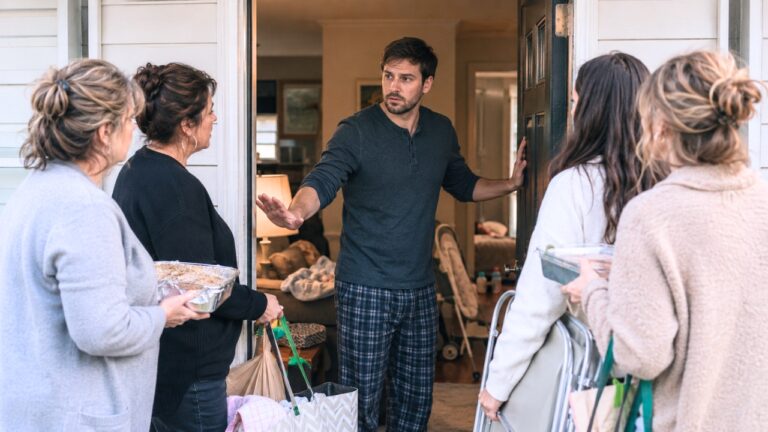
Her Cousins’ 60-Year Babysitting ‘Tradition’ Meant Free Childcare for Everyone — Then She Broke It and Refused

Photo credit: AI-generated image created using ChatGPT.
Some families pass down recipes, heirlooms, and the kind of advice that only makes sense once you’re older. Other families pass down expectations that look noble on paper and feel a lot different when you’re the one being handed the bill.
In the original post, a woman explains that on her dad’s side there’s a long-running “tradition” where younger cousins babysit for older cousins. The rough pattern is simple: teens and twenty-somethings watch the kids of the thirty- and forty-somethings, and the family takes pride in how it’s been done for decades. Now that she’s out of her parents’ house and living with friends, she’s decided she doesn’t want to participate, and the family is calling her selfish for refusing.
She doesn’t hate her relatives, and she isn’t claiming the parents have nowhere else to turn. She just doesn’t like being around kids, she never volunteered for this role, and she’s not interested in signing up for an unpaid commitment because “that’s how we’ve always done it.” That one decision—saying no—hit a nerve in the family system.
A “tradition” can turn into a tab you never agreed to
Her family describes this as a 300-year tradition, though she doubts the exact timeline. What she can trace is still substantial: her great-aunt’s generation babysat her dad’s generation, then that generation babysat her cousins, and then her cousins babysat her and her siblings. There’s a sense of continuity, like each group “pays back” what they received.
But here’s the trouble with informal family economies: they work until they don’t. Nobody writes down the terms. Nobody clarifies whether this is an optional kindness or a required duty. And once the word “owe” gets introduced, it stops being generosity and becomes a debt collectors’ office with casseroles.
What she actually did (and didn’t do)
When the cousins began having kids, she was still living at home, and she says the babysitting mostly fell to her parents and siblings. She admits she doesn’t enjoy being around kids, but others in the family do, and they were the ones doing the bulk of the watching. In other words, she wasn’t the star employee of this arrangement to begin with.
Now that she’s living in a house with friends, her brother called and told her it was “her turn next.” She responded plainly: she didn’t plan on babysitting at all. That’s not a flaky “maybe,” and it’s not a slow fade. It’s a clear boundary, delivered before she got pulled into the schedule.
Why families get furious when one person says no
Her brother told the rest of the family, and the backlash was immediate. They said she “owed” her cousin babysitting time and that she was “breaking the tradition.” Those aren’t neutral words. That’s the language of obligation and betrayal, like she’s walking out on a contract.
Families often get loud not because a person is wrong, but because a person is refusing to play their part in the machine. Free childcare is valuable. If the family has leaned on this system for years, one refusal forces everyone else to face uncomfortable realities: somebody’s going to have to pay a sitter, rearrange work, or admit they assumed access to someone else’s time.
It also exposes something more personal. A lot of us are fine with “tradition” as long as it benefits us in the season we’re in. When we’re the tired parent, tradition feels like support. When we’re the young adult trying to build a life, tradition can feel like a leash.
There’s a difference between service and entitlement
Family should help family. That’s not a trendy idea; it’s old, solid wisdom, and it lines up with a Christian understanding of community and sacrifice. People aren’t meant to do life alone, and children are a lot of work. A young cousin choosing to lend a hand can be a real act of love.
But service isn’t the same thing as entitlement. The moment it becomes, “You owe us,” it’s no longer a gift freely given. It’s wages demanded for a job you never applied for. And if the family is honest, what they’re protecting may not be a beautiful tradition as much as a convenient pipeline of unpaid labor.
There’s also a practical issue here: watching kids isn’t like watering plants. It’s tiring, it carries responsibility, and it takes a certain temperament. If someone genuinely doesn’t want to do it, forcing them is a good way to end up with resentment on both sides and a stressed-out caregiver trying to run out the clock.
The “but they babysat you” argument only goes so far
The family’s strongest emotional argument is that older cousins babysat her, so now she should return the favor. On the surface, that sounds fair. Reciprocity is a good thing, and gratitude should show up in action, not just words.
But there are limits to how far that logic can reach. First, she didn’t choose to be babysat as a child, and she didn’t negotiate those terms. Second, those older cousins may have been fulfilling the same expectation placed on them, not doing her a personal favor. Third, the real beneficiaries of babysitting are the parents who get time and flexibility, not the child who’s eating snacks and watching cartoons.
Gratitude is still appropriate, but gratitude doesn’t require signing a blank check. An adult can be thankful for the way a family supported them growing up while also deciding what responsibilities they’re willing to take on now.
If you don’t want kids, the “pay it forward” pitch changes
She acknowledges something important: refusing could “bite” her later if she chooses to have kids, but she doesn’t think she wants any. That matters because much of this tradition seems built on the idea of trading turns across life stages. You help now, and you’ll be helped later.
But if she’s not planning to be a parent, the arrangement becomes one-sided. She would be paying into a system she doesn’t intend to draw from. It’s fair for her to notice that. It’s also fair for the family to say, “We’re disappointed,” but disappointment doesn’t create moral ownership over her weekends.
The deeper point is that family roles should fit real callings and real capacity. Some people are wired for childcare and enjoy it. Others are better at fixing cars, handling paperwork, tutoring teens, or showing up with a meal and a calm head. A strong family makes room for different kinds of contribution, instead of trying to force everyone into the same slot.
How to refuse without burning the whole bridge
She already gave the cleanest answer: she doesn’t plan on babysitting. If she wants to keep the relationship steady, the next step is to keep the message consistent and low-drama. Long explanations can sound like negotiations, and negotiations invite pressure.
If she’s open to any involvement at all, she could offer alternatives that don’t turn into a standing obligation. Maybe she can visit at a family gathering, help in a way she’s comfortable with, or be clear that she can’t do childcare but can still be supportive in other ways. If she’s not open to any of it, then the boundary stays the boundary, and the family will have to adjust.
The family, for their part, would do well to ask a hard question: is this tradition about loving support, or is it about maintaining free childcare at any cost? If it’s love, it can survive a “no.” If it can’t survive a “no,” then it’s probably not as noble as the family wants to believe.
Sometimes maturity looks like helping without being asked. Other times, it looks like refusing to be drafted into a life you didn’t choose. In this case, a woman simply decided her time isn’t a family utility, and the family is being forced to reckon with that. The healthiest outcome won’t be everyone getting their way; it’ll be everyone learning the difference between a tradition that blesses people and a tradition that uses them.
Read more from Thrive Girly:
- Mother-in-Law Expected to Sleep Over After Every Visit — Then the Mom Said Overnight Stays Were No Longer an Option
- Relatives Showed Up to the Wedding Without Being Invited — Then the Couple Refused to Find Them Seats
- Grandma Buckled the Baby Into Her Car and Left Without Telling Anyone — Then the Mom Made Sure It Never Happened Again