His Family Expected His Wife To Host Everyone After Birth — Then He Sent Them Home
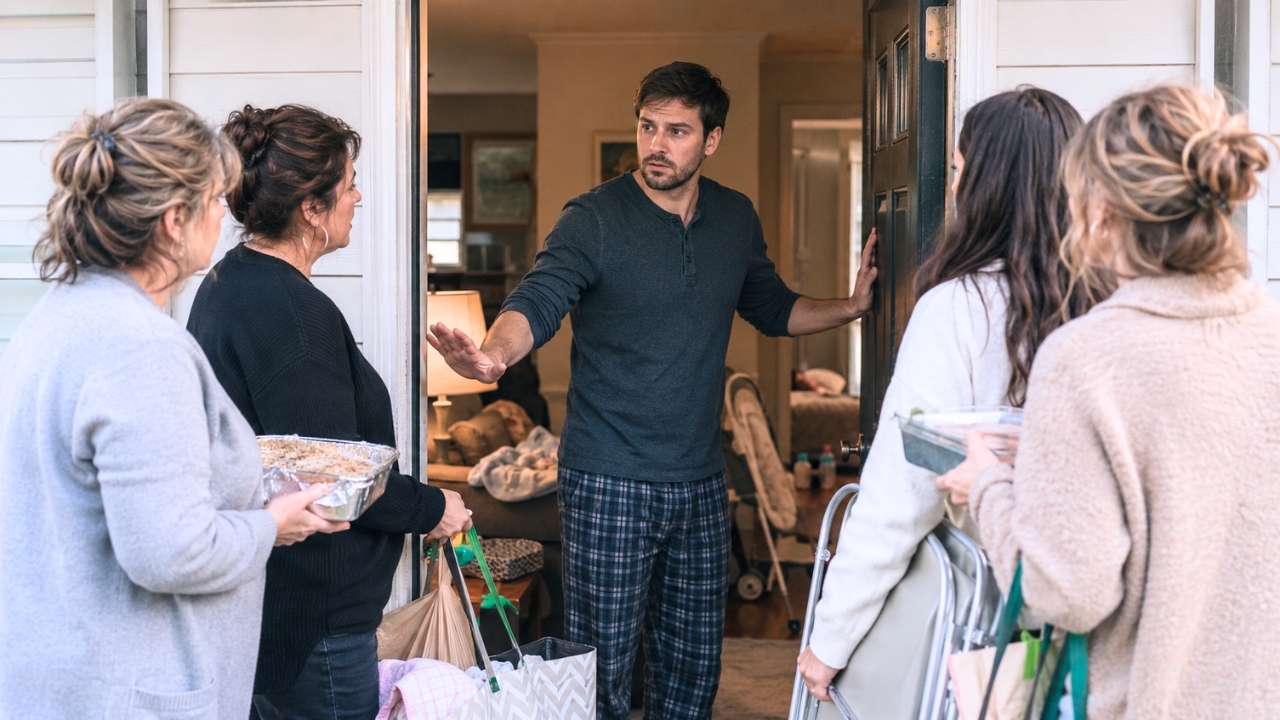
Photo credit: Thrivegirly
Two days after they brought their newborn home, the couple thought they were finally getting a quiet stretch. The baby was still on that round-the-clock schedule, the living room looked like a supply closet, and his wife was moving slowly, still sore and exhausted. Then his mother texted to say the family was on the way over—with food, with “help,” and with plans to stay most of the afternoon.
It wasn’t the first message like that, but the timing made it different. His wife had just managed to shower, and the pediatrician’s instructions were taped to the fridge like a checklist they couldn’t afford to mess up. He asked his mom to wait a week and schedule something short. She replied that family doesn’t need appointments.
They treated it like a holiday gathering, not postpartum recovery
By late morning, the first car pulled up. Then a second. He saw coolers and a grocery bag, but he also saw folding chairs, and that immediately set off alarms. His wife was in the bedroom with the baby, trying to rest between feedings, when the doorbell started going off in quick bursts.
He cracked the door and found his mom, an aunt, and two cousins, all talking over each other. They weren’t asking how long they could stay. They were asking where to set things down and whether the coffee maker was accessible.
Inside, the comments started right away: how quiet the house was, how the dishes were stacked, how the couch pillows were “all wrong.” One relative headed toward the bedroom saying she wanted to see the baby up close. He stepped in front of the hallway and said no visitors in the bedroom and no waking the baby.
The pressure wasn’t subtle: host, smile, and hand over the baby
His wife didn’t come out, and that seemed to irritate people. His mom kept repeating that the new mom should come sit with everyone “for a little bit,” like it was an obligation. When he said she was resting and feeding the baby, his aunt suggested that was even more reason they should be there—to “hold the baby” while she entertained.
That’s when the expectations got clearer. Someone asked where the extra plates were, and another relative asked if there was dessert. His mom started moving things around in the kitchen, opening cabinets without asking, then called out that the trash was already full.
He told them they could drop off food and leave. His mom acted like that was a personal insult, saying she’d already told everyone it would be a “meet the baby” day. His cousins drifted to the living room and sat down like they were settling in.
He drew a line, and the line turned into a standoff at the door
He called his wife from the hallway and asked if she wanted anyone in the house. From the bedroom she said no, not today. That was the final answer he needed, and he repeated it out loud to the group.
His mom tried to negotiate. Thirty minutes. Just one photo. Just the grandparents. When he didn’t budge, she switched to guilt, saying his wife was “keeping the baby from family” and that his own mother shouldn’t have to ask permission.
He picked up the grocery bag they’d brought, thanked them for the food, and set it just outside the front door. Then he opened the door wider and said they needed to go home. The temperature of the room changed immediately.
One cousin muttered that he was being dramatic. His aunt said his wife was being rude. His mom asked if he was really going to “throw them out.” He didn’t argue. He stood there, holding the door open, repeating the same sentence: not today, please leave.
The aftermath spilled into the driveway and onto their phones
They eventually walked out, but not quietly. His mom said loud enough for neighbors to hear that she’d never been treated this way. One cousin slammed a car door hard enough to make the porch light flicker. Another relative left the folding chairs leaned against the front steps like a final jab.
Within an hour, the texts started. Messages came in waves, from different numbers, repeating the same themes: she should be grateful; family is there to support; he’s being controlled; this is why people don’t help anymore. Someone sent a long paragraph listing everything his wife “should be doing,” including making sure visitors felt welcome.
He muted the thread. Then he installed the video doorbell he’d been meaning to set up anyway, mostly because he didn’t trust the next visit to start with a polite knock.
They made it a practical problem: boundaries, access, and safety
That evening, his mom came back alone. She didn’t text first. The camera caught her walking up with a small bag and trying the handle like she expected it to be unlocked. When it wasn’t, she knocked, waited, and knocked again.
He spoke through the door and told her they were resting. She said she needed to “talk this out” and tried to shift the conversation to the porch. He told her the next visit would be scheduled, and if she showed up again without asking, he wouldn’t open the door.
After she left, he and his wife started treating the situation like something they had to manage, not just feel upset about. They kept the door locked at all times. They wrote down the dates and times of the drop-ins. They agreed on a standard message they’d both use so nobody could play them against each other.
They also talked about the real stakes. His wife was recovering and had been instructed to limit stress and prioritize sleep when she could. The baby had a short list of rules about visitors, handwashing, and exposure. This wasn’t about being social. It was about health, privacy, and a household that had just been turned upside down.
People around them focused on proof, consistency, and not getting pulled into a fight
When he described the situation to friends and a couple of coworkers, the advice was less about emotions and more about control. Keep everything in writing. Don’t debate. Don’t explain postpartum recovery to people who are committed to ignoring it. Repeat the boundary and end the conversation.
Others urged them to document every uninvited visit with the camera footage and keep screenshots of the texts. Not because they expected a court case, but because patterns matter if the behavior escalates. One person told him to consider a formal message: no unannounced visits, no coming inside without permission, and no contacting them during certain hours unless it’s an emergency.
Some also pointed out the practical consequence of giving in “just this once.” If they let a crowd sit in the living room now, the next step would be a bigger crowd, longer stays, and more pressure on his wife to perform as a host while she was still bleeding, sleep-deprived, and learning how to care for a newborn.
He didn’t want a family feud, but he also didn’t want his home to become a place where his wife felt trapped. He sent one final text to the group: they loved everyone, they would invite people when ready, and any surprise visits would not be answered. Then he turned his phone off for the night.
The next day was quieter. The baby still woke up constantly, the house was still a mess, but the tension eased when they realized they could protect their own space. The family wasn’t happy, and the pressure hadn’t disappeared, but the couple had made one thing clear early: this phase wasn’t a spectator event, and nobody was entitled to be hosted.