Her Brother Wanted to Move His Homeless Girlfriend and Newborn Into Her Home Against the Lease — Then She Called the Landlord to Block It
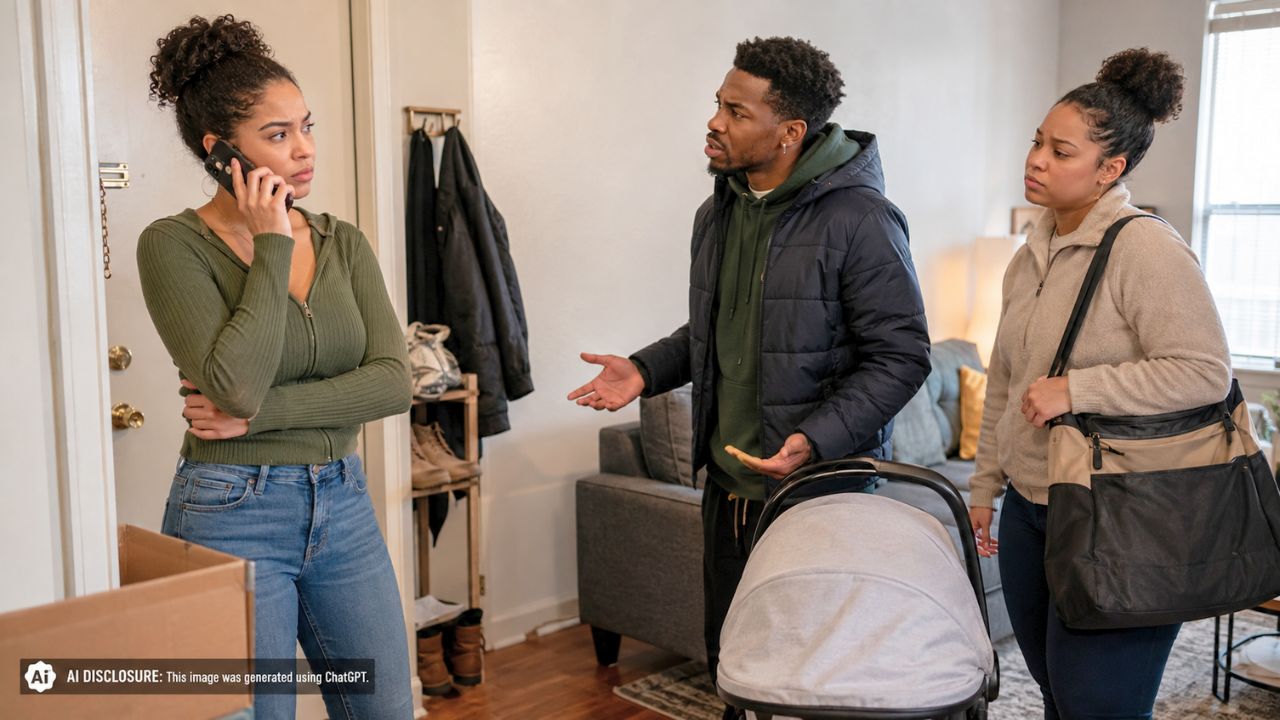
Photo credit: AI-generated image created using ChatGPT.
There’s a special kind of pressure that shows up when family brings you a problem and labels it “help.” It usually starts with a sad situation, a rushed plan, and the unspoken expectation that you’ll absorb the fallout because you’re the responsible one. If you hesitate, you’re not just cautious—you’re suddenly the villain.
In the original post, a 24-year-old woman explains that her 23-year-old brother has been dating a 20-year-old woman for about two months. The girlfriend recently became homeless and has been staying in the home for a few days. The woman doesn’t mind short-term help, but her brother and her mother want the girlfriend and her three-month-old baby to move in long-term—even though the woman pays most of the bills and the lease limits guests to two weeks without permission.
So she did the unglamorous adult thing: she called the landlord. The landlord objected, citing lead in the home and the baby’s age, and also the lease terms. Now her family is upset, and she’s wondering if she’s wrong for saying no and insisting the girlfriend and baby need to leave.
The “just for a while” lie family tells itself
Most long-term housing messes begin with two words: “temporary” and “just.” Just for a while. Just until she gets back on her feet. Just until he finds a better job. Temporary has a habit of turning into a new normal, especially when a newborn is involved and nobody wants to be the person who says, “Time’s up.”
The woman in this situation already saw what was coming. She’s the one paying the majority of the bills, she works a lot, and she’s preparing to start a master’s program. She wasn’t imagining some polite little houseguest scenario; she was looking down the road at a permanent, expensive, exhausting arrangement that she didn’t agree to.
A lease isn’t a suggestion, and neither is head of household
Men understand contracts when they apply to us, and we tend to get fuzzy when we want something badly. A lease clause about guests isn’t there for decoration. If the agreement says nobody can stay more than two weeks without permission, then moving in a girlfriend and a baby isn’t generosity—it’s a violation.
And there’s an extra layer here: she’s the head of household. That means if the landlord decides to enforce the rules, it won’t be her brother dealing with the consequences. It’ll be the person whose name is on the paperwork, whose credit gets hit, and whose housing stability gets threatened.
Calling the landlord wasn’t “snitching.” It was doing due diligence before her life got set on fire by someone else’s decisions. Adults don’t gamble their housing on wishful thinking and family guilt.
The baby changes the entire equation
Somebody will always say, “But it’s a baby,” as if that automatically means the baby should live wherever there’s a couch. A child deserves stability and safety, not a hurried arrangement held together by emotional blackmail. In this case, the landlord objected specifically because there’s lead in the home and the infant is only a few months old.
You don’t need to be a building inspector to understand the basic point: if the environment isn’t safe for an infant, then making a moral argument for keeping the infant there is backwards. Protecting the child doesn’t mean ignoring reality. Protecting the child means refusing to pretend a bad setup is “good enough” because it’s convenient.
This is where grown-up compassion matters. Compassion doesn’t just feel bad for people; it insists on wise choices that don’t create fresh harm.
Two months of dating isn’t a foundation for a household
The brother has been dating this woman for about two months. That’s barely enough time to know someone’s middle name and money habits, let alone build a shared life under somebody else’s roof. Moving a girlfriend and newborn into a family home after a short relationship is a high-risk move with low accountability.
If it goes badly—and plenty of these situations do—the person who tried to be “nice” becomes the default fixer. Suddenly you’re mediating arguments, paying higher utilities, losing sleep, and navigating tension that never had to be yours. Meanwhile, the original decision-makers often act shocked that real life has consequences.
There’s also the quiet question nobody wants to ask: where is the child’s father, and what support systems exist? The post doesn’t say, so nobody should invent an answer. But the absence of a clear plan is the point. A newborn can’t live on vibes and good intentions.
Family pressure has a way of targeting the responsible sibling
This is a familiar pattern. The person with the job, the routine, and the stable habits becomes the “resource” everyone else organizes around. It’s rarely stated out loud, but the expectation is clear: you’ll carry the load because you can. If you don’t, you’re accused of being cold, selfish, or unchristian.
But stewardship is a real moral category, too. If you pay most of the bills, work a lot, and are preparing for graduate school, you’re not wrong to protect the structure of your life. Some seasons require discipline and focus, not extra chaos. You can care about people and still refuse to be drafted into a permanent crisis.
And let’s be honest: an infant in the home changes everything. Sleep, noise, schedules, visitors, cleanliness—none of that stays the same. If you didn’t sign up for it, you’re allowed to say so.
Calling the landlord: not pretty, but sometimes necessary
There’s a reason people hesitate to involve a landlord. It feels formal, it raises the stakes, and it can make family members angry because it removes their ability to “just do it.” But the woman didn’t call to punish anyone. She called because the lease has limits and she didn’t want to get into trouble.
That’s not a betrayal; it’s protecting the home for everyone who already lives there, including her disabled mother. If the household gets hit with a lease violation or worse, the fallout doesn’t land evenly. The brother can be upset, but he isn’t the one holding the liability in his hands.
Also, the landlord’s objection wasn’t a personal insult. It was a boundary tied to property conditions and risk—especially with lead mentioned. If anything, the landlord’s response confirms that the woman wasn’t being paranoid. She was seeing the situation clearly.
What a better solution looks like (and who should carry it)
If a man has a girlfriend and wants to provide for her and her child, the burden belongs to him to build a real plan. That might mean he finds housing, increases his income, coordinates with family members who actually consent to hosting, or explores community resources. It doesn’t mean he moves them into his sister’s home and calls it love.
The mother’s support for the idea doesn’t change the math if the daughter is paying the bills and the lease is in her hands. Wanting to help is admirable, but wanting to help with someone else’s stability isn’t generosity—it’s presumption. If the family wants to rally, they can do it in a way that doesn’t violate the lease or put an infant in a questionable environment.
The woman can still offer short-term help within the rules, like a defined exit date, rides to appointments, help finding shelters or transitional housing, or connecting them to services. Those are real acts of care. Letting a risky “temporary” situation become permanent isn’t the only way to love people.
Sometimes the most loving word in a household is “no,” especially when “yes” would be dishonest, unsafe, or illegal under the agreement you signed. This woman wasn’t trying to be heartless; she was trying to keep a roof over her own head and avoid putting a baby in a bad situation. If her brother wants to play provider, he needs to start by taking responsibility instead of trying to move responsibility into someone else’s living room.
Read more from Thrive Girly:
- Mother-in-Law Expected to Sleep Over After Every Visit — Then the Mom Said Overnight Stays Were No Longer an Option
- Relatives Showed Up to the Wedding Without Being Invited — Then the Couple Refused to Find Them Seats
- Grandma Buckled the Baby Into Her Car and Left Without Telling Anyone — Then the Mom Made Sure It Never Happened Again