Her Stepsister Wanted to Wear Her Late Mother’s One-of-a-Kind Wedding Dress — Then the Teen Said No
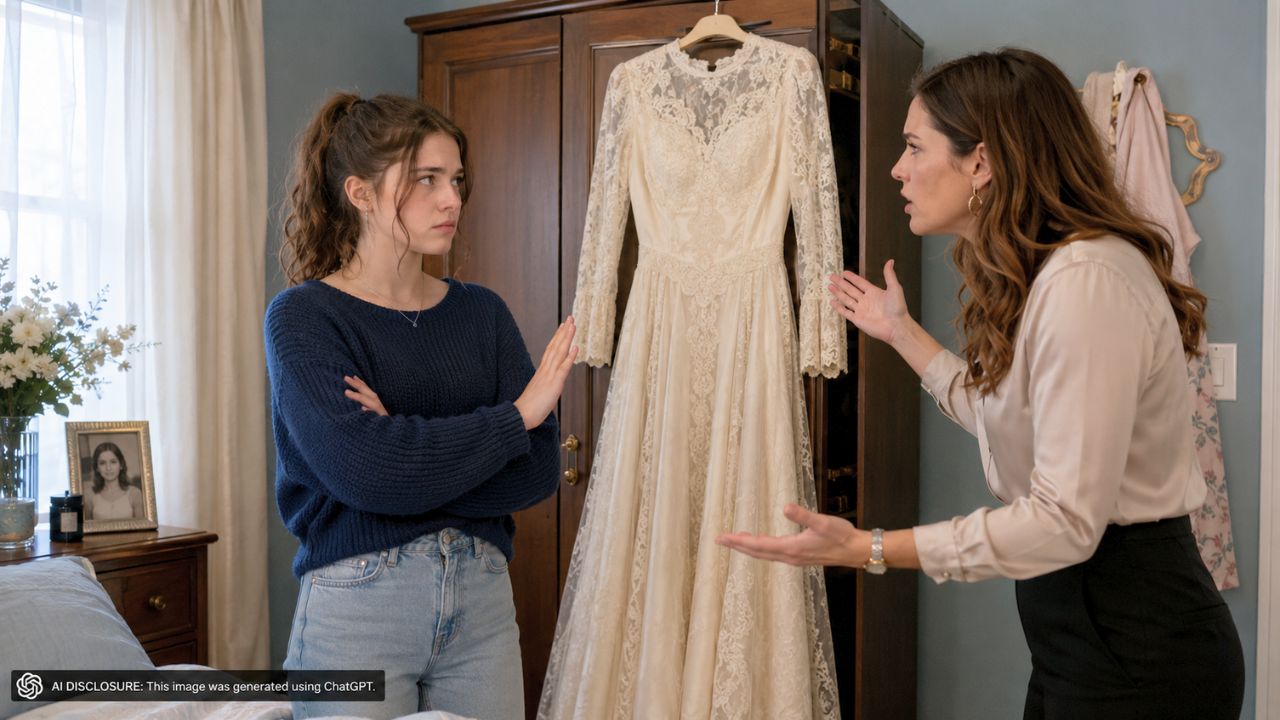
Photo credit: AI-generated image created using ChatGPT. Illustrative only.
There’s a particular kind of family tension that shows up when people start treating sentimental things like they’re community property. A teenager, a wedding dress, a new marriage, and an older stepsister who sees a chance to “save money” is all it takes to turn a home into a pressure cooker.
In the original post, a 16-year-old girl describes growing up with her mom after her father died shortly after she was born. Her mom held onto one item through debt and hard years: a one-of-a-kind wedding dress her late husband had custom made and designed for her. The mom repeatedly told her daughter that dress—maybe at least the veil—was meant for her someday.
Then the mom remarried, and her new husband brought two older kids into the picture: a 26-year-old daughter and an 18-year-old son. When the stepsister got engaged, she suggested wearing the preserved dress to cut costs. The teen said no, grabbed the dress, locked herself in her room, and got labeled “spoiled and selfish” by her stepdad for it.
A dress can be cloth and still be sacred
Some guys hear “wedding dress disagreement” and assume it’s shallow. It isn’t. In this case, the dress isn’t about fashion; it’s a physical link to a father who isn’t around, and to a mother who carried the weight of grief and debt while refusing to sell the one thing that mattered.
The detail that hits hardest is that the late father had the dress hand-made and designed for his bride. That’s not an off-the-rack purchase. That’s a husband planning a once-in-a-lifetime gift, and a wife protecting it for the child they never got to raise together.
The adults blurred a line they didn’t have the right to blur
The stepsister floated the idea in a family conversation, and the mom initially said she wasn’t comfortable because she’d been saving the dress for her daughter. That should’ve been the end of it. Instead, the stepdad argued that the mom now has two wedding dresses and the teen can “wear the other one.”
That’s not his call. A man marrying into a family doesn’t gain authority to reassign a widow’s memorial items like he’s reorganizing a garage. If anything, he should be the one protecting the boundary, not bulldozing it for convenience and applause.
The moment that really shows the posture here is when he pulled the dress out of storage and handed it to his daughter. Whether he meant to force the issue or just thought he could muscle through the emotions, it’s a hard move to defend. You don’t settle a sentimental disagreement by physically taking the item out and placing it into the other person’s hands.
“It’ll save money” is a weak reason to take what isn’t yours
Weddings cost too much, and everybody knows it. Still, “it’ll save us so much money” doesn’t justify claiming something that was promised to someone else, especially when the “something” is tied to a dead parent. Saving money is a goal; it’s not a moral trump card.
There are a hundred ways to cut a wedding budget that don’t involve stepping into your little stepsister’s grief. Borrow a venue, simplify the guest list, go modest on flowers, or buy a dress that fits and leave other people’s heirlooms alone.
And the alterations argument—“it would need so many alterations to even fit you” and “it’ll be years before you need it”—isn’t the slam dunk the stepsister seems to think it is. Alterations can permanently change a dress, especially length, structure, and lace work. That means the teen isn’t just being asked to share; she’s being asked to accept that her mom’s preserved piece of history might not come back the same.
A 16-year-old grabbed the dress because the adults didn’t protect her
Locking herself in her room with the dress isn’t a calm, mature response. It’s also a pretty understandable response when a teenager feels cornered and unheard. When the adults in the room use pressure instead of patience, you get a survival move, not a well-crafted speech.
She says it plainly: she “can’t let some stranger wear the only thing of my dad I have left.” The word “stranger” may sting the stepfamily, but emotionally it makes sense. A step-sibling who entered your life recently, who is ten years older, and who is now trying to take the most meaningful item from your father isn’t going to feel like “family” in that moment.
It’s also telling that the stepbrother and her friends agree she should stand her ground. Even without outside opinions, the household itself isn’t united against her. The conflict is coming from the people with the most leverage—her stepdad and older stepsister—who also have the most to gain.
Stepdad leadership shouldn’t look like name-calling
Calling a teen “spoiled,” “selfish,” and a “brat” is the kind of easy talk that feels powerful for about five minutes and costs you trust for five years. A grown man can be frustrated and still keep his dignity. If he can’t, he’s not leading; he’s venting.
There’s also a spiritual angle here that doesn’t need to be preachy: a household runs on stewardship and honor. A husband should honor his wife’s history, not treat it like baggage he can redistribute. A father figure should protect the weaker person in the room, not pressure her into surrendering what matters to keep the peace with the loudest adult.
And yes, the mom being “on the fence” matters. She’s stuck between her husband and her daughter, between her new marriage and an old promise. But being torn doesn’t remove responsibility. If she told her daughter for years that the dress would be hers, she needs to have the backbone to keep her word when it’s inconvenient.
What a fair outcome would actually look like
A fair outcome starts with a simple sentence from the adults: the dress isn’t available. Not “maybe,” not “we’ll see,” not “you can use it if you give it back.” It was preserved for the daughter, and it’s tied to her late father. That’s enough.
Next, the stepsister deserves a path forward that doesn’t humiliate her. She’s engaged and excited, and she probably got carried away. The family can help her look for a dress within budget, contribute in a reasonable way if they’re able, or help her find something secondhand that she can tailor without wrecking a heirloom.
Finally, the stepdad needs to own his part. Handing the dress over was a power play whether he meant it that way or not. If he wants real unity, he can start by apologizing for taking it out of storage and escalating the situation, and by refusing to use insults as a parenting tool.
Promises inside families aren’t small things
A wedding dress isn’t just fabric in this story; it’s a promise. The mom made that promise in the context of grief, and she repeated it enough that her daughter believes it’s settled. If a new spouse can override that promise for convenience, the message to the teen is clear: vows and words don’t hold when pressure shows up.
Families blend, and that can be good. But blending doesn’t mean erasing. A stepfamily becomes strong by respecting what existed before and by refusing to compete with ghosts. The stepsister can be welcomed without being handed what was never hers, and the teen can be asked to be kind without being asked to surrender the one tangible link to her father.
If the adults want this home to feel like a family instead of a negotiation table, they’ll stop treating the teenager’s “no” like a tantrum and start seeing it as a boundary that should’ve been honored from the beginning.
Read more from Thrive Girly:
- Mother-in-Law Expected to Sleep Over After Every Visit — Then the Mom Said Overnight Stays Were No Longer an Option
- Relatives Showed Up to the Wedding Without Being Invited — Then the Couple Refused to Find Them Seats
- Grandma Buckled the Baby Into Her Car and Left Without Telling Anyone — Then the Mom Made Sure It Never Happened Again