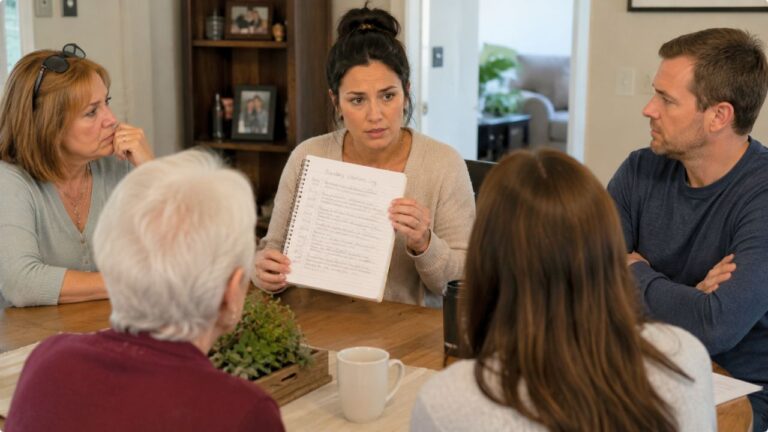
Her Bridesmaid Showed Up in the Wrong Color Dress on Her Wedding Day — Then the Bride Kicked Her Out of the Wedding Party
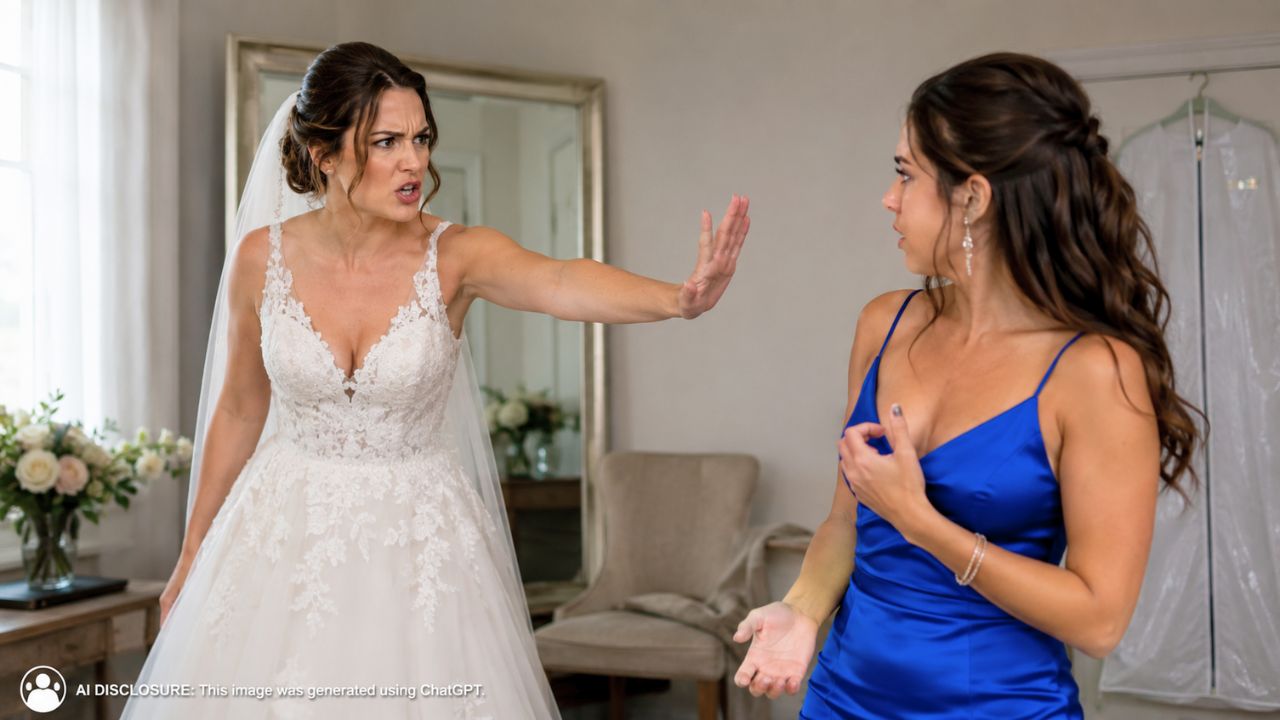
Photo credit: AI-generated image created using ChatGPT.
Weddings have a way of revealing what people really believe about commitment. Not the big poetic kind we put on invitations, but the day-to-day kind: keeping your word, honoring someone else’s moment, and not turning every decision into a referendum on your personal taste.
In the original post, a 23-year-old bride describes a winter-themed wedding with forest green and gold as the chosen palette. She paid for her bridesmaids’ dresses, set one clear exception—her maid of honor would wear black—and expected everyone else to show up in the agreed-upon green. One bridesmaid, “Kat,” disliked the color from the beginning, pushed for alternatives, and later showed up on the wedding day wearing black anyway.
The bride confronted her, asked her to change, and when Kat refused and escalated into a scene, the bride had security escort her out. Afterward, Kat demanded repayment for the black dress she bought and continued sending nasty messages, while some other bridesmaids told the bride she’d been too harsh. It’s the kind of conflict that looks small on paper—until you realize it’s not really about a dress.
The dress wasn’t the problem. The power play was.
If a bridesmaid shows up in the wrong color by accident, you handle it like a grown-up. You improvise, take photos creatively, maybe shuffle positions, and keep your focus where it belongs. But this wasn’t a mistake. Kat objected from the start, tried to renegotiate the bride’s choices, asked for the same exception the maid of honor had, and then arrived late carrying a bag with a “backup” dress story that didn’t match what happened next.
Showing up in black wasn’t about comfort. It was a statement: “I don’t agree with your call, so I’m going to override it in public.” That’s not personality; that’s disrespect with a zipper on it. The bride wasn’t reacting to fabric—she was reacting to someone trying to seize the steering wheel in the final minutes before the ceremony.
Bridesmaids sign up to support, not to compete
A wedding party isn’t a jury. It’s not a committee that votes on colors and vetoes themes because they’d rather be in something “more girly” or more flattering. The job is simple: show up, help the day run smoothly, and make sure the couple feels supported rather than managed.
Kat had plenty of chances to bow out earlier if the dress was truly unbearable. That’s an adult move: “I love you, but I don’t think I can do this role the way you need, so I’m going to attend as a guest.” It might sting, but it’s honest. What she chose instead was sabotage with plausible deniability—right up until it wasn’t deniable anymore.
The bride’s boundary was clear, and it was communicated
People love to argue boundaries after the fact, as if the issue is that nobody knew the rules. Here, the rules were straightforward. The wedding theme was winter; the color palette was forest green and gold; bridesmaids would wear green; the maid of honor would wear black; gold accessories for everyone. No complicated dress code spreadsheet. No hidden expectations.
And the bride paid for all the dresses, which matters. It doesn’t mean she owns people, but it does mean she removed a common source of tension: cost. Kat wasn’t being asked to spend money on a dress she hated and then smile through it. She was being asked to wear what was provided for a few hours because the couple wanted a certain visual cohesion for their ceremony and photos.
When someone breaks an agreement that plainly, the offended party isn’t “controlling” for responding. They’re just refusing to be controlled.
Why public defiance forces a public response
Some of the bridesmaids reportedly told the bride it was harsh to kick Kat out and embarrassing to do it that way. In a perfect world, every confrontation would happen quietly, behind a door, with everyone speaking calmly and nobody making it weird. But that option disappears when one person insists on making it weird.
The bride asked her to change. Kat refused and walked away. The bride warned her of the consequence. Kat escalated, yelling and insulting her. At that point, there are only a few options left, and none of them are pleasant: let the bridesmaid stay and hijack the tone of the day, physically argue, or get help removing the disruption. Calling security wasn’t a flex; it was a practical tool to stop the scene from spreading.
Here’s the uncomfortable truth: if you allow someone to publicly defy you at your own wedding, you’re not “keeping the peace.” You’re teaching everyone—friends, family, even your future spouse—that your boundaries are decorative. That’s a rough foundation to lay on day one of a marriage.
The money question: what’s fair and what’s enabling
Kat demanded repayment for the black dress she bought because she “didn’t get to wear it.” That line tells you a lot about how she’s framing the situation. In her mind, she made a purchase in pursuit of a plan, and the bride “ruined” the plan. But the plan was to break the agreement and force the wedding party to accept it under pressure.
Should the bride pay her back? Fairness doesn’t require reimbursing someone for the cost of their own disobedience. Kat chose to buy a black dress after being told no. She chose to arrive late. She chose to change into it. She chose to refuse a direct request to fix it. She chose to escalate into a shouting match. If you’re looking for the moment where the bride became responsible for Kat’s purchase, it isn’t in the story.
There’s also a stewardship angle here that doesn’t get talked about enough. Paying someone off to stop their tantrum can feel merciful, but it often trains them to repeat the behavior. You don’t have to finance someone’s lesson for them to learn it.
What the other bridesmaids are missing
The bridesmaids who think the bride should’ve been softer may be conflict-avoidant, or they may be stuck on appearances: “Don’t make a scene.” But the scene was already in motion, and it wasn’t started by the bride. It was started by someone who decided a wedding was a stage for her preferences.
Sometimes people confuse kindness with passivity. Kindness is patient and controlled; passivity is surrender dressed up as virtue. If you’re always smoothing things over for the person who blows up, you’re not being noble—you’re being predictable. And the person who pays for that predictability is usually the one who was trying to do something meaningful in the first place.
If those bridesmaids want to be helpful now, the best move is to tell Kat to stop, to apologize, and to take responsibility for her own choices. Real friends don’t demand you reward bad behavior so they can feel comfortable about the conflict.
A grown-up way to handle loyalty before big life moments
There’s a reason stories like this stick with people. A wedding is a public promise, and it draws a bright line around loyalty. Not blind loyalty to every whim, but basic loyalty to the couple’s day and the couple’s decisions. If someone can’t honor a color scheme, you start wondering what they’ll do when the stakes are higher—when there’s a marriage to protect, a family to respect, and hard seasons that require unity instead of ego.
The bride didn’t describe perfection; she described a boundary, a warning, and a consequence. That’s adult leadership. It’s not pleasant, but it’s clean. And in a world full of people who avoid hard moments until they rot, “clean” is a gift.
Kat wanted the benefits of being in the wedding party without the basic submission the role requires. She didn’t get it, and she’s still angry about it. That’s sad, but it’s also not the bride’s job to fix. Marriage asks a man to leave boyish appeasement behind, and it asks a woman to do the same. A wedding day is a pretty good place to start.
Read more from Thrive Girly:
- Mother-in-Law Expected to Sleep Over After Every Visit — Then the Mom Said Overnight Stays Were No Longer an Option
- Relatives Showed Up to the Wedding Without Being Invited — Then the Couple Refused to Find Them Seats
- Grandma Buckled the Baby Into Her Car and Left Without Telling Anyone — Then the Mom Made Sure It Never Happened Again